Luxury Watch Market Forecast 2026: Why High-End Sales are Upturning
Discover why the 2026 luxury watch market is experiencing a massive resurgence. Explore investment trends, Gen Z buyers, and the exploding pre-owned sector.
Mar 23, 2026 - Written by: Brahim amzil
Luxury Watch Market Forecast 2026: Why High-End Sales are Upturning
High-end watch sales are upturning in 2026 due to a massive global shift toward tangible asset investments, expanding wealth in emerging markets, and Gen Z’s unexpected fascination with heritage horology. Driven by deliberately constrained supply from top Swiss manufacturers and a newly legitimized, booming certified pre-owned (CPO) sector, the luxury watch market is officially forecast to achieve double-digit growth. Mechanical timepieces have proven they are no longer just status symbols; they are highly liquid, wearable assets offering serious financial resilience.
Money talks. But real wealth? Wealth ticks.
For a brief moment a few years back, the mainstream media loved to push a specific narrative. The smartwatch was going to kill the mechanical timepiece. Silicon Valley was supposedly drafting the obituary for the Swiss Alps. Fast forward to today, and the reality looks entirely different. We are witnessing a horological renaissance.
To understand the mechanics of this boom, you have to look past the shiny display cases. You have to look at macroeconomic shifts, changing generational values, and the sheer power of supply and demand.
The Macro Picture: Inflation and the Flight to Hard Assets
When inflation bites, investors scramble. They look for safe harbors. Historically, that meant gold, real estate, and fine art. Today, that list includes haute horology.
During the economic turbulence of the early 2020s, traditional markets were a rollercoaster. Cryptocurrencies created immense wealth but proved violently volatile. Suddenly, newly minted millionaires and seasoned investors alike needed places to park their cash that wouldn’t evaporate overnight. They turned to tangible assets.
It’s no secret that the trajectory of luxury watches sales upturned dramatically as we entered the current year. People realized that a Patek Philippe Nautilus or a Rolex Daytona wasn’t just a beautiful piece of jewelry. It was a globally recognized currency. You can walk into a dealership in Tokyo, London, or Dubai, and the intrinsic value of that steel sports watch remains universally understood.
This financialization of watches fundamentally changed the market. Buyers are no longer just collectors who appreciate the escapement mechanism; they are portfolio diversifiers.
The Demographic Plot Twist: Gen Z and Millennials Enter the Chat
If you thought mechanical watches were just for retirees hanging out at country clubs, think again. The demographic profile of the luxury watch buyer has skewed younger faster than anyone predicted.
Digital fatigue is real. Millennials and Generation Z spend their entire lives staring at glowing rectangles. They are tracked, notified, and pinged into oblivion. A mechanical watch offers a profound rebellion against that hyper-connected reality. It is a micro-machine powered entirely by the kinetic energy of the wearer’s wrist. No batteries. No software updates. No planned obsolescence.
Younger buyers are flocking to heritage brands because they crave authenticity and permanence. They want items with a story. A 1970s Omega Speedmaster has a history that an Apple Watch Series 10 simply cannot match.
Market analysts were caught off guard when luxury watches sales upturned despite broader economic uncertainties. But they missed the psychological angle. For a younger generation facing an increasingly digital and transient world, owning a piece of meticulously crafted steel and sapphire crystal anchors them to something real.
Protecting these investments is just as important as acquiring them. For new collectors starting their journey, proper storage is critical. A high-quality Lansheng Solid Wood Watch Box offers the perfect blend of aesthetic display and physical protection for a growing collection, keeping dust and humidity at bay.
The Certified Pre-Owned (CPO) Revolution
We can’t talk about 2026 without talking about the secondary market. The pre-owned watch space used to be the Wild West. It was full of shady dealers, “Frankenwatches” (pieces cobbled together from disparate parts), and terrifying counterfeit risks.
Not anymore.
The gray market went corporate. Platforms like Chrono24, Watchfinder, and Hodinkee legitimized the secondary trade. But the absolute earthquake happened when the Swiss giants themselves stepped into the ring. Rolex launching its own Certified Pre-Owned program completely changed the paradigm.
When the biggest player in the game officially sanctions the secondary market, consumer confidence skyrockets. Buyers now feel safe dropping $15,000 on a pre-owned GMT-Master II because it comes with a factory guarantee.
This transparency and safety have unlocked massive amounts of capital. The secondary market is no longer a shadow economy; it is the primary engine of growth. It allows new buyers an entry point, and it allows seasoned collectors liquidity to trade up.
Beyond the Big Three: The Rise of Independents
Rolex, Patek Philippe, and Audemars Piguet are the undisputed heavyweights. They dictate the weather in the watch world. However, a fascinating trend defining the 2026 forecast is the meteoric rise of independent watchmakers.
Brands like F.P. Journe, MB&F, H. Moser & Cie, and Rexhep Rexhepi are experiencing unprecedented demand. Why? Because true luxury is rooted in scarcity.
When a standard steel Rolex becomes relatively common in certain affluent circles, the ultra-wealthy seek the next level of exclusivity. They want watches made by living artisans who produce maybe 50 to 100 pieces a year. These independent brands represent the bleeding edge of horological innovation—combining traditional finishing techniques with avant-garde design.
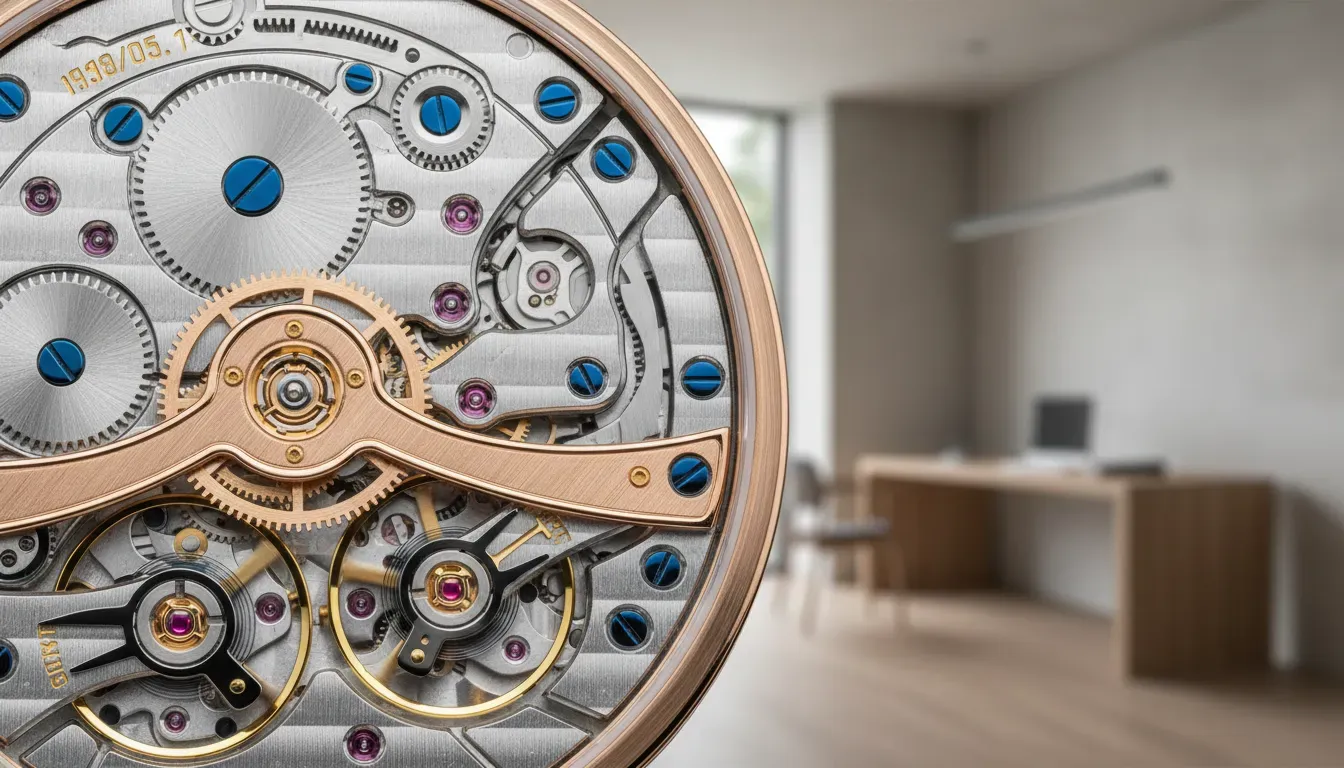
This shift proves the maturity of the current market. Buyers aren’t just chasing hype anymore; they are educating themselves. They are learning about hand-beveled bridges, constant force escapements, and Grand Feu enamel dials.
Wearable Portfolios and Maintenance
Because these items are now viewed as wearable assets, the culture around maintaining them has evolved. You wouldn’t park a vintage Ferrari under a leaky roof, and today’s collectors are applying that same logic to their timepieces.
Mechanical watches require motion to keep their lubricants from settling and their mechanisms running smoothly. For collectors with multiple automatic pieces, a reliable winder isn’t a luxury; it’s a necessity. The WOLF Heritage Single Watch Winder remains an industry standard, perfectly simulating the wrist’s movement to keep your perpetual calendars and chronographs ready to wear at a moment’s notice.
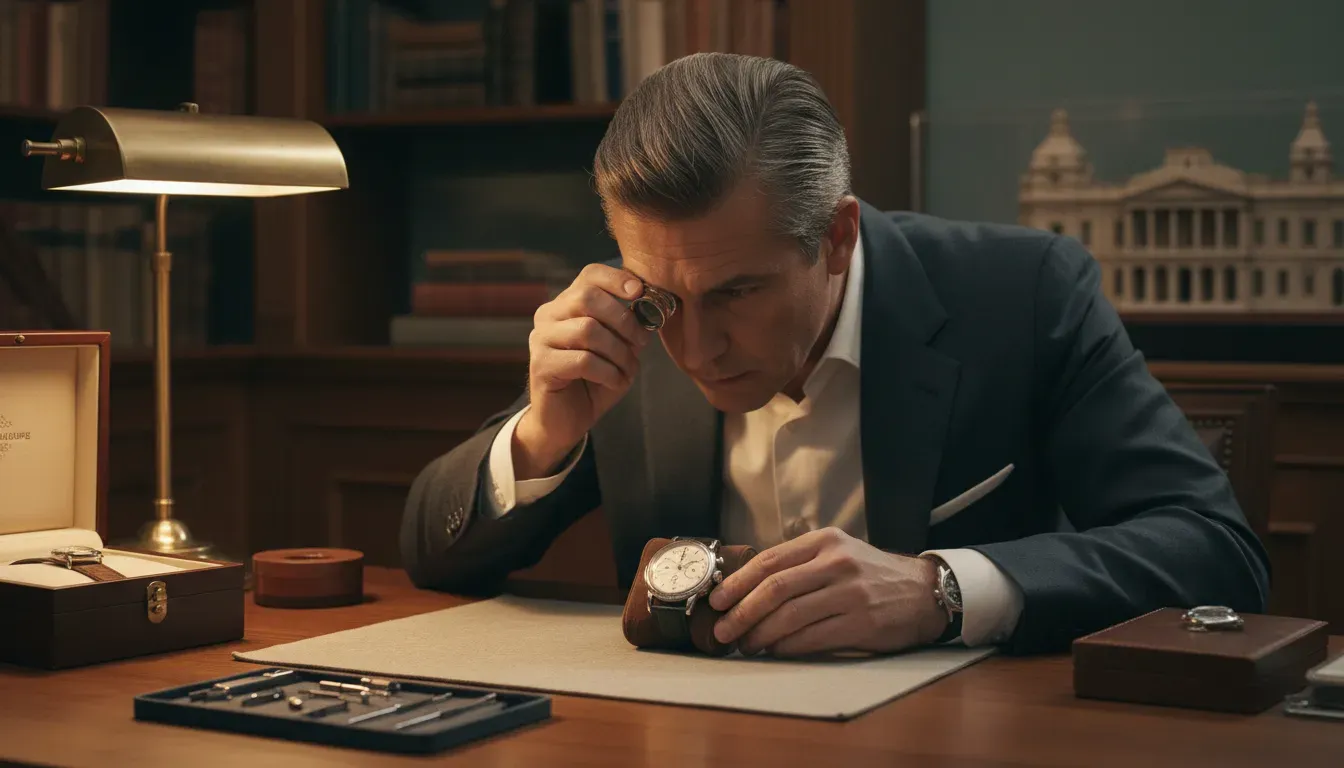
Proper maintenance directly correlates to value retention. A watch that has been meticulously cared for, complete with its original box and papers (often referred to in the community as a “full set”), will command a massive premium on the secondary market compared to a loose, neglected piece. If you want to dive deeper into how to curate a smart portfolio, check out our comprehensive guide to entry-level luxury watches.
Emerging Markets: The New Frontiers of Horology
Historically, Switzerland exported the vast majority of its luxury watches to the United States, Hong Kong, and Western Europe. While those markets remain titans, the geography of wealth is shifting rapidly.
The Middle East, specifically the UAE and Saudi Arabia, has become a massive hub for high-end horology. Boutiques in Dubai are moving inventory at an astonishing rate. Similarly, Southeast Asia—beyond just Singapore to include booming economies in Vietnam and Thailand—is displaying an insatiable appetite for Swiss luxury.
These emerging markets are characterized by young, highly affluent populations eager to signal their global status. They aren’t just buying entry-level luxury; they are going straight for grand complications. Tourbillons, minute repeaters, and gem-set masterpieces are finding homes in Riyadh and Bangkok faster than in London or New York.
The definitive reason why luxury watches sales upturned hinges on this cultural shift toward lasting value combined with an expanding global footprint. The customer base has quite literally doubled in the last decade.
The Supply Chain Deliberation: Artificial Scarcity or True Craftsmanship?
You can’t buy a new Rolex Daytona at retail right now. You just can’t. You will be politely asked to register your interest, which is industry code for being placed on a waitlist that stretches into eternity.
Is this artificial scarcity? A deliberate marketing ploy to drive up hype?
Yes and no.
While brands certainly enjoy the prestige of being unattainable, the reality of high-end watchmaking is stubbornly analog. You cannot scale up the production of a Patek Philippe the way you can scale up the production of an iPhone.
There is a severe global shortage of master watchmakers. It takes years to train an artisan to the level required to assemble and finish a high-end movement. When demand tripled over the past five years, the Swiss industry simply could not—and would not—compromise their quality standards just to pump out more units.
This inherent bottleneck in the supply chain guarantees long-term price stability. When the supply of a highly desirable asset is hard-capped by the limits of human craftsmanship, economics 101 dictates that the value will hold or rise.
For those who are fascinated by this craftsmanship and want to understand the mechanics themselves, tinkering with entry-level mechanical movements has become a popular hobby. Serious enthusiasts looking to change their own straps, adjust bracelets, or open casebacks safely rely on professional-grade tools. The Bergeon 7812 Watch Repair Kit is the exact Swiss-made toolkit used by professionals, ensuring you don’t scratch the lugs of your investment-grade timepiece during routine maintenance.
The Smartwatch Synergy
Let’s circle back to the smartwatch narrative. Why didn’t Apple and Garmin destroy the mechanical watch industry?
Because they occupy two entirely different psychological spaces. A smartwatch is utility. A mechanical watch is emotion.
In fact, industry insiders argue that smartwatches actually helped the mechanical watch industry. For a generation that grew up relying on their smartphones to check the time, the Apple Watch put something back on their wrists. It re-accustomed society to the feeling of wearing a watch.
Once people got used to the real estate on their left wrist being occupied, it was only a matter of time before they started looking for an upgrade. A smartwatch is an incredible piece of technology, but it will be obsolete in three years. A mechanical watch is something you hand down to your child.
Many modern collectors engage in “double wristing” or simply wear their fitness tracker during a workout and switch to their mechanical timepiece for the office or evening out. The two can coexist beautifully.
What to Expect for the Rest of the Decade
As we look toward the end of the 2020s, the market is stabilizing into a mature, highly sophisticated ecosystem. The wild, speculative frenzy of 2021 and 2022—where casual buyers were flipping watches for 100% margins overnight—has cooled. And that is a very good thing.
The current upturn is built on solid fundamentals rather than hype. Brands are innovating with new materials like proprietary titanium alloys and advanced ceramics. E-commerce integration is becoming smoother, even for five-figure purchases. And the customer base is more educated and passionate than at any point in history.
The luxury watch market forecast for 2026 isn’t just a story about retail sales numbers. It is a testament to enduring human craftsmanship. In an age of artificial intelligence, fast fashion, and fleeting digital trends, the mechanical watch stands as a monument to permanence. It ticks quietly on the wrist, a tiny beating heart of gears and springs, proving that some things are entirely immune to the passage of time.