Top Dress Watches for the Office: Minimalism & Class
Discover the ultimate guide to dress watches for the office. Elevate your business attire with slim, minimalist timepieces that master the art of subtlety.
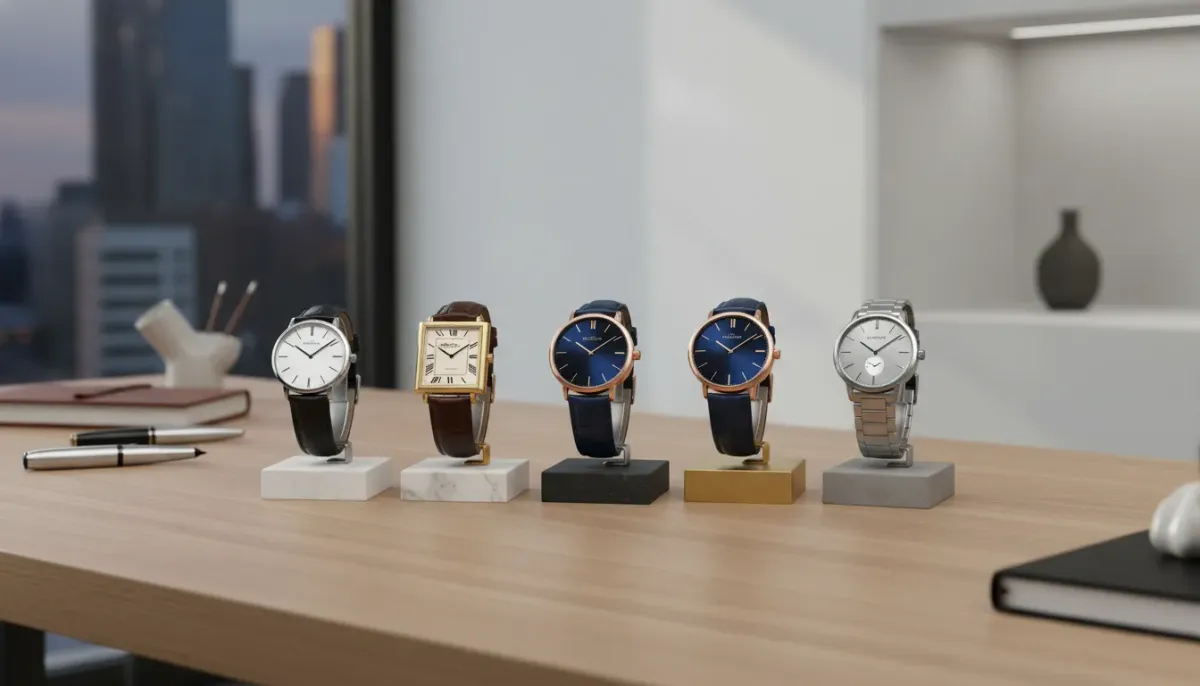
Feb 13, 2026 - Written by: Brahim amzil
There is a specific moment in every business meeting that goes unspoken but gets noticed by everyone in the room. It’s the handshake. Or perhaps it’s when you reach across the mahogany table to slide a document toward a client. Your jacket sleeve pulls back just an inch, revealing your wrist.
What’s sitting there?
Is it a clunky plastic fitness tracker buzzing with email notifications? A massive diving watch that looks like it could anchor a boat? Or is it something subtle, refined, and intentional?
In the world of corporate aesthetics, the dress watch is the final frontier of male jewelry. It is often the only accessory a man wears aside from a wedding band. Because of that scarcity, it carries immense weight. It speaks to your attention to detail. It whispers about your taste.
This isn’t about flashing a diamond-encrusted bezel that screams “look at my bonus.” True office style—specifically in business formal settings—is about minimalism and class. It’s about the art of the understated. Let’s look at why slim, elegant timepieces are the ultimate power move for your 9-to-5 and break down the best options to slip under your cuff.
The Unwritten Rules of the Boardroom Watch
Before we start dropping brand names and movement calibers, we have to address the architecture of a proper dress watch. You can’t just slap a leather strap on a chronograph and call it formal. Well, you could, but you’d be wrong.
A true dress watch is defined by what it lacks. It lacks clutter. It lacks bulk. It lacks noise.
The “Slide Factor”
This is the golden rule. If you take nothing else away from this guide, remember the Slide Factor. Your watch must—without resistance—slide underneath the cuff of a properly tailored dress shirt.
If your watch gets snagged on your cuff, bunching up the fabric of your sleeve, it ruins the silhouette of your suit. It looks sloppy. This is why thickness (or rather, thinness) is the most critical dimension to consider. You generally want a case thickness under 12mm, with under 10mm being the sweet spot. The goal is seamless integration between man and suit.
Simplicity is King
In a business context, your watch is there to tell time, not to calculate the fuel load for a trans-Atlantic flight or measure your heart rate variability. The dial should be clean. Maybe a date window if you must, but generally, two or three hands are all you need.
White, cream, silver, black, or deep blue dials are the standard. Roman numerals or simple baton indices usually look sharper than bold Arabic numbers. You want a face that is legible at a glance but doesn’t demand attention from across the room.
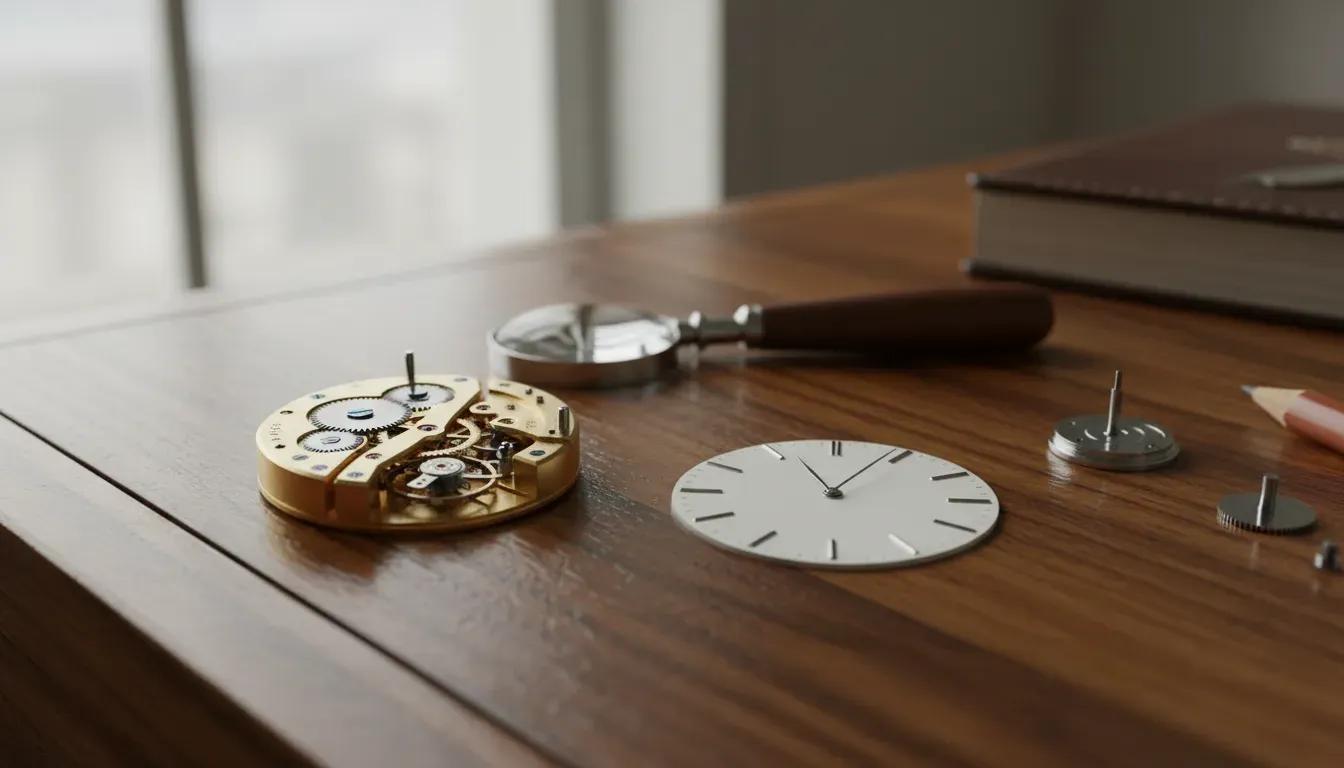
The Entry-Level Icons (Under $500)
You do not need to spend five figures to look like you own the place. In fact, some of the most respected dress watches in the horological community are shockingly affordable. These pieces command respect because they offer heritage and style without the pretense.
The Undisputed Value King: Orient Bambino
If you ask any watch enthusiast to recommend a first dress watch, nine times out of ten, they will say “Bambino.” Orient, a Japanese manufacturer owned by Seiko Epson, produces everything in-house. That’s rare even for luxury Swiss brands.
The Orient Bambino Version 4 is a standout. It features a domed mineral crystal that gives it a distinct vintage vibe, distorting the dial slightly at the edges in a way that feels warm and old-school. The sunburst dials are captivating, particularly in blue or gray.
What makes the Bambino work for the office is its humility. It looks far more expensive than it is, but it doesn’t try to mimic a Rolex. It has its own identity. The leather strap it comes with can be a bit stiff initially, but swap that out for a high-quality cordovan strap, and you have a watch that can go toe-to-toe with pieces costing ten times as much.
The Seiko Presage “Cocktail Time”
Moving slightly up the ladder, we find the Seiko Presage line. Specifically, the “Cocktail Time” series. These dials are mesmerizing. Inspired by different cocktails, the guilloché-style patterns catch the office fluorescent lights and turn them into something actually pleasant to look at.
While slightly thicker than the Bambino, they still fit well with a suit. They bridge the gap between “strictly formal” and “business casual” perfectly. If you are wearing smart casual attire, a Presage on a leather strap elevates the whole look.
The Bauhaus Aesthetic: German Engineering
When we talk about minimalism in design, all roads eventually lead to the Bauhaus movement. Form follows function. No superfluous ornamentation. Just clean lines and perfect legibility. For the modern office—especially in creative fields, architecture, or tech—a Bauhaus watch is a signal of intellect and refined taste.
Junghans Max Bill
This is the archetype. Designed by Max Bill in the 1960s, this watch hasn’t barely changed in decades because it is fundamentally perfect. It is almost all dial; the bezel is razor-thin, making the watch wear slightly larger than its dimensions suggest, yet it remains incredibly slender.
The Junghans Max Bill Automatic is a masterclass in typography. The font used for the numbers is iconic. The crystal is highly domed plexiglass (with a scratch-resistant coating), which provides a warmth that sapphire crystal sometimes lacks.
Wearing a Max Bill tells people you appreciate design history. It’s not a flex of wealth; it’s a flex of culture. It pairs exceptionally well with charcoal or navy suits, providing a stark, clean contrast.
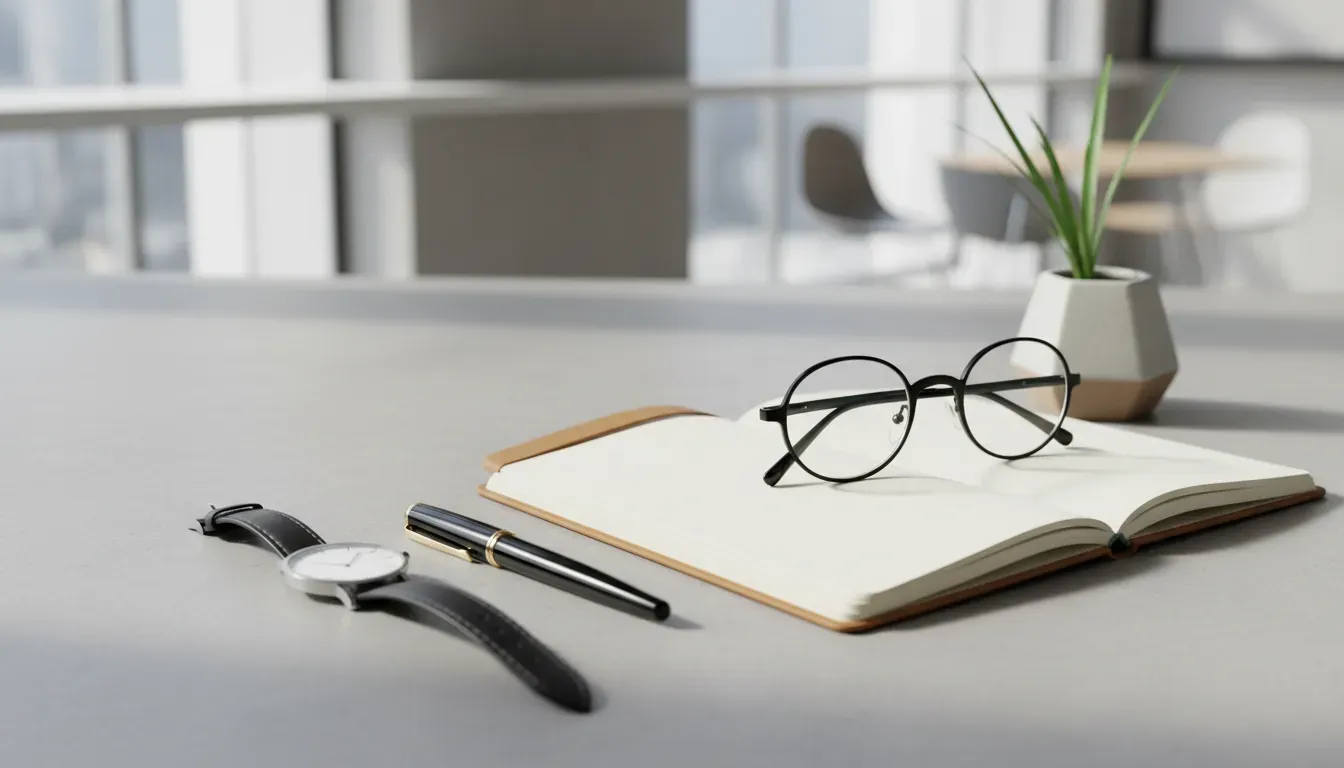
The Swiss Heritage Selection ($500 - $1,500)
Switzerland is the heartland of watchmaking, and having “Swiss Made” on the dial still carries weight in the corporate world. In this mid-range bracket, you are paying for better materials—sapphire crystals, robust automatic movements, and superior finishing.
Tissot Visodate
Tissot is often the gateway into Swiss luxury. The Visodate is a throwback to the 1950s, created to celebrate the integration of a date mechanism into an automatic movement.
The Tissot Visodate Heritage brings that mid-century charm to the modern wrist. The logo on the dial is the vintage Tissot script, which is a lovely touch. It usually comes on a faux-alligator strap with a deployant clasp (which saves the leather from wear and tear).
The polished steel case is sharp and catches the eye, but the dial remains uncluttered. It’s a reliable workhorse. You can wear this to a client dinner, a board meeting, or casually on a Friday, and it never looks out of place.
Hamilton Intra-Matic
Hamilton, originally an American brand now Swiss-owned, has a deep catalog of retro designs. The Intra-Matic is sleek, often lacking a seconds hand entirely to keep the profile as slim as possible. It is pure elegance. The “panda” dial versions (white dial, black sub-dials) are iconic, but for a strict dress watch, the solid dial versions are superior.
Metals, Leathers, and Matching
Once you’ve selected the watch, you have to style it. The rules here are traditional, but they exist for a reason—harmony.
Match Your Leathers
This is Dress Code 101. If you are wearing black oxfords and a black belt, your watch strap should be black leather. If you are wearing walnut or cognac brogues, your watch strap should be brown.
This is why having a watch with easily interchangeable straps is a pro move. A simple spring-bar tool allows you to swap a black lizard grain strap for a brown calfskin one in under two minutes, effectively giving you two watches for the price of one.
Match Your Metals
This rule is a bit more flexible in modern times, but for maximum elegance, try to coordinate. If your belt buckle and cufflinks are silver/steel, a gold watch might clash. However, a two-tone watch can often bridge this gap. Wedding bands are the exception—you don’t need to swap your wedding ring to match your watch.

The Smartwatch Dilemma
We have to address the elephant in the room. The Apple Watch.
Can you wear a smartwatch with a suit? Technically, yes. People do it all the time. But should you?
From a style perspective, a black glass rectangle lacks soul. It breaks the organic lines of a suit. From a psychological perspective, it can be detrimental. If your wrist lights up every time you get a Slack message during a negotiation, you have lost the upper hand. You appear distracted. You appear to be at the beck and call of your device.
A traditional dress watch signals that you are present. It says you value the time of the people you are with enough to disconnect from the digital noise. If you must track your steps, get a subtly integrated ring or a thin tracker to wear on the other wrist (hidden). Let your primary wrist be reserved for style.
Investing in Your Image
Choosing the right dress watch is about more than just telling time. It’s about curating your personal brand. In an office environment, where judgments are often made in split seconds, demonstrating that you understand nuance, history, and restraint sets you apart.
Whether you opt for the value-packed Orient, the design-forward Junghans, or the heritage-rich Tissot, the key is intentionality. Wear it with confidence. Keep it wound. And make sure it slides right under that cuff.
For more tips on refining your professional appearance, check out our guide on essential grooming habits for the modern man. Excellence, after all, is in the details.