The Ultimate Guide to Buying Your First Luxury Timepiece
Ready to invest in horology? Discover expert strategies for selecting, authenticating, and purchasing your first luxury watch without making costly rookie mistakes.
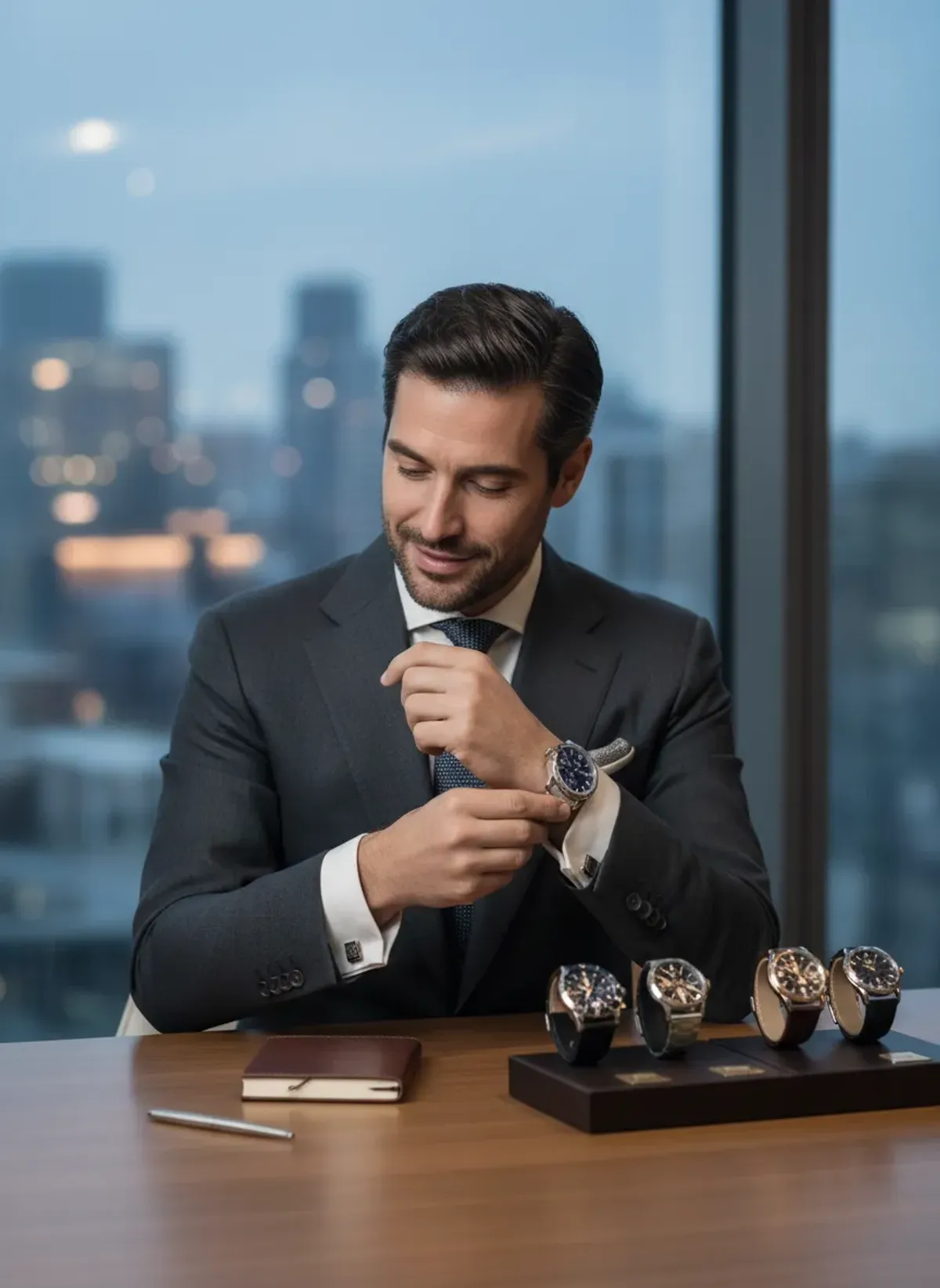
Mar 11, 2026 - Written by: Linda Wise
You never forget the moment you strap a genuine mechanical timepiece to your wrist for the first time. The cold, dense weight of 316L stainless steel settling against your skin. The microscopic, mesmerizing sweep of the seconds hand. The faint, rapid-fire heartbeat of the escapement echoing against the sapphire crystal.
Buying your first luxury watch isn’t just a retail transaction. It’s an initiation. You are stepping into an esoteric world of micro-engineering, centuries-old craftsmanship, and, frankly, a minefield of marketing hype. I’ve personally found that the journey from admiring watches in boutique windows to actually handing over your credit card is fraught with anxiety. You want a piece that commands respect, retains its dignity, and reflects your personal aesthetic—all without getting fleeced by an opportunistic dealer.
This guide strips away the velvet-rope pretension of the horological world. We are going to break down the anatomy of a smart purchase, dissect the psychology of collecting, and arm you with the insider knowledge required to navigate authorized dealers, the grey market, and the vintage archives.
Before we tear into the mechanics and market dynamics, let’s establish a baseline. If you want to bypass the analysis paralysis, here are three undisputed heavyweights that serve as perfect entry points into the world of luxury horology.
Quick Comparison: Top Picks
| Product | Rating | Check Price |
|---|---|---|
| Tissot PRX Powermatic 80 | ⭐⭐⭐⭐⭐ | View on Amazon |
| Seiko Prospex SPB143 | ⭐⭐⭐⭐½ | View on Amazon |
| Hamilton Khaki Field Automatic | ⭐⭐⭐⭐½ | View on Amazon |
The Psychology of the Mechanical Anachronism
Let’s address the elephant in the room right away. Your smartphone keeps better time than a $50,000 Patek Philippe. A ten-dollar digital watch from a gas station is infinitely more accurate, durable, and legible than a platinum grand complication. So why are we here? Why are sane, rational adults willing to spend thousands of dollars on obsolete technology?
Because luxury horology isn’t about telling time. It’s about a relationship with time itself.
A mechanical watch is a living, breathing machine composed of hundreds of microscopic gears, pinions, springs, and synthetic rubies, all working in silent harmony without a single microchip or battery. It is powered by the kinetic energy of your own body. When you take it off, it eventually stops, waiting for you to pick it back up and breathe life into its mainspring once again. There is a visceral romance to that symbiotic relationship.
Furthermore, a proper timepiece serves as a generational artifact. You don’t pass down an Apple Watch to your grandchild; it becomes e-waste the moment the lithium-ion battery degrades. A well-maintained mechanical watch, however, will outlive you. It absorbs the scratches, dents, and patina of your life’s adventures, transforming into a deeply personal heirloom. If you happen to be curating the perfect selection for a significant other, this emotional permanence is precisely what makes a watch the ultimate milestone gift.
Decoding the Horological Lexicon
Before you walk into a boutique, you need to speak the language. Sales associates can spot an uneducated buyer from a mile away. If you confuse a chronograph with a chronometer, you immediately lose leverage. Let’s clarify the terminology that actually matters.
Movements: The Engine Under the Hood
- Quartz: Battery-powered. Highly accurate, low maintenance, but generally lacks the prestige and “soul” that collectors seek. The seconds hand “ticks” once per second.
- Manual Wind: A mechanical movement that requires you to physically turn the crown every day or two to tighten the mainspring. It offers an incredibly tactile, engaging experience.
- Automatic (Self-Winding): A mechanical movement equipped with a weighted rotor that spins as your wrist moves, automatically winding the mainspring. This is the industry standard for modern luxury watches.
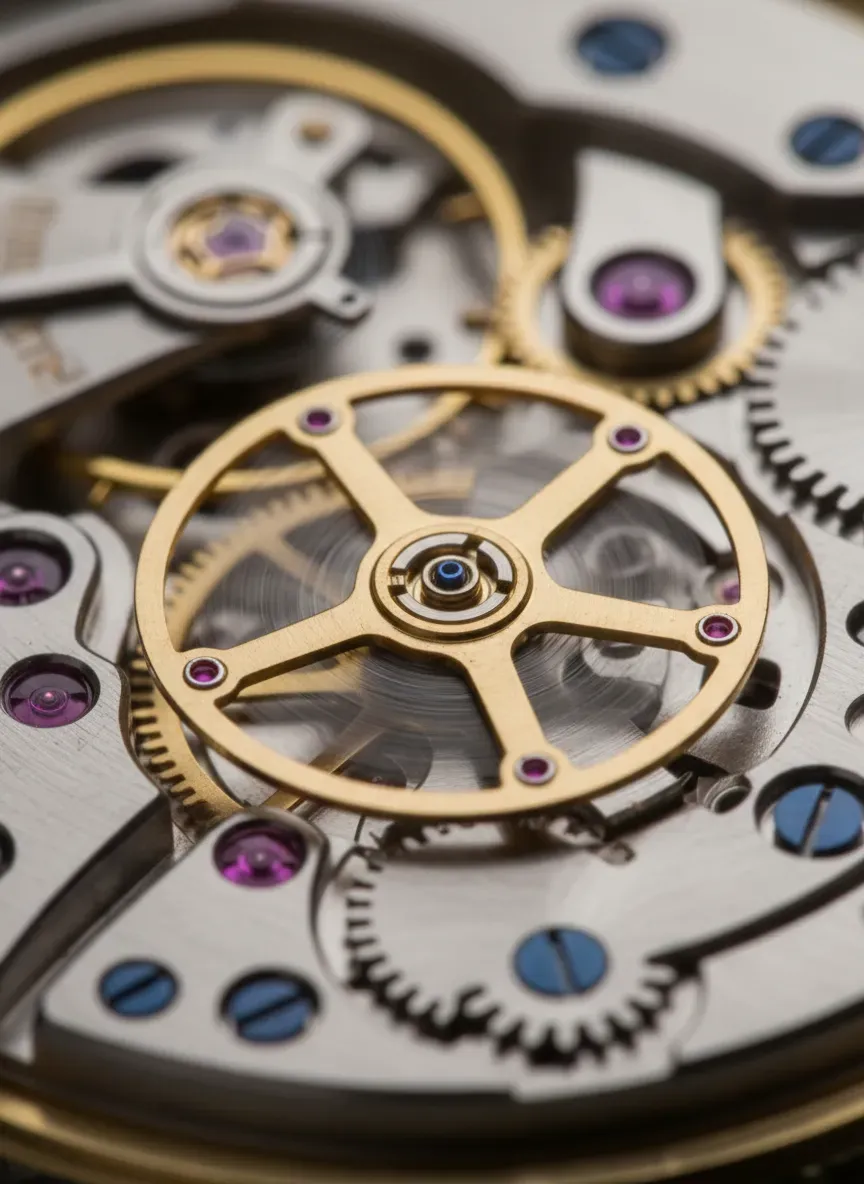
Pro Tip: Pay attention to the “beat rate” (Vibrations Per Hour or VPH). A standard workhorse movement beats at 3Hz (21,600 vph), giving the seconds hand 6 tiny ticks per second. Higher-end movements often beat at 4Hz (28,800 vph), resulting in a smoother, more hypnotic sweep consisting of 8 ticks per second.
Complications
In watchmaking, a “complication” is any function that does more than simply display the hours, minutes, and seconds.
- Date/Day-Date: The most common complication.
- Chronograph: A stopwatch function, typically featuring two or three sub-dials (registers) and pushers on the side of the case.
- GMT (Greenwich Mean Time): Features a fourth hand that rotates once every 24 hours, allowing the wearer to track a second or even third time zone simultaneously.
- Moonphase: A whimsical, highly traditional complication that displays the current phase of the moon through an aperture on the dial.
Sizing and Proportions (The Golden Rule)
Forget case diameter for a second. The most critical measurement of a watch is the Lug-to-Lug distance. This is the measurement from the very top tip of the watch where the strap attaches, down to the bottom tip.
If the lug-to-lug distance is wider than the flat surface of your wrist, the watch will overhang, look comically large, and feel incredibly uncomfortable. A 40mm watch with long, straight lugs might wear much larger than a 42mm watch with short, curved lugs that hug the wrist. Always try the watch on, and view it in a full-length mirror, not just by staring directly down at your wrist.
The Three Pillars: Building Your Collection
When buying your first piece, versatility is paramount. You want a watch that can easily transition from a Monday morning boardroom meeting to a Saturday afternoon barbecue. The community generally breaks down starter watches into three distinct archetypes.
1. The Steel Dive Watch
The diver is the undisputed king of modern horology. Characterized by robust water resistance, highly legible luminous dials, and a unidirectional rotating bezel (originally used to track oxygen time underwater), the dive watch is rugged masculinity incarnate.
You don’t need to be a scuba instructor to own one. The rotating bezel is incredibly useful for timing steaks on the grill or tracking parking meters. For an entry into this space, the Seiko Prospex SPB143 is a masterclass in vintage-inspired design. It features a stunning grey sunburst dial, a reliable in-house automatic movement, and a heritage that traces back to Japan’s very first dive watches. It looks just as good on a battle-worn NATO strap as it does on its factory steel bracelet.
2. The GADA (Go Anywhere, Do Anything) Field Watch
The GADA watch thrives on understated competence. It lacks the bulky rotating bezel of a diver, favoring a clean, legible dial, moderate proportions (usually 36mm to 40mm), and enough water resistance to survive a sudden downpour. It is the horological equivalent of a perfectly tailored navy blazer.
A prime example is the Hamilton Khaki Field Automatic. Born from a rich military pedigree, this watch features a workhorse movement with an impressive 80-hour power reserve. It is a strap monster; you can put it on distressed brown leather for a casual weekend, or switch it to a sleek black sailcloth strap for a stealthier, urban vibe.
3. The Integrated Bracelet Sports Watch
Born in the 1970s from the minds of legendary designers like Gérald Genta, the integrated sports watch is defined by a case that flows seamlessly into the bracelet without traditional lugs. It is heavily geometric, heavily textured, and absolutely dominates the current market trends.
If you want this aesthetic without paying the $50,000 premium for an Audemars Piguet Royal Oak, the Tissot PRX Powermatic 80 is the undisputed champion of entry-level luxury. The tapisserie waffle dial catches the light beautifully, and the finishing on the sharply angled case rivals watches that cost five times as much.
Brand Prestige vs. Horological Merit
Here’s the reality check you probably need to hear: In the luxury watch world, you are often paying a massive premium for the name printed on the dial.
There is a fascinating dynamic at play between brand equity and actual mechanical superiority. Some brands spend hundreds of millions of dollars on celebrity ambassadors, Formula 1 sponsorships, and glossy magazine spreads. Other brands quietly sit in the Vallée de Joux, hand-finishing movement components that no one will ever see, simply because it’s the “right” way to do things.
This dynamic becomes aggressively apparent when analyzing the perennial debate of horological giants. Do you buy the watch with the most recognizable crown logo in the world, knowing it acts as an immediate status symbol? Or do you buy from a competitor that arguably offers superior anti-magnetic technology and more intricate movement finishing for less money, simply because they don’t command the same pop-culture hysteria?
There is no wrong answer, but you must be honest with yourself about why you are buying the watch. If you are buying it to impress strangers at a dinner party, horological merit takes a backseat to brand recognition. If you are buying it to marvel at the sheer engineering prowess strapped to your wrist, you will likely find better value off the beaten path with brands like Grand Seiko, Jaeger-LeCoultre, or Nomos Glashütte.
- In-House vs. Ébauche: You’ll hear the term “in-house movement” thrown around as the ultimate marker of quality. This means the brand designed and manufactured the movement themselves. Conversely, an “ébauche” (like an ETA or Sellita) is a mass-produced movement purchased from a third-party supplier and dropped into the watch. While in-house movements carry immense prestige, they are vastly more expensive to service. A reliable ETA movement can be regulated and repaired by any competent local watchmaker for a fraction of the cost. Don’t be a snob about outsourced movements; they are the reliable V8 engines of the watch world.
The Vintage vs. Modern Dilemma
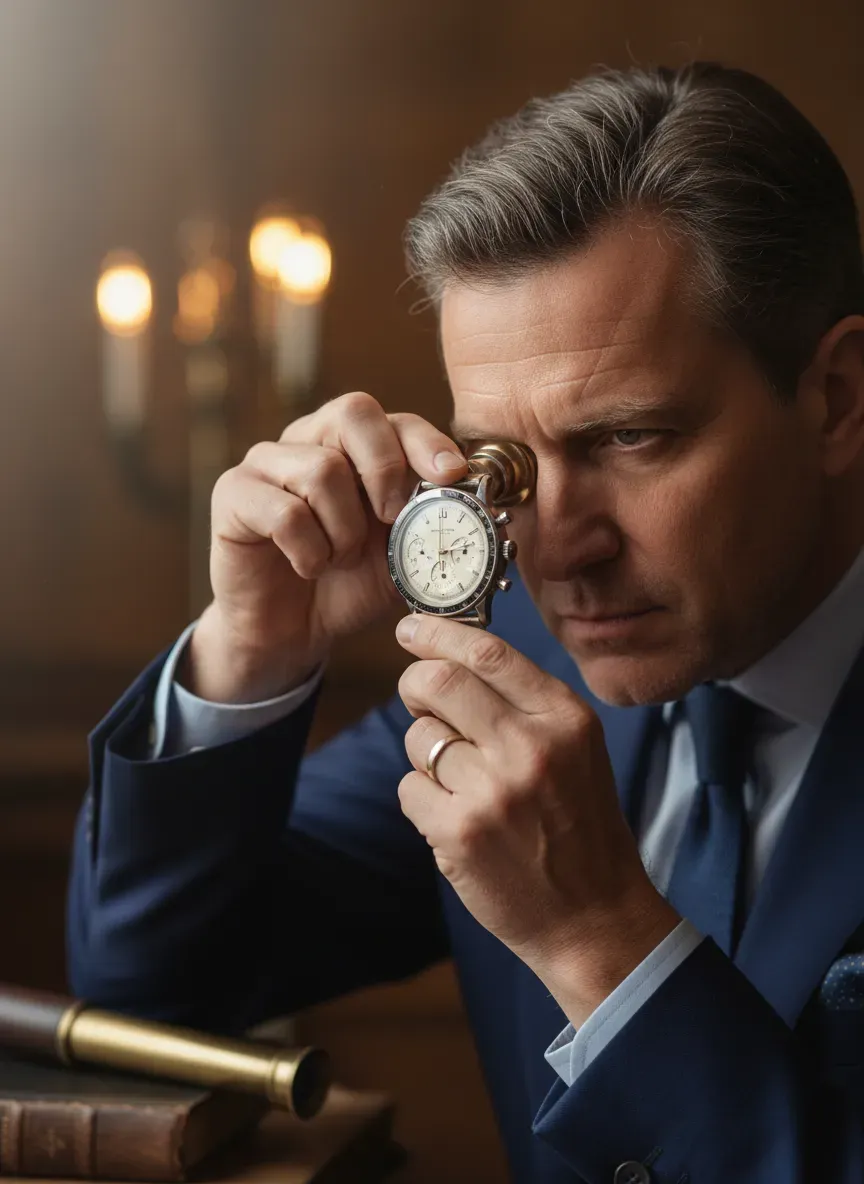
At some point in your research, you will inevitably be seduced by the allure of vintage watches. The faded, creamy tritium luminous plots. The ghosted, sun-bleached bezels. The romantic idea that the watch lived a whole life before it ever found its way to you.
I’ve personally found that buying vintage is an intoxicating thrill, but it is also a treacherous landscape for a novice.
When you buy a modern watch from an Authorized Dealer (AD), you get a pristine object with a five-year factory warranty. You know its water resistance is intact. You know the movement is freshly lubricated.
When you buy vintage, you are buying a mystery.
- Has the dial been poorly repainted (redialed)?
- Are the hands original, or replacement parts from a different decade?
- Has the case been polished so aggressively by an amateur jeweler that the sharp, factory bevels on the lugs have been smoothed into unrecognizable melted blobs?
If you are drawn to the mid-century aesthetic, I highly recommend doing exhaustive research before pulling the trigger. For instance, exploring the nuances of mid-century divers requires a deep understanding of reference numbers, correct crown shapes, and movement calibers.
If you want the vintage look without the vintage headaches, look into the “neo-vintage” market (watches from the 1990s and early 2000s) or modern re-issues. Brands like Tudor and Longines are currently dominating the industry by releasing modern, highly reliable watches that flawlessly mimic the aesthetic codes of their 1960s archives.
The Retail Battlefield: ADs, Boutiques, and the Grey Market
Where you buy your watch is almost as important as what watch you buy. The retail landscape of luxury horology is notoriously bizarre.
Authorized Dealers (ADs) and Boutiques
Buying from an AD offers total peace of mind. You get the full boutique experience: the espresso, the plush seating, the branded shopping bag, and a warranty card stamped with your name.
However, for highly coveted steel sports watches from brands like Rolex, Patek Philippe, or Audemars Piguet, the AD experience can be profoundly frustrating. You cannot simply walk in with cash and buy a Rolex Daytona. You will be placed on an “expression of interest” list (a polite term for a waitlist that may span years). To get the watch you actually want, dealers often expect you to build a “purchase history”—meaning you have to buy jewelry or less desirable watches first to prove your loyalty. It is an exclusionary game of retail politics.
The Grey Market
The grey market consists of dealers who acquire authentic, brand-new watches through unofficial channels (usually overstock from ADs in different countries) and sell them at market value.
- The Advantage: If a watch is unpopular, you can buy it on the grey market for 20% to 30% below retail price. If a watch is highly coveted (like the aforementioned Daytona), you can bypass the AD waitlist entirely and have the watch on your wrist tomorrow—provided you are willing to pay double or triple the retail price.
- The Catch: Grey market watches do not come with a factory warranty. You are relying entirely on the warranty provided by the grey market dealer themselves.
Pro Tip: If you decide to buy pre-owned or grey market, “Buy the Seller, Not the Watch.” Only transact with highly reputable platforms with ironclad authenticity guarantees and return policies, such as Chrono24 (using their Escrow service), Bob’s Watches, or Crown & Caliber. Never wire money to a stranger on a forum.
Avoiding First-Time Buyer Pitfalls
I’ve watched countless friends make the exact same mistakes when buying their first serious timepiece. Let’s triage these errors before you make them.
1. Ignoring the Hidden Cost of Maintenance
A mechanical watch is a high-performance machine. The oils inside the escapement eventually dry up, and the friction between the microscopic gears increases. Every 5 to 7 years, your watch requires a full overhaul. A watchmaker will completely disassemble the movement, clean every individual component in an ultrasonic bath, re-lubricate the jewels, regulate the timing, and replace all the rubber gaskets to ensure water resistance.
This is not cheap. A standard three-hand automatic watch might cost $300 to $500 to service. A luxury chronograph from a high-end Swiss house can easily cost $800 to $1,500 just for standard maintenance. Factor these running costs into your long-term budget.
2. The Obsession with “Investment” Value
Social media has poisoned the well by convincing newcomers that luxury watches are an asset class akin to real estate or index funds. Listen carefully: Do not buy a watch as a financial investment.
Yes, certain steel Rolex, Patek, and AP models appreciate in value. But they are the exception, not the rule. The vast majority of luxury watches lose 15% to 30% of their retail value the exact moment you walk out of the boutique doors. Buy a watch because you love the design, you respect the engineering, and you want to wear it. If it happens to hold its value, consider that a pleasant bonus, not a baseline expectation.
3. Fearing the Scratches
The first scratch on a polished steel bezel is going to break your heart. It’s inevitable. You’ll graze a door frame or drag your wrist across a laptop chassis, and there it is—a permanent scar on your flawless luxury item.
Embrace it. Watches that sit in dark velvet safes, perfectly pristine, are tragic. A watch is meant to be worn. Those micro-abrasions and scuffs (often referred to as “desk diving” marks on the clasp) are the patina of a life well-lived. They make the watch uniquely yours.
Key Takeaways for the Novice Collector
- Patience is paramount: Never buy on impulse. If you fall in love with a watch, wait two weeks. If you still obsess over it, then pull the trigger.
- Try before you buy: Specs on paper lie. A 42mm titanium watch feels drastically different on the wrist than a 42mm solid gold watch.
- Focus on versatility: For your first major piece, choose a dial color (black, white, or navy) and a case design that pairs just as easily with a tailored suit as it does with denim and a t-shirt.
The Bottom Line
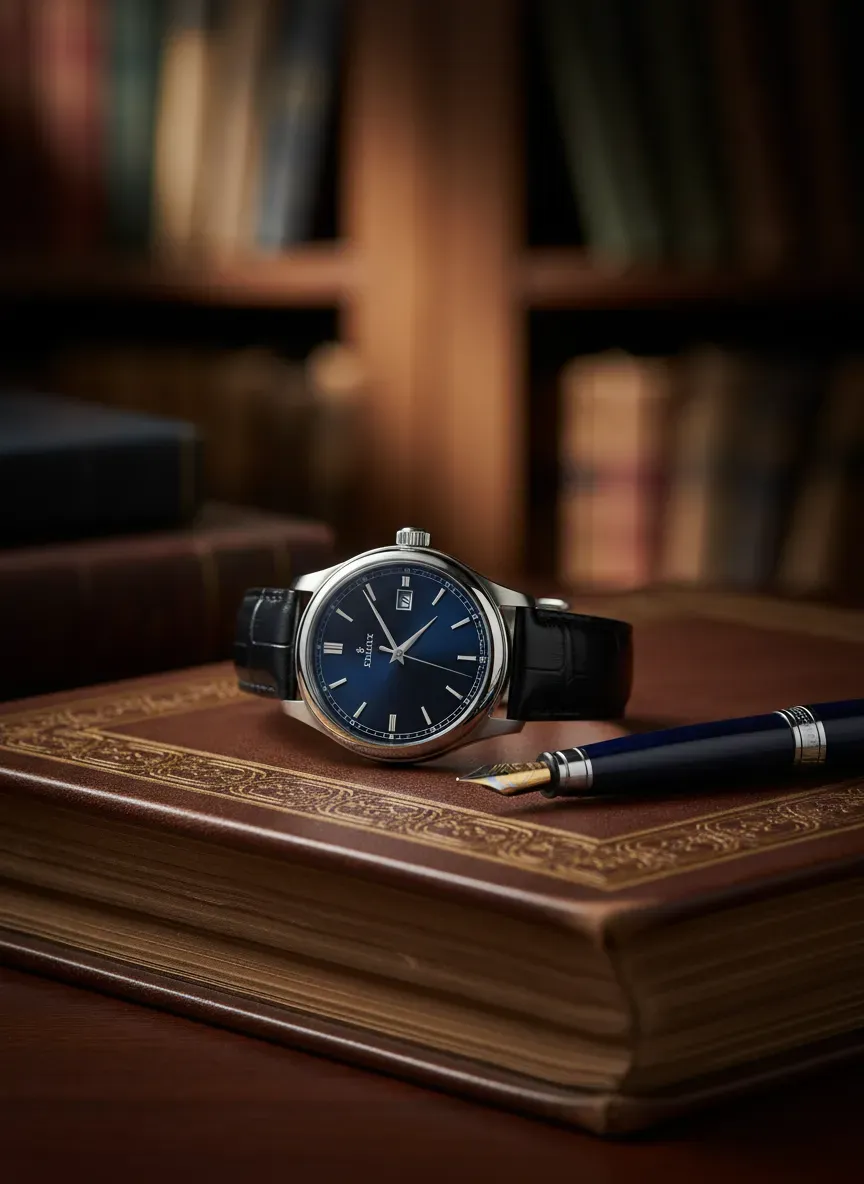
Acquiring your first luxury timepiece is a deeply personal milestone. It is a rejection of planned obsolescence and a celebration of enduring craftsmanship. Whether you opt for a rugged, sand-blasted field watch to accompany you on weekend hikes, or a razor-sharp, integrated sports watch that flashes brilliantly under the city lights, ensure the piece resonates with your actual lifestyle, not just an idealized version of it.
Do your research, respect the heritage of the brands, but ultimately trust your own visceral reaction. When you finally clasp that bracelet around your wrist and feel the rotor spin to life, you’ll understand exactly why this bizarre, anachronistic hobby captures the hearts of millions. Wear it in good health, let it absorb the stories of your life, and maybe, just maybe, prepare to pass it on to someone who will appreciate it just as much as you do.