COSC Certification: Is Chronometer Accuracy Worth the Cost?
Is the premium for a COSC chronometer justified? We break down certification standards, sizing, and the rise of luxury quartz.
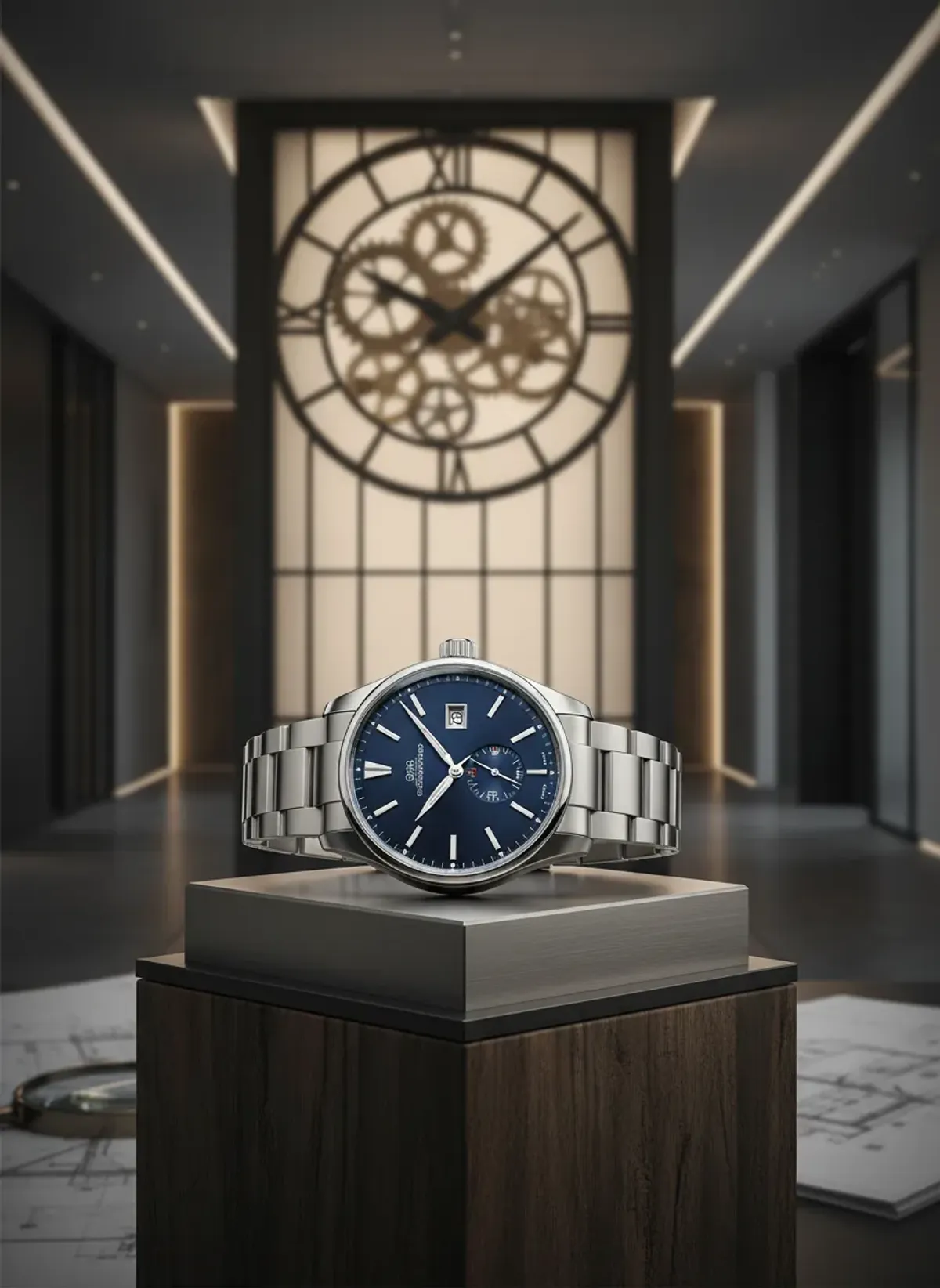
For the vast majority of collectors, COSC certification is worth the cost if you prioritize horological pedigree, resale value stability, and the guarantee of a movement rigorously tested to perform within -4/+6 seconds per day. While modern manufacturing allows many non-certified watches to keep excellent time, paying for a Chronometer ensures a third-party verification of quality control that standard movements simply do not offer. Ultimately, the premium you pay is for consistency and the peace of mind that your mechanical engine is operating at the peak of industrial standards, rather than just “good enough.”
Beyond the Movement: The Geometry of a Perfect Fit
Before we dive deep into the oscillation rates and temperature deviations of a Certified Chronometer, we need to address the elephant in the room. Or rather, the elephant on the wrist. You could wear the most precise, COSC-certified engineering marvel on the planet, but if the lugs overhang your wrist bone, the watch fails its primary directive: to look good while telling time.
Precision in watchmaking isn’t limited to the gear train. It applies to geometry.
Many online buyers get hung up on the “Case Diameter” spec. They see “42mm” and panic, or see “36mm” and assume it’s too small. This is a rookie mistake. The single most critical metric for how a watch wears is not the diameter—it is the lug-to-lug distance.
The Golden Ratio of Wrist Mechanics
Think of the case diameter as the screen size of a TV, but the lug-to-lug distance as the width of the entertainment center it sits on. The lug-to-lug measurement is the length from the very tip of the top lug to the tip of the bottom lug.
If you are looking to start a collection, perhaps eyeing one of the top 10 entry-level luxury watches for beginners, you need to know your limits.
How to Measure Your Wrist: Do not guess. Take a soft measuring tape (or a piece of string and a ruler). Wrap it around the part of your wrist where the watch sits—usually just behind the pisiform bone (that bony bump on the outside of your wrist).
- Small Wrists (6.0 - 6.5 inches): You are generally safe with a lug-to-lug of under 46mm. This usually correlates to case diameters of 34mm to 38mm.
- Medium Wrists (6.75 - 7.25 inches): The sweet spot. You can pull off lug-to-lug measurements up to 50mm. This opens the door to the standard 40mm and 42mm divers.
- Large Wrists (7.5+ inches): You have the real estate for 52mm+ lug-to-lug spans. Panerai and IWC Big Pilots are in your wheelhouse.
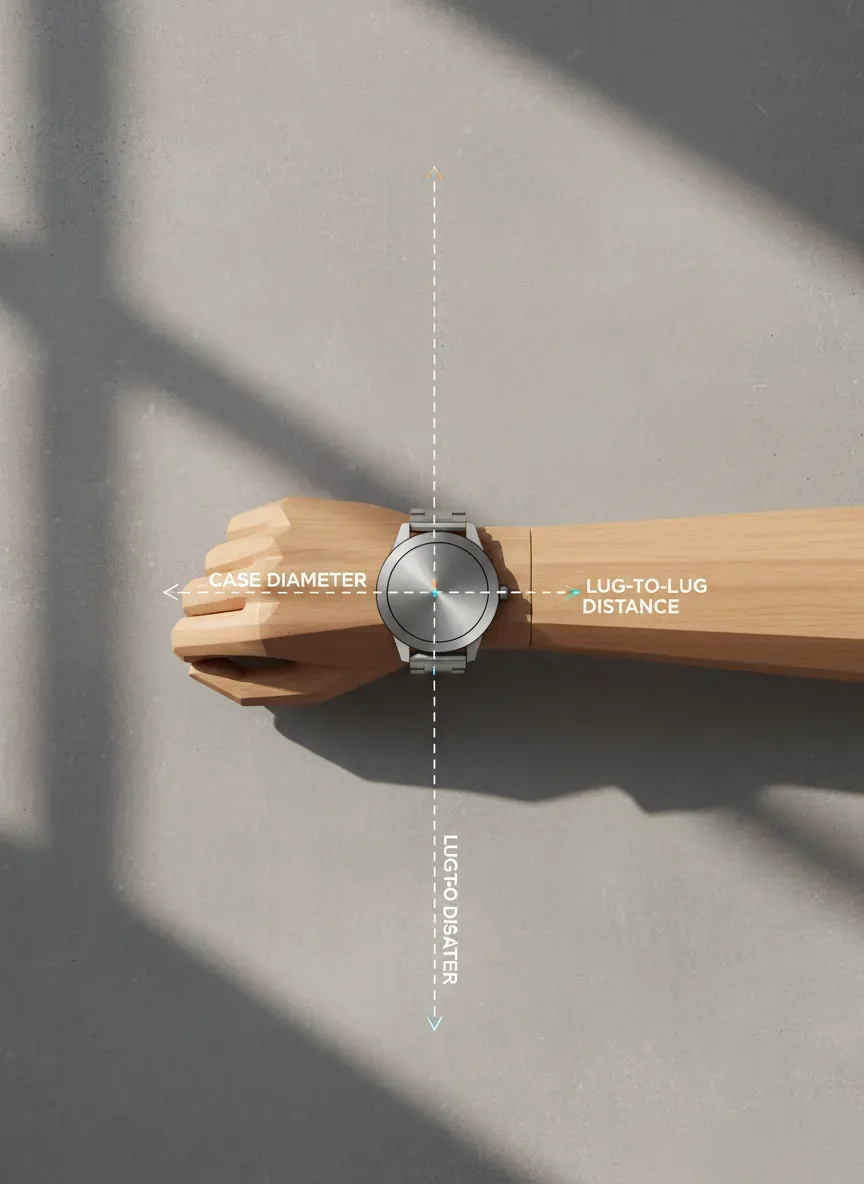
A watch that stays within the boundaries of your wrist looks tailored. A watch that extends past the edges looks like you are wearing your father’s timepiece. It’s about visual weight. A 39mm watch with long, straight lugs can wear larger than a 42mm watch with short, curved lugs.
If you are buying online without trying it on, hunt for that lug-to-lug number. It is the secret handshake of the informed buyer.
For those needing to measure their current collection to find their preference, a digital caliper is indispensable. Mitutoyo 500-196-30 Advanced Onsite Sensor (AOS) Absolute Scale Digital Caliper
The COSC Standard: Technical Analysis for the Collector
Now that the watch fits, let’s talk about what makes it tick—literally.
You see the word “Chronometer” on a dial. It sounds fancy. It sounds expensive. But what does it actually mean? In the Swiss watch industry, this isn’t just a marketing buzzword; it is a legal definition protected by the Contrôle Officiel Suisse des Chronomètres (COSC).
The Gauntlet of 15 Days
To earn the right to print “Chronometer” on the dial, a movement (uncased, which is an important distinction) is sent to one of the COSC laboratories. There, it undergoes a torture test that would break lesser machines.
The testing protocol, governed by ISO 3159, lasts for 15 consecutive days and nights. The movements are tested in five different positions (3 o’clock, 6 o’clock, 9 o’clock, dial up, dial down) and at three different temperatures (8°C, 23°C, and 38°C).
For a standard mechanical caliber, gravity is the enemy. It pulls on the balance wheel differently depending on how the watch is resting. A watch might run fast when lying flat on your nightstand but lose time when hanging vertically on your wrist while you walk.
A COSC movement must maintain an average daily rate of -4/+6 seconds.
To put that in perspective:
- There are 86,400 seconds in a day.
- A deviation of 5 seconds is an accuracy rate of 99.994%.
- A standard, non-certified automatic movement might drift by -15/+25 seconds a day.
Does This Matter for an Entry-Level Collector?
Here is the brutal truth: If you change your watch every day, COSC doesn’t matter much. If you pick up a watch you haven’t worn in three days, it will be dead anyway, and you’ll have to reset it.
However, if you are looking for a “daily driver”—a watch that stays on your wrist for weeks at a time—that accuracy drifts adds up. A standard watch losing 20 seconds a day is off by over two minutes by the end of the week. That’s the difference between catching your train and watching it leave. A COSC watch might only be off by 30 seconds after that same week.
When comparing brands, this certification is often the tie-breaker. For instance, when looking at the battle of Tag Heuer vs. Longines, you will notice that Longines aggressively certifies its Spirit collection, offering Chronometer specs at a price point where Tag Heuer often relies on standard Calibre 5 movements. It’s a value proposition that technical geeks adore.

The Competitors: METAS and Superlative
COSC is the baseline, not the ceiling. Because COSC tests movements outside of the case, some brands argue it doesn’t reflect real-world usage.
- Rolex Superlative Chronometer: Rolex sends movements to COSC, gets them certified, puts them in the case, and then tests them again in-house to a much stricter -2/+2 seconds per day.
- METAS (Master Chronometer): Championed by Omega and now Tudor, this tests the cased watch for accuracy (0/+5 seconds), water resistance, and massive magnetic resistance (15,000 gauss).
For an entry-level collector, these higher standards usually command a much higher price tag. COSC remains the sweet spot of “high performance” without the “luxury tax” of a Master Chronometer.
If you are looking for an affordable entry into the world of COSC, Tissot remains the undefeated champion of value. Tissot Le Locle Powermatic 80 COSC
The Quartz Revolution: A Reissue Reborn
While we obsess over mechanical accuracy, there is an irony in the luxury world. The most accurate watches aren’t mechanical at all. They are quartz. And for a long time, “quartz” was a dirty word in high-end collecting circles. It implied cheap, disposable, and soulless.
That narrative has shifted violently in the last few years.
We are witnessing the “Revenge of the Quartz,” driven largely by 1970s nostalgia and the realization that a grab-and-go watch has immense utility in a modern man’s wardrobe.
The Integrated Bracelet Phenomenon
The catalyst for this shift was the reissue of 1970s integrated bracelet sports watches. The aesthetic—angular cases, tapisserie dials, sharp faceting—was popularized by the Audemars Piguet Royal Oak. But mere mortals cannot drop $50,000 on a steel sports watch.
Enter the heritage reissue. Brands dug into their archives and found gold.
The most prominent example is the Tissot PRX. Based on a Seastar model from 1978, Tissot relaunched it with a quartz movement first. It was an instant sensation. Why? Because it offered the look of high luxury for a few hundred dollars.
Why Quartz became “Cool” Again
For the fashion-conscious gentleman, the movement is secondary to the vibe. A quartz reissue allows you to tap into the “retro-chic” aesthetic without the hassle of servicing a mechanical movement or winding it every time you want to wear it.
It also solves the thickness issue. Quartz movements are slim. This allows for case profiles that slide effortlessly under a dress shirt cuff, hugging the wrist in a way chunky automatic divers simply cannot.
This resurgence isn’t limited to the big players. If you dig into some of the 7 underrated luxury brands, you’ll find that many are utilizing high-accuracy quartz or “Mecha-quartz” to offer vintage styling at accessible price points. Cartier, for example, has seen massive success with the SolarBeat Tank, proving that even the highest tier of luxury isn’t afraid of a battery.
The modern collector realizes that a collection isn’t binary. You don’t have to choose between a COSC mechanical diver and a stylish quartz sports watch. A balanced collection needs both: the soul of the machine and the precision of the electron.

For those wanting to jump on the integrated bracelet trend that defines current watch fashion: Tissot PRX Quartz 40mm Blue Dial
The Verdict on Value
So, is COSC worth it?
If you view watches as tiny, autonomous mechanical organisms that rely on you for life, then yes. The COSC certificate is a diploma. It proves the watch graduated at the top of its class. It verifies that the engineering inside is capable of battling gravity and temperature to keep you on time.
But if you are driven by style, fit, and the practicality of daily wear, the letters “COSC” on the dial are just one factor among many. A watch that fits your wrist perfectly (remember the lug-to-lug!) or captures a specific era of design (long live the quartz crisis!) can offer just as much satisfaction as a certified chronometer.
The best watch isn’t always the most accurate one. It’s the one you never want to take off.