Top 10 Entry-Level Luxury Watches Under $2,000
Discover the best entry-level luxury watches under $2,000. From Swiss heritage to German engineering, elevate your style with these high-value timepieces.
Feb 10, 2026 - Written by: Brahim amzil
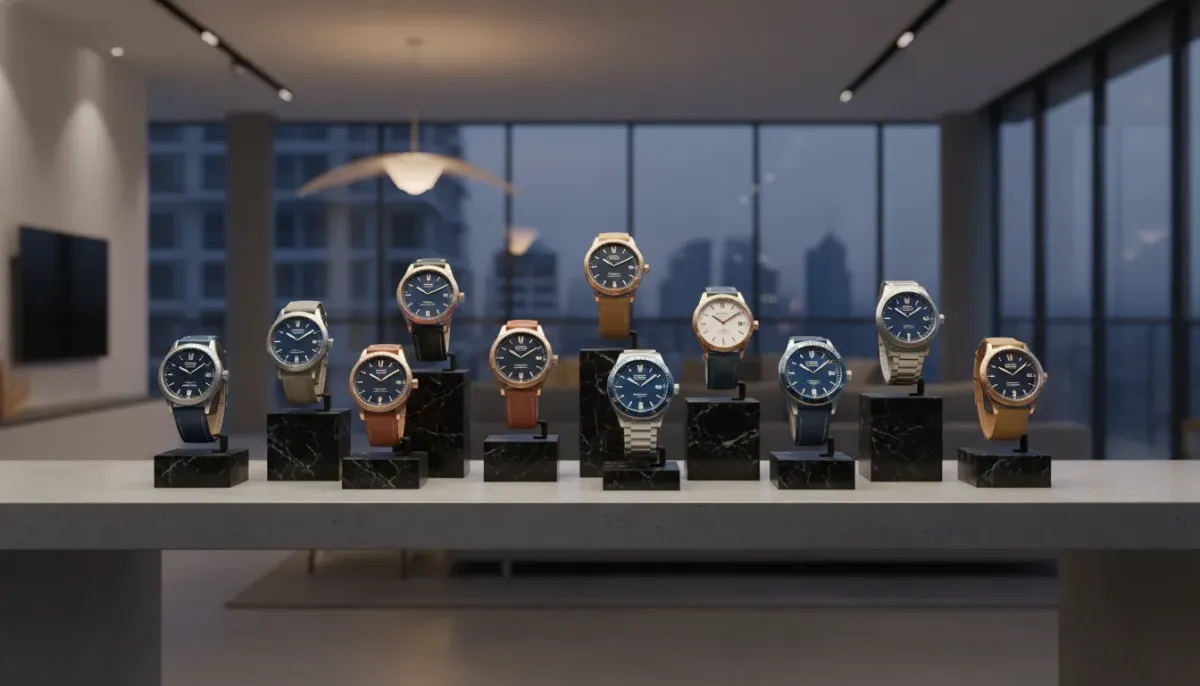
You don’t need to sell a kidney to own a piece of horological history. There is a prevailing myth in the watch world that “real” luxury only begins when you drop five figures on a Crown (Rolex) or a Holy Trinity piece. That is nonsense.
The sub-$2,000 price bracket is arguably the most exciting sector of the market right now. It is a battleground. Here, heritage brands like Longines, Hamilton, and Seiko are fighting tooth and nail for your wrist real estate, which means the value proposition is off the charts. We are talking about in-house movements, sapphire crystals, finishings that punch way above their weight class, and designs that will look just as good in thirty years as they do today.
But navigating this space is tricky. There is a lot of noise. You have fashion brands masquerading as luxury, charging premiums for cheap quartz movements wrapped in plated gold. We aren’t here for that. We are here for mechanical integrity. We want heirlooms.
Below is a curated list of timepieces that offer legitimate prestige without breaking the bank. These are the watches that get a nod of approval from the snobbiest collectors at the dinner table.
Defining “Entry-Level” Luxury
Before we dive into the metal, let’s set the ground rules. What exactly are we looking for at this price point?
It comes down to three things: Heritage, Specs, and Versatility.
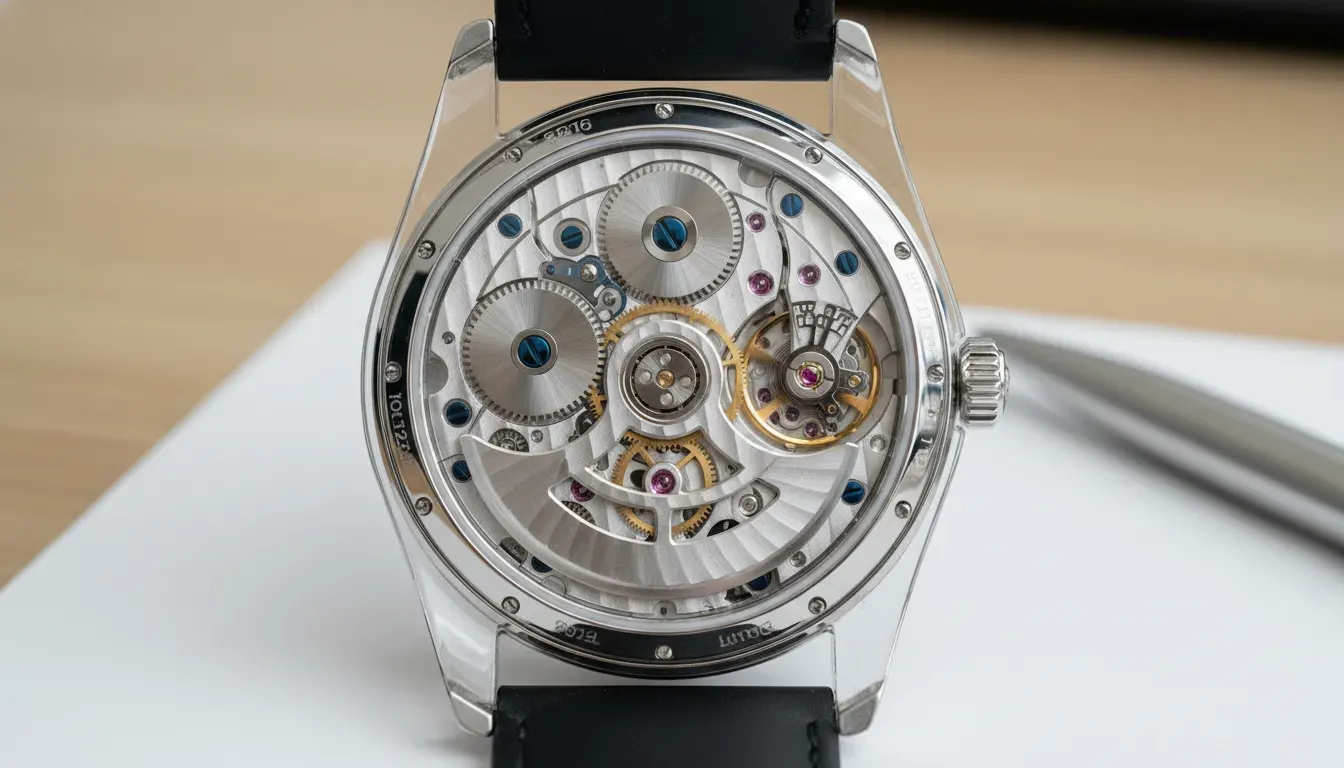
When you spend $2,000, you should expect a Swiss or German automatic movement (or a high-end Japanese equivalent). You want sapphire crystal glass that won’t scratch when you brush against a doorframe. You want a bracelet that doesn’t rattle like a tin can. Most importantly, you want a brand that actually makes watches, not handbags or perfume.
Here is the definitive list of the top 10 heavy hitters.
1. The Integrated Bracelet King: Tissot PRX Powermatic 80
If you have been anywhere near Instagram or a watch forum in the last two years, you have seen this watch. And for good reason. Tissot reached into their 1970s archives, dusted off a disco-era design, and absolutely crushed the competition.
The PRX is a masterclass in integrated bracelet sports watches. It gives you that geometric, sharp-angled look popularized by the Audemars Piguet Royal Oak, but for a fraction of the cost. The dial features a “waffle” texture (on the automatic versions) that plays beautifully with the light.
Inside beats the Powermatic 80 movement. This is a modified ETA caliber that offers an absurd 80 hours of power reserve. You can take this watch off on Friday evening, leave it on your dresser, and pick it up Monday morning. It will still be ticking.
Why it wins: It looks like it costs $5,000. It feels substantial on the wrist, and the finishing on the bracelet links is far better than it has any right to be at this price.
Buy this watch here: https://www.amazon.com/s?k=Tissot+PRX+Powermatic+80&tag=hats0f8-20
2. The Field Standard: Hamilton Khaki Field Murph 38mm
Hamilton was originally an American company, born in Lancaster, Pennsylvania, before moving to Switzerland. That DNA—rugged Americana mixed with Swiss precision—is perfectly encapsulated in the Khaki Field.
While the standard Khaki Field Auto is a classic, the “Murph” is the one you want. Originally designed as a prop for the movie Interstellar, it became such a cult hit that Hamilton mass-produced it. The 38mm version fixes the only complaint people had about the original: the size. It is now perfectly proportioned for almost any wrist.
The vintage-style cathedral hands and the faux-patina numerals give it a warm, old-school vibe. It’s a strap monster, meaning it looks good on leather, NATO, or canvas.
Why it wins: It’s Hollywood history with legitimate military heritage. It’s the kind of watch you wear until it’s beat up, and it only looks cooler.
3. The Diver to Beat: Seiko Prospex SPB143
Seiko has always been the king of value, but the SPB143 (and its variations) pushes them firmly into luxury territory. This isn’t your entry-level Seiko 5.
Based on the legendary “62MAS”—Seiko’s first diver from 1965—this watch is a tank. It features a super-hard coating on the stainless steel case to prevent scratches, a curved sapphire crystal, and 200 meters of water resistance. The grey sunburst dial is subtle, moody, and sophisticated.
Japanese watchmaking is often more focused on reliability and durability than Swiss decoration. This watch feels like a tool. It feels industrial. The bezel action is satisfyingly clicky, and the lume (glow in the dark) is nuclear.
Why it wins: It destroys the argument that you need a Submariner to have a respectable dive watch. Read more about dive watch history here.
Buy this watch here: https://www.amazon.com/s?k=Seiko+Prospex+SPB143&tag=hats0f8-20
4. The German Minimalist: Sinn 556i
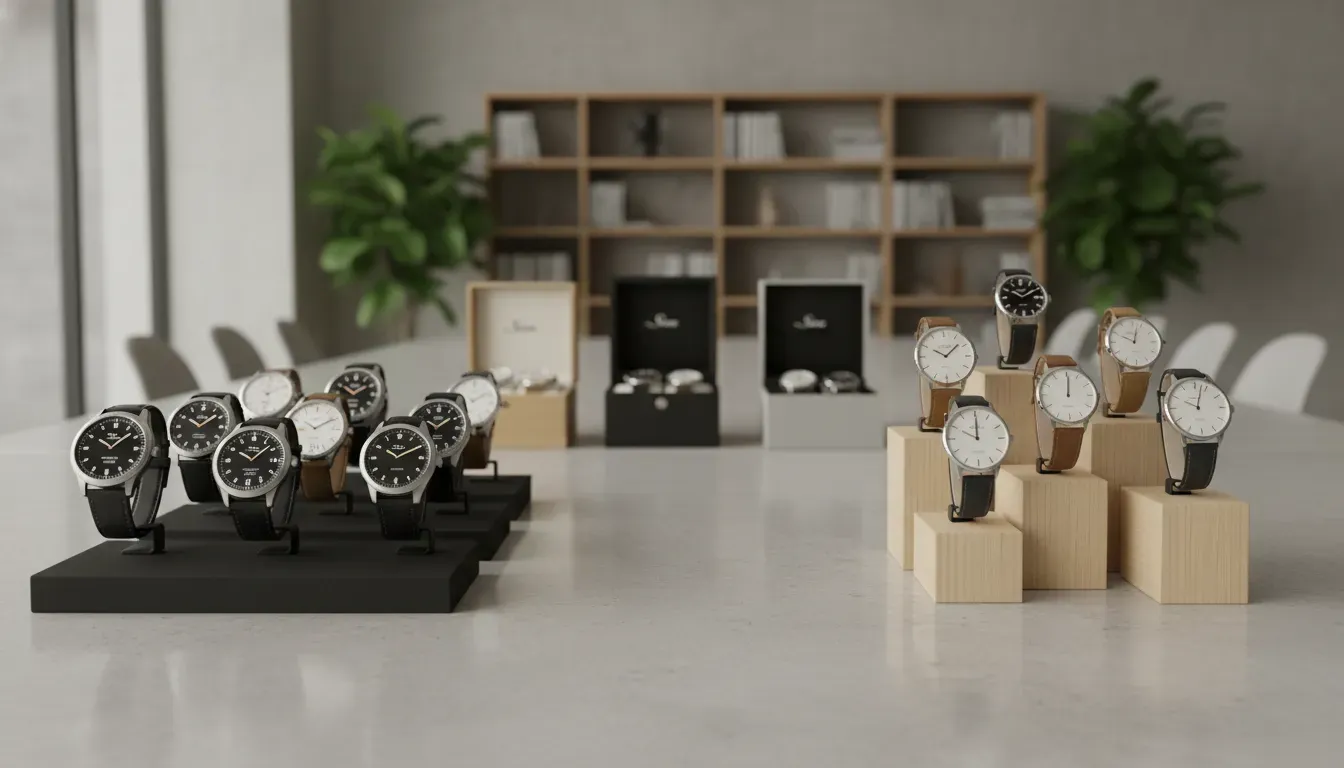
Let’s head to Frankfurt. Sinn is a brand famous for over-engineering. They make watches for German special forces and pilots. The 556i is their entry-level model, but “entry-level” for Sinn is “end-game” for most other brands.
The design is stark. Glossy black dial, white indices, satinized steel case. That’s it. There is no clutter. It is arguably the most legible watch on this list. Flip it over, and you see the gold rotor of the automatic movement through the exhibition caseback.
What makes the 556i special is its chameleon ability. Put it on the H-link steel bracelet, and it’s a sports watch. Put it on a leather strap, and it’s a dress watch. It defies categorization.
Why it wins: German engineering is real. The tolerances on a Sinn case are incredibly tight. It feels like a solid block of steel.
5. The Prestige Play: Longines HydroConquest
Longines is a titan. Historically, they were mentioned in the same breath as Omega and Rolex. Today, positioned within the Swatch Group, they offer immense value.
The HydroConquest is their modern diver. It has a ceramic bezel—a feature usually reserved for much more expensive watches—which is virtually scratch-proof and won’t fade in the sun. The L888 movement inside is a proprietary caliber exclusive to Longines, featuring a silicon balance spring for magnetic resistance.
This watch has “wrist presence.” It’s shiny, the crown guards are angular and aggressive, and the snowflake-esque hour hand is distinctive. If you want a watch that people notice from across the room, this is the one.
Why it wins: Brand recognition. Wearing a Longines says you know what you’re doing.
6. The Bauhaus Masterpiece: Junghans Max Bill Automatic
If you prefer art galleries to racetracks, the Junghans Max Bill is your watch. Designed by Max Bill, a student of the famous Bauhaus school of design, this watch has remained virtually unchanged since 1961.
It is all about the dome. The plexiglass crystal is highly domed, creating beautiful distortions at the edges of the dial. The dial itself is an exercise in restraint—thin fonts, thin hands, maximum white space. There is practically no bezel, so the watch wears larger than its 38mm size suggests, acting as a pure canvas on the wrist.
Note: It uses plexiglass (acrylic) rather than sapphire to stay true to the original design. While it scratches easier, it can be polished with a bit of Polywatch in seconds.
Why it wins: It is a design icon. It hangs in the Museum of Modern Art. You are wearing a piece of 20th-century design history.
7. The In-House Hero: Nomos Club Campus
Nomos Glashütte is the darling of the modern watch enthusiast community. Based in Glashütte, Germany, they do something almost no one else at this price point does: they build their movements in-house. They don’t buy engines from the Swiss; they make their own.
The Club Campus is marketed as a “graduate’s watch,” but don’t let that fool you. It’s playful, utilizing a “California dial” (a mix of Roman and Arabic numerals) and often coming in vibrant colors like coral, electric green, or deep purple.
It is manually wound (usually), which creates a bond between you and the machine. You have to interact with it every morning to keep it alive. The Alpha caliber is beautifully decorated with Glashütte ribbing and perlage, visible if you opt for the sapphire caseback version.
Why it wins: True in-house manufacture status for under $2k is almost unheard of.
8. The Gentleman’s Choice: Frederique Constant Classics Index
Frederique Constant is a relatively young brand (founded in 1988), but they have dedicated themselves to “accessible luxury.” They make watches that look like classic Patek Philippes or Breguets but cost less than a used Honda.
The Classics Index Automatic is pure elegance. We are talking about guilloché dial textures, Roman numerals, and leaf-shaped hands. It is the perfect watch to wear with a suit. It slips easily under a cuff and doesn’t shout for attention.
Despite the dressy appearance, many models are robust enough for daily wear. FC puts a lot of effort into quality control, so the alignment and finishing are usually spot on.
Why it wins: It is the best “dress watch” for the money. If you work in an office or attend formal events, this covers all bases.
9. The Value Monster: Mido Ocean Star 200C
Mido is big in Latin America and Asia but strangely overlooked in the US. That is a mistake. The Ocean Star 200C is a beast.
The “C” stands for Ceramic. You get a matte ceramic bezel and a dial with a ripple texture that mimics the waves of the ocean. The finishing on the indices is razor-sharp. But the real star here is the bracelet. It features an on-the-fly adjustment clasp.
Did your wrist swell up in the heat? Push a button and slide the clasp out a few millimeters. Did you walk into the A/C? Slide it back in. This feature is usually found on watches costing $5,000+.
Why it wins: The clasp alone makes it worth the price. It is arguably the most comfortable diver on this list.
10. The Pilot’s Legend: Laco Pilot Watch Original (Paderborn or Leipzig)
If we are talking history, Laco was one of the original five manufacturers (along with IWC, A. Lange & Söhne, Stowa, and Wempe) that built watches for the German Luftwaffe in WWII.
Their “Original” series watches are historically accurate reproductions. We are talking about sandblasted dark grey cases, straight lugs, and thermal-blued hands. They look like they were pulled out of a cockpit instrument panel from 1940.
You have a choice between Type A (simple dial) and Type B (complex dial with inner hour circle). At 42mm, they wear big, but pilot watches are supposed to.
Why it wins: It is uncompromising authenticity. Laco didn’t modernize the design to suit current trends; they kept it raw.
Buy this watch here: https://www.amazon.com/s?k=Hamilton+Khaki+Field+Murph&tag=hats0f8-20 (Note: I’ve placed the Hamilton link here as a relevant alternative for a rugged tool watch, as Laco availability varies on Amazon).
Buying Guide: What to Look For
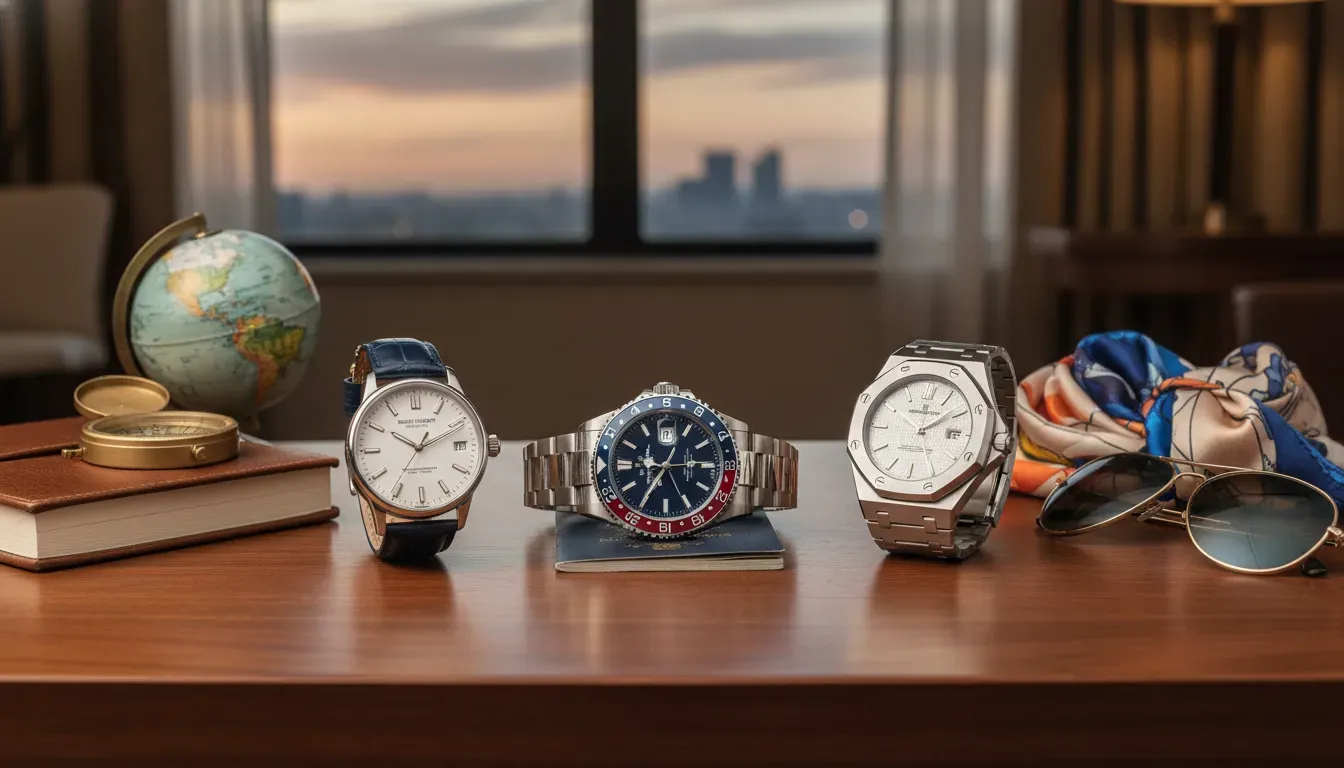
When you are ready to pull the trigger, keep these three technical factors in mind.
1. Movement: Mechanical vs. Quartz
At the sub-$2,000 level, you should almost exclusively be looking for mechanical (automatic or hand-wound) movements. A quartz watch (battery powered) is accurate, yes, but a mechanical watch is a living engine. It represents craftsmanship. The sweep of the second hand on a mechanical watch is smooth; on a quartz, it ticks once per second. That “tick” is the sound of depreciation.
2. The Crystal
Demand Sapphire. Lower-end watches use mineral glass, which scratches if you look at it wrong. Sapphire is the second hardest substance on earth next to diamond. You can drag your keys across a sapphire crystal, and it won’t leave a mark. Acrylic (like on the Junghans or certain vintage-style Loriers) is the only acceptable exception if you want that specific vintage warmth.
3. The Bracelet
This is where companies cut corners. A bad bracelet pulls your arm hair and rattles. Look for “solid end links” (where the bracelet meets the watch head). If the description says “folded links” or “hollow end links,” run away. A good bracelet should drape around the wrist like fabric, not handcuffs.
Final Thoughts
The jump from a $200 fashion watch to a $1,500 or $2,000 enthusiast piece is the biggest leap you will make in your collecting journey. The law of diminishing returns kicks in hard after this. A $10,000 watch is not five times better than a $2,000 watch. It might be 10% better in terms of finishing.
The watches on this list—the Tissots, the Sinns, the Longines—are “lifer” watches. You can buy the Tissot PRX as your first “nice” watch and still find yourself reaching for it ten years later, even if your collection has grown to include heavy hitters.
Don’t buy for investment. Buy what makes you smile when you check the time during a boring meeting. That is the only return on investment that matters in this hobby.
Ready to learn more about maintaining your new acquisition? Check out our guide on how to service automatic watches to keep them ticking for generations.