Leather Strap vs. Steel Bracelet: Choosing Your Look
Leather or Steel? We break down the durability, comfort, and style differences to help you decide which watch band suits your lifestyle.
Feb 13, 2026 - Written by: Brahim amzil
You’ve spent weeks, maybe months, obsessing over the dial. You know the movement caliber by heart. You’ve measured your wrist to the millimeter to ensure the lug-to-lug distance is perfect. But then comes the decision that actually determines how often you’ll wear the thing: the band.
It’s the great divide in the horological world. On one side, you have the industrial, architectural permanence of the stainless steel bracelet. On the other, the organic, warm, old-world charm of a leather strap.
Choosing between them isn’t just about aesthetics; it’s about utility, comfort, and the message you want to send when you walk into a room. Are you James Bond diving into the ocean, or a minimalist architect drafting plans in a studio? Sometimes, you’re both. But your watch usually has to pick a side.
We are going to strip this debate down to the studs—examining how these materials age, how they feel after fourteen hours on the wrist, and what they say about your personal style.
The Battle of Durability: Weathering the Storm vs. Aging Gracefully
When we talk about durability, we aren’t just asking “will it break?” We are asking how it handles the chaos of daily life. Water, sweat, door frames, and desk diving are the enemies here.
Stainless Steel: The Tank on Your Wrist
If your life involves sudden downpours, high humidity, or the occasional accidental collision with a stucco wall, steel is your insurance policy. There is a reason dive watches—tools designed to survive the crushing pressure of the deep—almost exclusively come on steel bracelets.
High-grade 316L or 904L stainless steel is essentially impervious to the elements. You can swim with it. You can shower with it (though the steam isn’t great for the watch gaskets, the bracelet won’t care). You can sweat profusely during a summer heatwave, and a quick rinse under the tap brings it back to showroom condition.
But steel has an Achilles heel: scratches.
The mirror-polished center links of a bracelet are magnets for hairline scratches. We call them “desk diving” marks—the scuffs that accumulate on the clasp from typing on a laptop or dragging your wrist across a table. While steel doesn’t break, it does scar. However, these scars can often be polished out, returning the metal to a near-pristine state.
If you are looking to maintain your bracelet, having the right gear is non-negotiable. A simple slip with a screwdriver can gouge the lugs. I highly recommend picking up a Bergeon Spring Bar Tool. It’s the industry standard for a reason—it allows you to swap or adjust bracelets without looking like you attacked your watch with a hacksaw.
Leather: The Patina Factor and Vulnerability
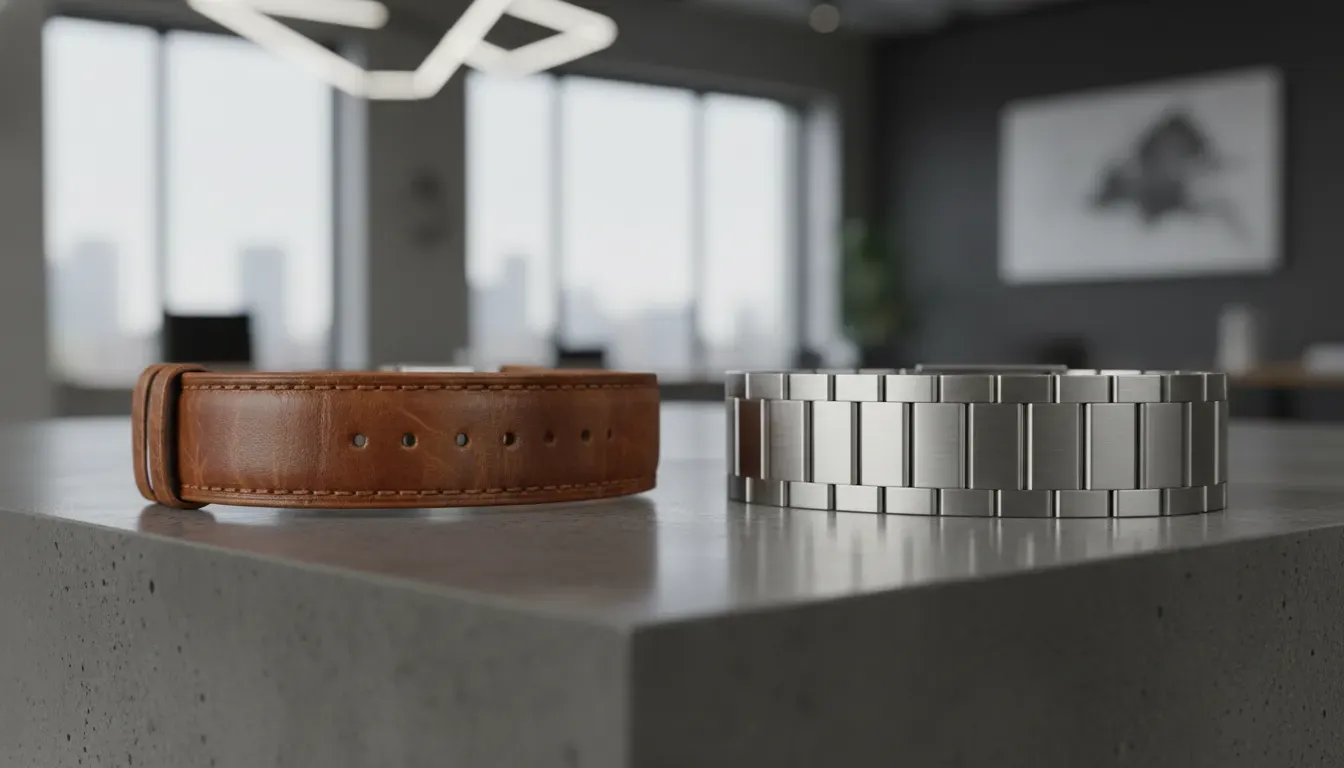
Leather is skin. Like your own skin, it reacts to the environment. It burns, it cracks, and it stains. If you jump into a pool wearing a fine calfskin strap, you have essentially ruined it. Water causes leather to warp and, eventually, rot.
But there is a romance to this vulnerability.
Leather doesn’t just get old; it develops a patina. That tan leather strap might darken into a rich chestnut over a year of wear. It picks up oils from your skin and marks from your life, becoming entirely unique to you. This is the concept of wabi-sabi—finding beauty in imperfection.
However, from a purely functional standpoint, leather is a “consumable.” Unlike a steel bracelet which can outlive you, a leather strap has a lifespan. Depending on how much you sweat and the climate you live in, you might be replacing that strap every 12 to 24 months.
Comfort Wars: Sweat, Weight, and The “Break-In” Period
You can have the most beautiful watch in the world, but if it pulls your arm hair or feels like a damp rag against your wrist, it’s going to end up in the drawer. Comfort is subjective, but the physics of the materials create distinct experiences.
The Weight of Metal: Psychological and Physical
Steel is heavy. There is no getting around it. For some, this “heft” is a signal of quality. A solid steel bracelet makes the watch feel substantial, expensive, and present. You never forget you are wearing it.
However, that weight can become fatigue as the day wears on. If you type all day, the bulk of a clasp under your wrist can be intrusive. Furthermore, steel is a conductor. In the winter, putting on a steel watch is like slapping an ice cube on your wrist. In the summer, it heats up.
Fit is also tricky with steel. Your wrist expands and contracts throughout the day based on heat and hydration. A bracelet that fits perfectly in the cool morning might feel like a tourniquet by 3 PM. Unless your bracelet has a “micro-adjust” feature or a glidelock system, you are stuck with a fixed circumference on a fluctuating wrist.
Leather’s Second-Skin Feel
Leather wins the comfort battle, but not immediately.
Fresh out of the box, a high-quality leather strap can be stiff, rigid, and awkward. It tends to sit strangely on the wrist, leaving gaps. This is the “break-in” period. It might take a week or two of wear for the fibers to relax and the strap to curve naturally.
Once that happens, though, nothing beats it. Leather is warm to the touch. It is lightweight, balancing the watch head so it doesn’t slide around. It breathes better than solid metal (though less than a mesh bracelet). In the winter, it’s cozy. It feels less like jewelry and more like a piece of clothing.
If you want to experience that instant comfort without the heavy break-in time, you might want to look at softer leathers or specific cuts. A Fullmosa Quick Release Leather Watch Strap is a solid entry point to test different colors and textures without breaking the bank, and the quick-release mechanism means you can swap them out in seconds without tools.
Temperature Sensitivity
Here is the real separator: Humidity.
If you live in a tropical climate or have overactive sweat glands, leather can get… funky. It absorbs sweat. Over time, this leads to odors that are difficult to remove. Steel, conversely, might get sticky, but you can wash it with soap and water. If you run hot, steel (or perhaps a NATO nylon strap) is usually the safer bet for hygiene.
Style Implications: From Boardroom to Barbecue
Your watch band dictates the formality of the timepiece. You can take the exact same watch head—say, an Omega Speedmaster—and make it look like a rugged tool or a dress watch just by changing the strap.
The Steel Aesthetic: Sport, Utility, and Flash
Steel is undeniably sporty. It harkens back to the mid-20th century era of tool watches—equipment for divers, racers, and pilots.
- Oyster Bracelets: The classic three-link design. Rugged, simple, goes with jeans and a t-shirt perfectly.
- Jubilee/Beads of Rice: More intricate, more “jewelry-like.” These catch the light and can dress up a sport watch enough to wear with a suit.
- Milanese/Mesh: A retro 60s vibe that bridges the gap between dress and sport.
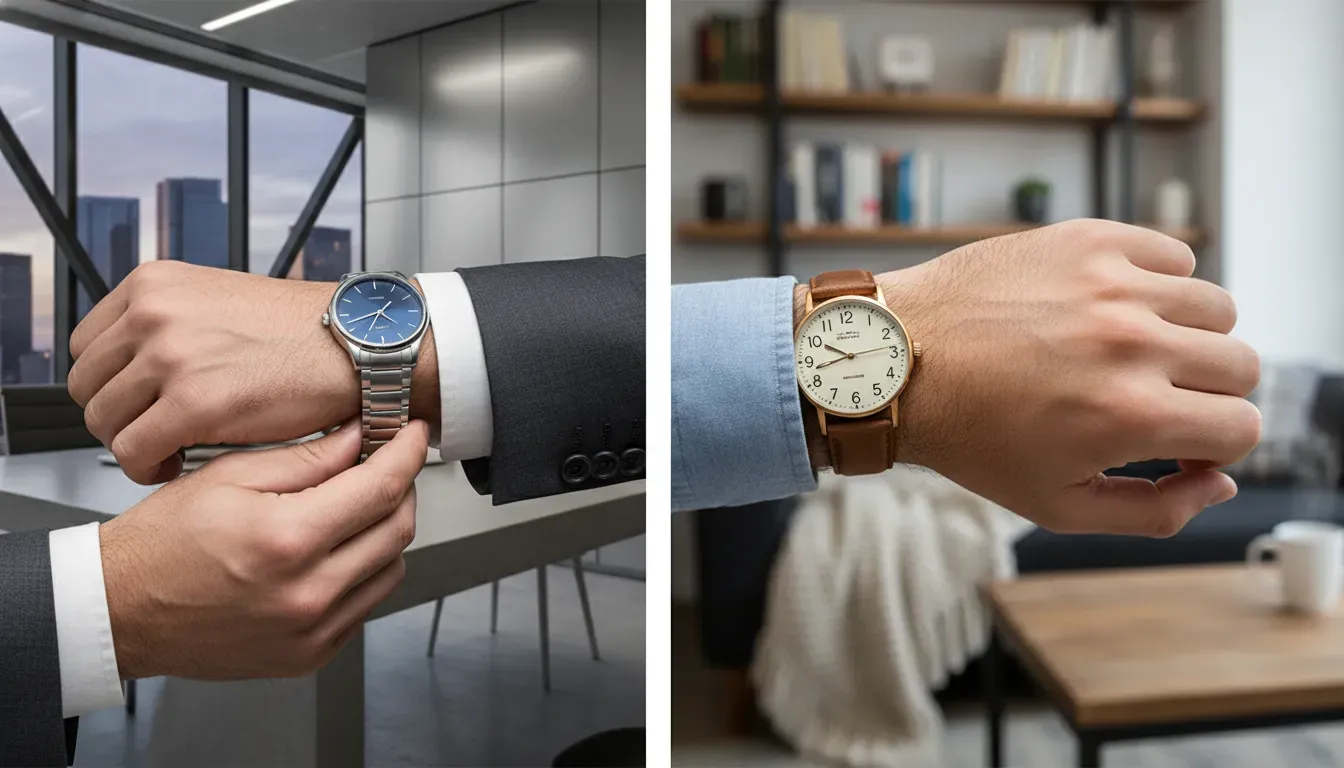
Steel attracts attention. It catches the light. If you wear a steel bracelet, you are accepting that your wrist will flash. It projects an image of readiness and action. It works brilliantly with casual wear, “smart casual,” and business suits, though strict traditionalists will say you shouldn’t wear a dive watch with a tuxedo (Bond broke that rule, so you probably can too).
The Leather Aesthetic: Warmth, Tradition, and Dress
Leather is the choice of the purist. Historically, wristwatches were strapped on leather long before steel bracelets became standard.
- Alligator/Croc: The peak of formality. Glossy, textured, and stiff. This is what you wear to a wedding or a board meeting.
- Suede/Nubuck: The ultimate “casual cool.” It softens the look of a harsh steel watch and looks incredible with flannel, denim, or knitwear.
- Vintage/Distressed: Adds character. It makes a new watch look like an heirloom you inherited from your grandfather.
Leather flies under the radar. It is quieter, more understated. It allows you to coordinate with your other leathers (shoes and belt). If you are wearing brown Oxfords and a brown belt, a steel bracelet is fine, but a matching brown leather strap is a power move. It shows intention. It shows you thought about the details.
For those wanting to add that vintage, sophisticated touch to a modern diver or chronograph, swapping to leather is the easiest “mod” you can do. See how it changes the personality of your watch entirely.
Maintenance and Longevity: What Does Ownership Look Like?
Owning a watch isn’t a passive activity. You have to take care of it, or it will look like trash within a year.
Steel Maintenance: The biggest enemy of steel is grime—that black gunk that builds up between the links. It’s a mixture of dead skin, lotion, and dust. Gross, right? To clean it, you just need a soft toothbrush and some mild dish soap. Scrub it, rinse it, dry it. Done.
Scratches are inevitable. You can have a jeweler polish them out every few years during a service, but be careful: over-polishing softens the sharp edges of the case, ruining the geometry of the watch. Sometimes, it’s better to just accept the scratches as a record of your time with the watch.
Leather Maintenance: Leather needs to rest. If you wear the same leather strap every single day, it will stay damp from your skin’s moisture and degrade rapidly. The rule of thumb? Don’t wear the same leather strap two days in a row if you can help it. Let it air out.
You can use leather conditioners, but be sparse. Too much oil will darken the leather and make it floppy. And remember, no matter how well you treat it, leather is finite. You will be buying a replacement eventually.
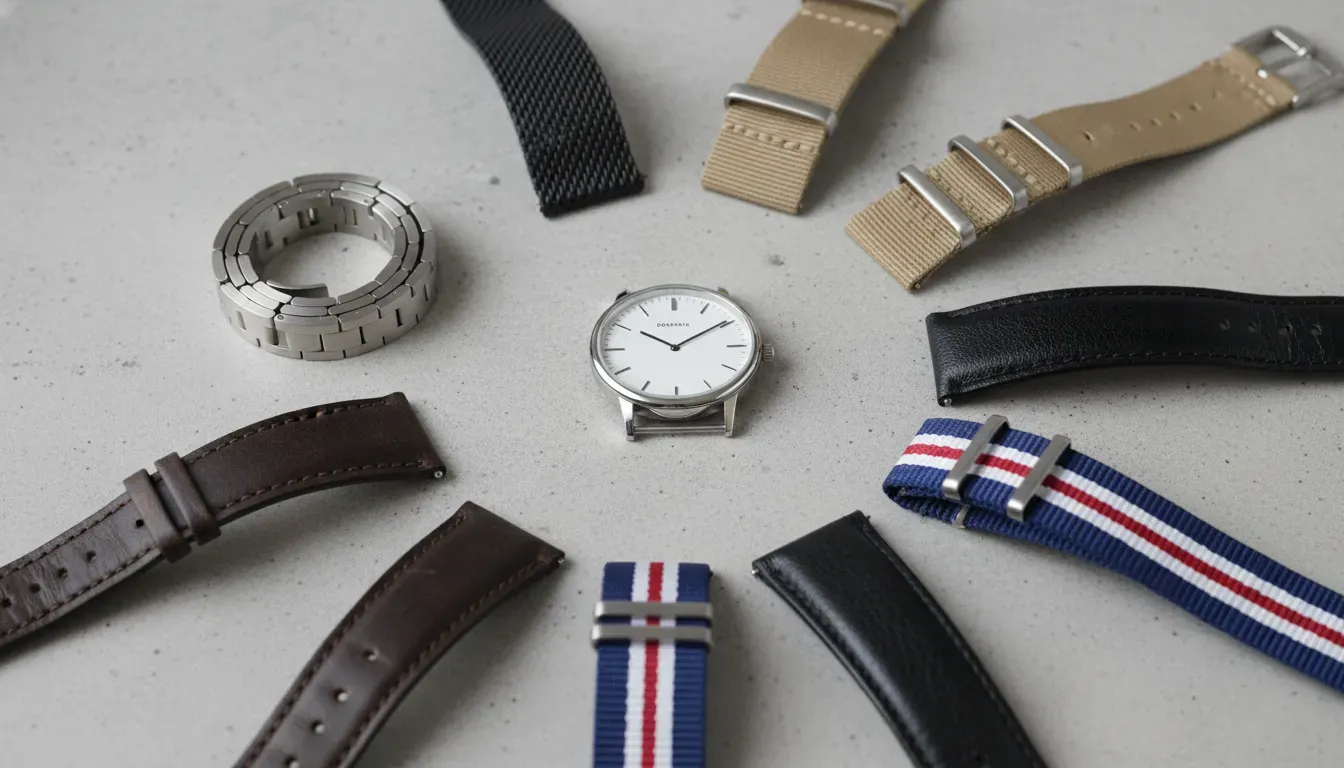
If you love the look of leather but hate the “consumable” nature of it, consider a high-quality steel mesh. It wraps like leather but lasts like steel. The Staib Polished Mesh Watch Bracelet is German-engineered excellence and is widely considered one of the best aftermarket mesh options available.
Versatility: Can One Band Do It All?
Here is the secret: You don’t actually have to choose.
Most modern watches are sold on a steel bracelet. My advice? Always buy the watch on the steel bracelet.
Why? Because buying the steel bracelet separately later is astronomically expensive. Manufacturers often charge $500 to $1,000+ for the bracelet alone if you try to buy it as a spare part. Leather straps, on the other hand, are plentiful, affordable, and universal.
Buy the watch on steel. Wear it for the summer, for the beach, for the rugged days. Then, buy two or three high-quality leather straps for the winter or for dressier occasions. This essentially gives you three watches for the price of one plus a little extra for leather.
Changing the strap is the cheapest way to feel like you bought a new watch. A chronograph on steel looks like a racing tool. Put it on a rally leather strap with holes, and it looks vintage. Put it on a black alligator strap, and it looks like a dress watch.
The Verdict: Making Your Choice
So, where do you land?
If you are a “one-watch collection” type of person—someone who wants to put a watch on and never worry about it, never baby it, and never change it—go with Steel. It is the set-it-and-forget-it option. It handles the shower, the gym, the boardroom, and the bar without missing a beat.
If you view your watch as an accessory to your outfit, a variable in your style equation, go with Leather. It offers warmth, sophistication, and a level of comfort that metal simply cannot match. It connects the watch to the history of sartorial elegance.
But really, the best answer is to embrace the hobby fully: get the steel bracelet for the chassis, and a drawer full of leather straps for the soul. Check out our guide on organizing your watch accessories to keep that growing collection in check.