Water Resistance Explained: What 5ATM Actually Means
Don't ruin your luxury watch. We decode 5ATM, explain the difference between static and dynamic pressure, and reveal if you can actually swim with your timepiece.
Feb 16, 2026 - Written by: Brahim amzil
Water Resistance Explained: What 5ATM Actually Means
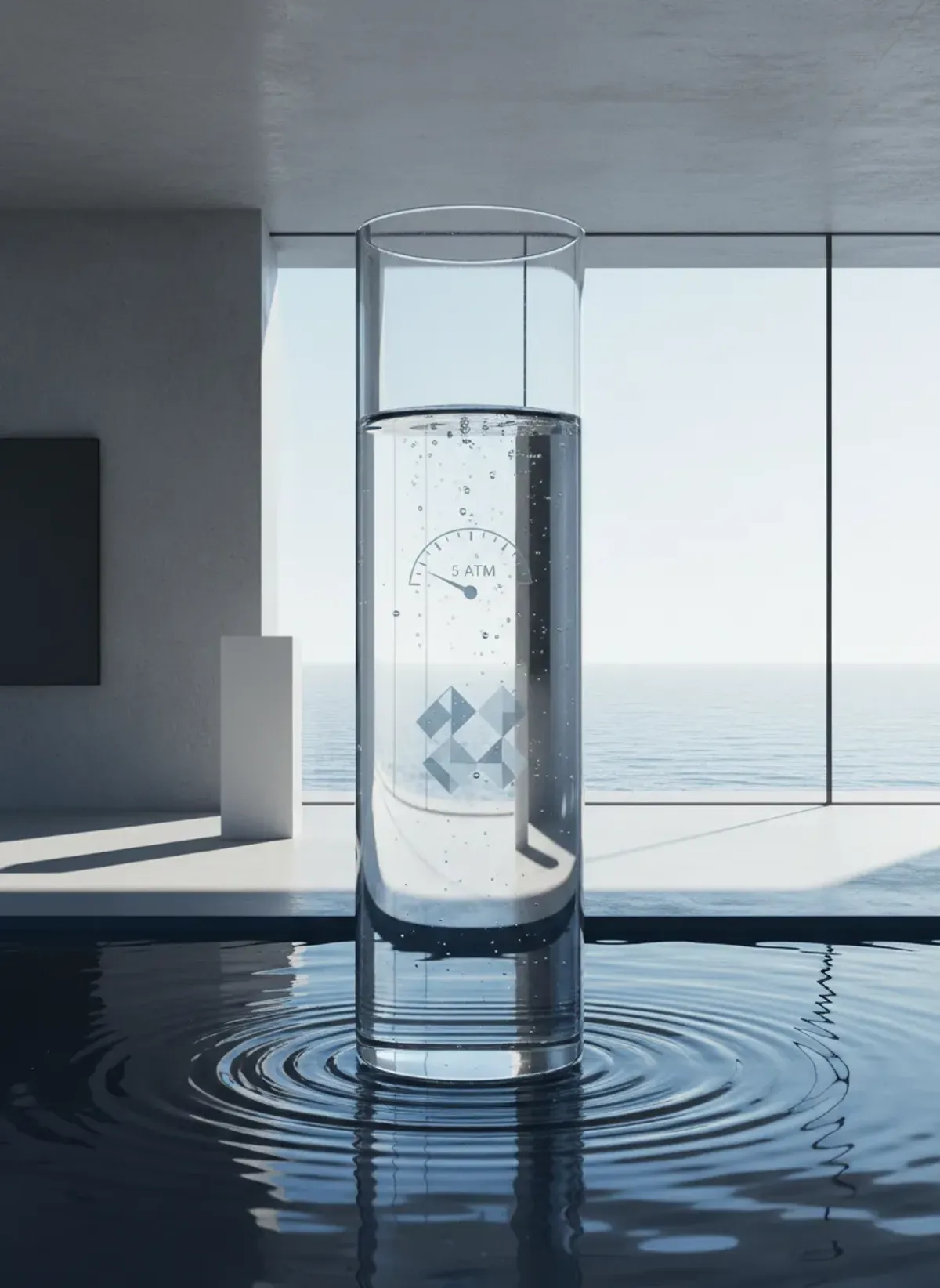
5ATM stands for “5 Atmospheres,” which technically translates to being able to withstand pressure equivalent to a depth of 50 meters (164 feet). However, this rating is based on static laboratory pressure tests, not real-world turbulence. In practical terms, a 5ATM rating means a watch is resistant to splashes, rain, showering, and shallow swimming in calm waters, but it is generally unsafe for high-velocity water sports, diving, or snorkeling.
You have just unboxed a stunning timepiece. It catches the light perfectly, the movement is mesmerizing, and stamped on the caseback are the reassuring words: “Water Resistant 50m.” naturally, you assume this means you can dive fifty meters deep into the ocean without a care in the world.
Stop right there.
That assumption is the single fastest way to drown a luxury investment. The world of horological water resistance is filled with confusing nomenclature, misleading depth ratings, and a disconnect between physics labs and the local swimming pool. If you are exploring the top 10 entry-level luxury watches on the market, understanding these ratings is not just trivia—it is an insurance policy for your wrist.
Let’s decipher these technical ratings so you don’t accidentally turn your new Swiss masterpiece into a very expensive paperweight.
The “Static” Lie: Why 50 Meters Doesn’t Mean 50 Meters
Here is the dirty little secret of the watch industry: water resistance ratings are often derived from static pressure tests.
When a watch is tested for a 5ATM (50 meters) rating, it is typically placed in a dry pressure chamber. Air pressure is increased to simulate the weight of water at 50 meters. If the gaskets hold and the case doesn’t leak air, it passes. In some wet tests, the watch is lowered gently into still water.
Key word: Gently.
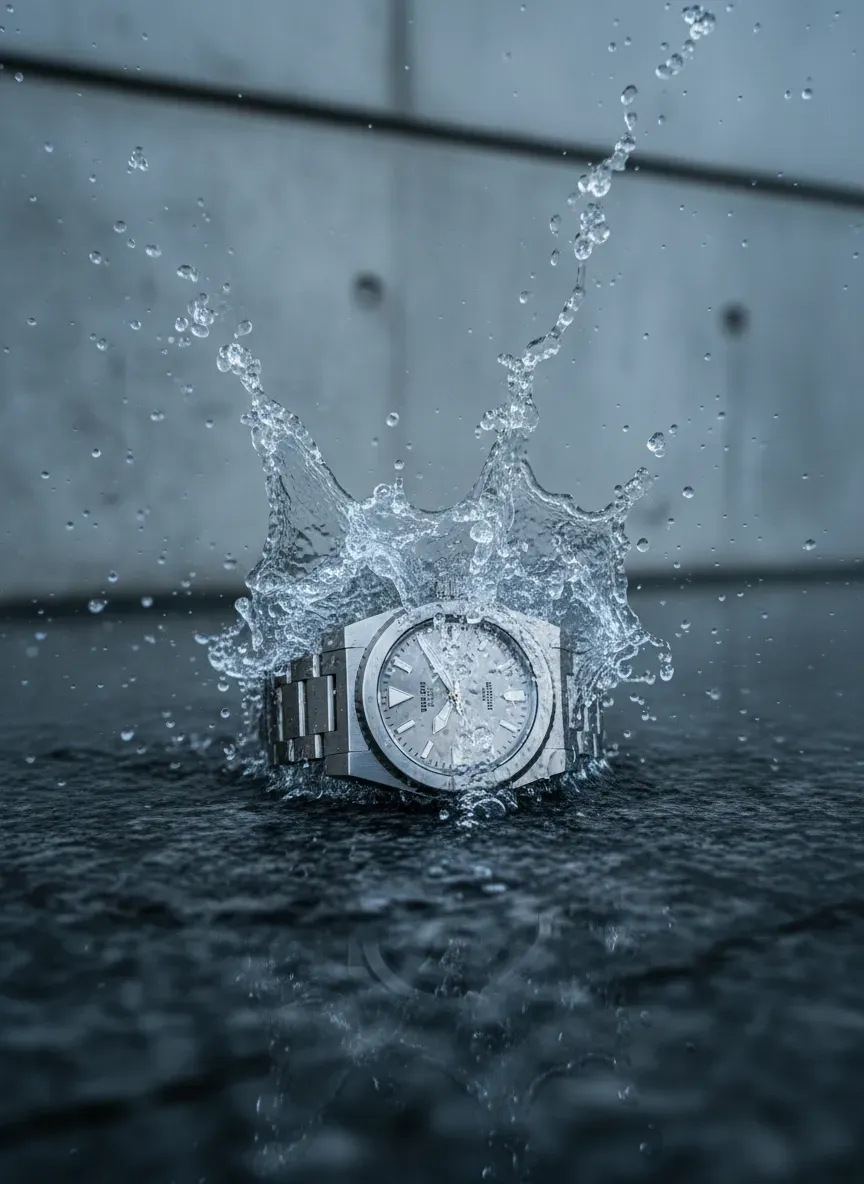
The ocean, your shower, and the pool are not static environments. They are dynamic. When you swim, your arm smashes against the surface of the water. When you dive off a starting block, the impact velocity creates a pressure spike that far exceeds the ambient pressure of the water itself.
Think of it like wind chill. The thermometer might say 30 degrees, but the wind makes it feel like 10. Similarly, you might be in only 2 meters of water, but the force of a jet ski spray or a high-dive entry can exert pressure equivalent to 50 or 100 meters instantly. This “dynamic pressure” is what forces water past the rubber gaskets of a watch that was only rated for a quiet life in a laboratory.
Breaking Down the ATM Hierarchy
To understand where your 5ATM watch fits in, we need to look at the ladder of water resistance. Manufacturers use different terms—Bars, ATMs (Atmospheres), and Meters—but they generally correlate.
- 1 ATM / 1 Bar = Roughly 10 meters of water pressure.
3ATM / 30m: The “Do Not Dunk” Zone
If your dress watch says 30m, treat it like a piece of paper. This rating effectively means “splash resistant.” It can handle washing your hands, a bit of sweat, or getting caught in a drizzle while running to your car. Do not submerge it. Do not shower with it.
5ATM / 50m: The Grey Area
This is the most common rating for versatile daily wearers and smartwatches. As stated in the intro, 5ATM allows for submersion. You can wash the car, take a shower (though we will discuss why you shouldn’t later), and theoretically, swim laps.
However, this is where brand confidence matters. A rugged Casio G-Shock GWM5610 rated at 5ATM is likely fine for a rough swim. A delicate vintage chronograph rated at 5ATM? Keep it dry. The construction tolerances play a massive role here.
10ATM / 100m: The Real “Swimmer”
If you plan to be in the water regularly—surfing, snorkeling, or vigorous lap swimming—100 meters is your baseline. At this level, the watch usually features beefier gaskets and often a screw-down crown (more on that shortly). This is the standard “safe zone” for aquatic activities that don’t involve scuba gear.
20ATM / 200m+: The Diver’s Standard
This is professional territory. Watches rated 200m or higher are built for the crushing pressures of scuba diving. If it is ISO 6425 certified (an official diver’s watch standard), it has been tested to 125% of its rated depth and checked for thermal shock and magnetic resistance.
The Nuance of 5ATM: Construction Matters
Why can one 5ATM watch handle a swim while another fogs up instantly? It comes down to the architecture of the case.
Water is a relentless enemy. It doesn’t need a large opening to destroy a movement; it only needs a microscopic gap. There are three main entry points water tries to exploit: the crystal, the caseback, and the crown.
The Crown: The Achilles Heel
The crown (the knob you use to set the time) is the weakest link. On most 3ATM and 5ATM watches, the crown is a “push-pull” style. It relies entirely on internal rubber O-rings to create a seal against the stem. If you accidentally snag the crown on your swimsuit or bump it against the pool wall, the seal can distort, letting water in.
Higher-rated watches (usually 10ATM and up) use a screw-down crown. This threads the crown into the case body, compressing the gaskets tightly and locking the mechanism. It prevents accidental operation underwater. If your 5ATM watch has a push-pull crown, you are playing a risky game by swimming with it.
For those looking for robust build quality without the massive price tag, look at the Seiko Prospex SRPE93. It offers professional-grade resistance features that far exceed the basic 5ATM requirements.
Caseback Compression
Watches either have snap-on casebacks or screw-down casebacks. Snap-on backs are held by friction. Under high pressure, these can warp. Screw-down backs generally provide a more uniform seal. Many of the 7 underrated luxury brands we profile utilize screw-down casebacks even on their dressier 5ATM models to ensure longevity.
The Hot Tub and Shower Myth
“I have a 300m dive watch, so I can wear it in the hot tub, right?”
Wrong.
This is a mistake even seasoned collectors make. Water resistance ratings are based on cold or ambient temperature water. They do not account for heat, steam, and soap.
Here is the physics of why the shower and sauna are watch killers:
- Thermal Expansion: Metal cases and rubber gaskets expand at different rates when heated. This mismatch can create temporary gaps that standard water pressure wouldn’t penetrate, but steam can.
- Gasket Degradation: Heat dries out the oils in rubber gaskets, causing them to become brittle and crack prematurely.
- Surfactants: Soap and shampoo reduce the surface tension of water. This allows water to slip past seals that would normally repel plain water.
If you love your watch, take it off before you shower. It’s not about depth; it’s about chemistry and thermodynamics.

Leather Straps: The Silent Victim
We have focused heavily on the watch head (the case and movement), but we need to address the strap.
Even if your watch is rated 5ATM and you decide to take a dip, what is it attached to? If the answer is alligator, calfskin, or cordovan leather, you are making a mistake. Water ruins leather. It strips the natural oils, causes the glues to fail, and leaves the strap smelling like a wet dog.
If you plan to utilize the water resistance of your timepiece, swap the strap for:
- Rubber (FKM or Vulcanized): Impervious to water and UV light.
- Stainless Steel: Classic, though you should rinse the clasp to prevent grit buildup.
- NATO/Nylon: Secure and quick-drying.
ISO Standards: 22810 vs. 6425
If you want to get nerdy—and let’s be honest, that’s why we are here—look for which International Organization for Standardization (ISO) norm the watch follows.
Most standard luxury watches (including those rated 3ATM or 5ATM) follow ISO 22810. This covers “Water Resistant” watches intended for daily use. The testing is less rigorous and allows for batch testing (testing a sample of the production run rather than every single unit).
Dive watches follow ISO 6425. To earn the word “Diver’s” on the dial (e.g., “Diver’s 200m”), every single watch must be individually tested to 125% of the rated depth. They must also pass condensation tests, strap strength tests, and shock resistance tests.
If you are buying a watch specifically for water sports, look for “Diver’s” on the dial, not just “Water Resistant.” A great entry point into ISO-certified diving is the Citizen Promaster Dive Eco-Drive, which is practically bulletproof in aquatic environments.
Maintenance: The Rating Expires
Water resistance is not a permanent feature. It is a condition that degrades over time.
Rubber gaskets dry out. Case metals corrode slightly. A watch that was 5ATM when it left the factory in 2024 might barely be 1ATM by 2028 if left unserviced.
If you actually swim with your watch, you should have the water resistance checked annually. Any competent watchmaker can do a “dry pressure test” in five minutes. It’s cheap, non-invasive, and tells you immediately if your seals are compromised.
Furthermore, if you swim in the ocean, rinse your watch with fresh water immediately afterward. Salt is corrosive and abrasive. If left to dry on the watch, salt crystals can act like sandpaper on the gaskets (and the bezel action) the next time you turn them.
Summary: Can I Swim With My 5ATM Watch?
Let’s circle back to the user’s core anxiety. You have a 5ATM watch. Can you swim?
The Conservative Answer: No. Why risk a $5,000+ luxury item? If it doesn’t have a screw-down crown and a 100m rating, leave it in the locker or by the poolside.
The Realistic Answer: Yes, provided:
- The watch is relatively new (less than 3 years old) or recently serviced.
- You are swimming casually (breaststroke, wading) rather than high-impact diving.
- You are not in a hot tub.
- The strap is not leather.
Ultimately, water resistance ratings are about risk management. 5ATM provides peace of mind against the accidental dunk, the sudden downpour, or the impulsive jump into the pool. But for anything planned, prolonged, or deep, upgrade to a 10ATM or 20ATM companion.
Final Thoughts
The “50m” stamp on the back of your watch is a promise, but it’s a promise with terms and conditions. It assumes the water is still, the gaskets are fresh, and the temperature is moderate.
Navigating the world of luxury watches requires looking past the marketing text. Whether you are hunting for entry-level pieces or rare collectibles, treating water resistance with a healthy dose of skepticism will keep your movement ticking and your dial dry.
Enjoy the water, but respect the pressure.