Are Smartwatches Still Worth It? A Deep Dive into Pros, Cons, and Top Models
We cut through the marketing hype to analyze whether smartwatches are truly worth your investment. Discover the hidden pros, brutal cons, and our top tactical picks.
Mar 22, 2026 - Written by: Linda Wise
I remember the exact moment the smartwatch transition happened for me. It wasn’t during a chaotic workday filled with endless emails, nor was it while trying to casually reject a phone call from my wrist during a dinner date. It happened at 5:30 AM on a freezing Tuesday. I checked my wrist, bleary-eyed, to see a beautifully visualized graph of my Heart Rate Variability (HRV) telling me my nervous system was entirely unrecovered. I skipped the heavy lifting session, opted for a walk, and avoided an injury I was almost certainly barrelling toward.
That micro-interaction encapsulates the modern wearable dilemma. We initially strapped these glass-and-aluminum squares to our arms so we wouldn’t have to pull our phones out of our pockets. A decade later, the paradigm has entirely shifted. We are no longer buying notification machines; we are buying miniaturized biometric laboratories.
But a glaring question hangs in the air: Are smartwatches still worth it?
When you strip away the polished marketing videos of athletes summiting alpine peaks or hipsters effortlessly paying for lattes with a flick of the wrist, what is the actual daily utility of these devices? Do they enhance our lives, or do they simply introduce another vector for digital anxiety?
Let us rip the band-aid off and dissect the architecture of the modern smartwatch, examining the raw pros, the undeniable cons, and the specific hardware that currently dominates the market.
Quick Comparison: Top Picks
| Product | Rating | Check Price |
|---|---|---|
| Apple Watch Ultra 2 | ⭐⭐⭐⭐⭐ | View on Amazon |
| Garmin Fenix 7 Pro | ⭐⭐⭐⭐½ | View on Amazon |
| Samsung Galaxy Watch 6 Classic | ⭐⭐⭐⭐ | View on Amazon |
The Core Philosophy: Why Are We Still Strapping Computers to Our Wrists?
To understand the value proposition of a modern smartwatch, you have to understand the evolution of the hardware. The early iterations—think the original Pebble or the Apple Watch Series 0—were effectively remote controls for your smartphone. They were sluggish, their batteries barely survived a standard workday, and their primary function was vibrating when your boss emailed you.
Today, the processing power housed inside a premium smartwatch exceeds the capabilities of desktop computers from two decades ago.
The Shift from Novelty to Necessity
We have moved past the era of the “gimmick.” A smartwatch is no longer a party trick. I’ve personally found that the transition from novelty to necessity usually occurs within the first three weeks of ownership. It happens subtly. You stop caring about the text message previews and start relying heavily on the ambient intelligence the watch provides.
You use it to set a silent haptic alarm that wakes you up without disturbing your partner. You use the onboard NFC to swipe through subway turnstiles without fumbling for a wallet in a crowded station. You glance at the localized rain radar widget before leaving the house. These are micro-frictions. A smartwatch eliminates dozens of these micro-frictions daily, creating a streamlined, almost symbiotic extension of your digital life.
The Health Tracking Revolution
If there is a singular justification for the existence of the smartwatch industry today, it is health quantification.
We are living in the golden age of the “quantified self.” Photoplethysmography (PPG) sensors shine green and red LEDs into your capillaries, measuring the volumetric change of blood flow to calculate your heart rate and blood oxygen levels with staggering clinical accuracy. Accelerometers and gyroscopes track your movement in three-dimensional space, calculating your stride length, ground contact time, and vertical oscillation while running.
This level of granular data used to require a trip to a sports science laboratory. Now, it happens passively while you jog around your neighborhood. You are generating a longitudinal dataset of your own cardiovascular health, year over year. For anyone serious about fitness, longevity, or general wellness, this data alone justifies the cost of entry.
The Brutal Truth: The Cons We Rarely Talk About
I would be entirely remiss if I painted this ecosystem as a technological utopia. Smartwatches carry significant, often infuriating drawbacks that hardware manufacturers desperately try to gloss over.
Notification Fatigue and Digital Tethering
Here is the real kicker: a smartwatch can easily become a digital shackle.
Our smartphones already bombard us with an unrelenting barrage of notifications. When you introduce a device physically strapped to your skin that vibrates every time an app demands your attention, you are inviting cortisol into your bloodstream. It is an inescapable physiological response.
Notification fatigue is real. The constant “phantom buzz” phenomenon—where you instinctively check your wrist even when the watch hasn’t vibrated—is a documented psychological side-effect of prolonged wearable use. The attention economy wants your focus, and a smartwatch gives application developers direct, haptic access to your central nervous system. Unless you are ruthlessly militant about customizing your notification settings, a smartwatch will make you more distracted, not less.
Planned Obsolescence vs. Generational Heirloom
Lithium-ion batteries degrade. It is an inescapable law of chemistry.
Every charge cycle slightly diminishes the maximum capacity of the battery cell. Within three to four years, a smartwatch that used to easily last two days will struggle to make it from breakfast to dinner. Because these devices are tightly sealed with industrial adhesives to maintain their water resistance, replacing the battery is often economically unviable or outright impossible.
This brings us to the most painful reality for watch enthusiasts. A mechanical timepiece is a testament to longevity. While a finely tuned Patek Philippe gets handed down to the next generation—a dynamic you can deeply explore when looking at the pinnacles of horological craftsmanship—a premium smartwatch is ultimately destined for a recycling bin. You are not buying a legacy; you are leasing a temporary technological advantage.
Battery Anxiety: The Modern Phobia
If you buy a mechanical automatic watch, your physical movement keeps it wound. If you buy a traditional quartz watch, the battery lasts for years.
If you buy a flagship smartwatch, you are suddenly burdened with the daily mental calculus of battery management. Did I pack my proprietary magnetic charging puck? Do I have enough juice to track my sleep tonight? Will the GPS tracking kill my battery before I finish this hike?
Battery anxiety transforms a passive accessory into an active responsibility. You become a slave to the battery percentage indicator. While companies are pushing the boundaries—introducing larger batteries and faster charging protocols—the fundamental annoyance of having to charge your wrist remains a massive hurdle for many consumers.
The Pros That Actually Matter (Beyond the Spec Sheet)
Despite the very real drawbacks, millions of people refuse to take their smartwatches off. Why? Because when the technology works as intended, the benefits drastically outweigh the inconveniences.
Granular Biometric Feedback
We briefly touched on health tracking, but the true value lies in the interpretation of that data.
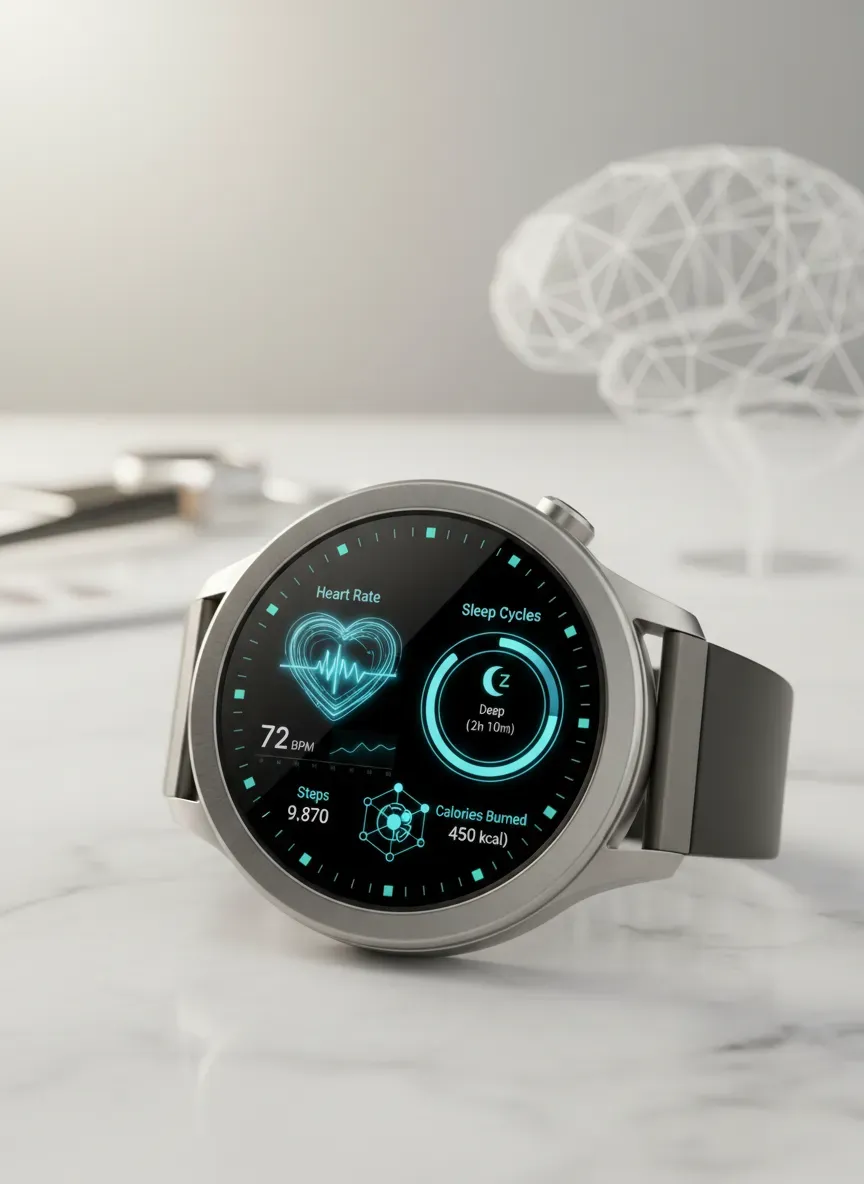
Premium smartwatches don’t just throw raw numbers at you anymore. They synthesize your sleep architecture (Deep, Light, and REM stages), your resting heart rate, and your HRV to generate an overarching readiness score. This is a game-changer for athletic training.
Instead of guessing how hard you should push in the gym, your watch looks at your physiological stress markers and says, “Your autonomic nervous system is strained today; focus on active recovery.” This prevents overtraining, mitigates injury risk, and optimizes your long-term fitness trajectory.
Pro Tip: Ignore your daily step count. Instead, focus heavily on your Resting Heart Rate (RHR) and Heart Rate Variability (HRV) trends over a 30-day rolling period. These two metrics offer the most accurate reflection of your overall cardiovascular efficiency and central nervous system recovery.
Disconnecting by Connecting (The Paradox)
It sounds deeply counterintuitive, but a cellular-enabled smartwatch is the ultimate tool for digital minimalism.
When you purchase a smartwatch with its own LTE connection, you sever the tether to your smartphone. You can leave your 6-inch, distraction-filled glass rectangle at home. You can go for a two-hour hike, run errands, or hit the gym with absolutely nothing in your pockets.
Because the watch screen is tiny, you aren’t going to endlessly scroll social media or fall down a YouTube rabbit hole. The interface actively discourages prolonged use. Yet, you remain safely connected. You can still stream your favorite Spotify playlists directly to your Bluetooth earbuds. You can still use Apple Pay at the grocery store. Most importantly, your spouse or your child’s school can still reach you in a genuine emergency via a phone call or text.
It is the perfect filter. It allows the essential communications through while physically blocking the addictive algorithms of your smartphone.
Emergency Features: The Silent Guardian
You rarely think about the emergency features until the exact moment they save a life.
Modern smartwatches feature high-G accelerometers that can detect the specific kinetic signature of a severe car crash or a hard fall from a bicycle. If you are rendered unresponsive, the watch will automatically dial emergency services, transmit your exact GPS coordinates, and notify your designated emergency contacts.
Furthermore, the electrocardiogram (ECG) applications built into the digital crowns of these devices have successfully detected thousands of cases of Atrial Fibrillation (AFib)—a dangerous irregular heart rhythm that often goes entirely unnoticed until it triggers a stroke. The watch works in the background, analyzing the rhythm of your pulse, acting as a silent, 24/7 guardian over your cardiovascular system.
Reviewing the Titans: Top Models Analyzed
If you have decided that the pros outweigh the cons, the next hurdle is selecting the right hardware. The market is saturated, but a few distinct models have pulled away from the pack, establishing themselves as the undisputed titans of the industry.
Apple Watch Ultra 2 (The Titanium Juggernaut)
Apple completely disrupted the adventure watch segment when they introduced the Ultra lineage. The Apple Watch Ultra 2 is unapologetically massive, crafted from aerospace-grade titanium, and features a completely flat sapphire crystal display that peaks at a retina-searing 3000 nits of brightness.
You’ll notice that Apple didn’t just make a bigger watch; they re-engineered the internal architecture. It boasts dual-frequency GPS (L1 and L5 bands), which allows it to lock onto satellites even when you are surrounded by towering skyscrapers or dense forest canopies. It has a built-in depth gauge and water temperature sensor, effectively transforming it into an EN13319-certified dive computer through the Oceanic+ app.
Is it overkill for the average user who just wants to track their elliptical workouts? Absolutely. But for the serious athlete heavily invested in the Apple ecosystem, the massive battery life (up to 72 hours in low power mode) and unparalleled integration with iOS make it an absolute triumph of engineering.
Garmin Fenix 7 Pro (The Off-Grid Tactical Beast)
If you scoff at the idea of charging a watch every two days, Garmin is your sanctuary. The Garmin Fenix 7 Pro represents the pinnacle of purpose-built, ruggedized athletic tracking.
Unlike the OLED screens found on mainstream smartwatches, the Fenix utilizes a Memory-In-Pixel (MIP) display. It doesn’t look as punchy or colorful indoors, but step outside into direct, glaring sunlight, and the screen becomes brilliantly legible. More importantly, this display technology sips power. When combined with Garmin’s Power Sapphire solar charging lens, this watch measures its battery life in weeks, not hours.
If you want something that survives an apocalypse without needing a charger, you usually look at rugged digital beaters—perhaps a virtually indestructible tactical timepiece—but Garmin bridges that gap with military-grade smarts. It offers built-in topographical maps, PacePro pacing strategies for marathon runners, and a built-in LED flashlight that is shockingly useful when navigating a dark campsite or digging through your car trunk at night.
Samsung Galaxy Watch 6 Classic (The Horological Hybrid)
Android users have historically struggled to find a wearable that matches the seamless fluidity of the Apple Watch. The Samsung Galaxy Watch 6 Classic is the definitive answer.
What makes the “Classic” variant so compelling is the mechanical rotating bezel. Instead of awkwardly swiping your sweaty fingers across a tiny touchscreen during a workout, you physically rotate the stainless steel bezel to scroll through menus, adjust volume, or read notifications. It offers a satisfying, tactile click that bridges the gap between mechanical watchmaking and digital utility.
Samsung has also aggressively focused on sleep coaching. The watch doesn’t just tell you that you slept poorly; it assigns you a “sleep animal” based on your habits and provides a multi-week coaching program designed to actively improve your sleep hygiene. Powered by the Exynos W930 chip, the interface is snappy, the OLED screen is incredibly vibrant, and it looks remarkably like a traditional timepiece when paired with a leather hybrid strap.

Pitfalls to Avoid When Purchasing
Throwing down hundreds of dollars on wearable tech requires a strategic approach. I have watched countless consumers make the exact same mistakes, leading to buyer’s remorse and a watch that ends up sitting in a drawer gathering dust.
Buying for Aspiration, Not Reality
The marketing teams at Apple, Garmin, and Samsung are brilliant. They sell you an aspirational version of yourself. They show you footage of a rugged individualist scaling a rock wall in Yosemite, and suddenly you convince yourself you need the $800 titanium ultra-watch.
Evaluate your actual, mundane reality. If your weekly routine consists of commuting to an office, walking the dog, and hitting the treadmill for 30 minutes, you do not need dual-frequency GPS or a 100-meter dive rating. You need a slim, comfortable wearable with solid baseline health tracking. Buy the hardware that matches the life you currently live, not the life you fantasize about living.
The Compatibility Trap
The smartwatch market is heavily siloed. The Apple Watch simply will not work with an Android phone. It is a locked ecosystem designed to keep you firmly entrenched in the walled garden of iOS.
Similarly, while many Garmin watches will sync with an iPhone, you lose crucial functionalities—like the ability to reply to text messages directly from your wrist—because Apple severely restricts third-party access to iMessage. Navigating these ecosystem lock-ins is just as crucial as understanding the movement types outlined in our comprehensive roadmap for selecting your next timepiece. Always ensure the hardware you are purchasing has deep, unrestricted synergy with your primary smartphone.
Key Takeaways
- Audit Your Phone Habits: If you already feel overwhelmed by digital notifications, a smartwatch will exacerbate the problem unless you aggressively cull your notification permissions.
- Prioritize Comfort over Specs: You cannot track your sleep if the watch is too heavy or bulky to wear comfortably in bed. A massive spec sheet means nothing if you take the watch off every night.
- Understand the Lifespan: Accept that you are buying consumer electronics, not a mechanical heirloom. Expect a functional lifespan of 3 to 5 years before battery degradation forces an upgrade.
- Leverage Cellular Freedom: If your budget allows, opting for the cellular version of a smartwatch provides the immense psychological benefit of leaving your smartphone behind without severing essential communications.
Are They Worth the Investment Today?
We circle back to the core question: Are these digital marvels actually worth your hard-earned cash?
The answer relies entirely on your willingness to engage with the data they produce. If you treat a smartwatch purely as a notification mirror for your phone, you are wasting your money. You are paying a premium to be annoyed more frequently.
However, if you view the smartwatch as a biometric tool—a device that holds a mirror up to your physiological habits, quietly nudges you toward better cardiovascular health, helps you map out your sleep architecture, and occasionally gives you the freedom to leave your smartphone on the kitchen counter—the value proposition becomes undeniable.
The Bottom Line: A smartwatch is an amplifier. It will amplify whatever habits you already possess. If you are distracted, it will make you more distracted. But if you are actively seeking to optimize your health, streamline your daily routines, and establish boundaries with your primary digital devices, a modern premium smartwatch is arguably the most powerful piece of technology you can buy. Choose your ecosystem wisely, turn off the social media alerts, and let the device work for you, rather than the other way around.