Building Purchase History: Jewelry vs. Tudors
Buying your way to a Rolex allocation? We analyze the math and strategy behind building purchase history via high-margin jewelry versus Tudor watches.
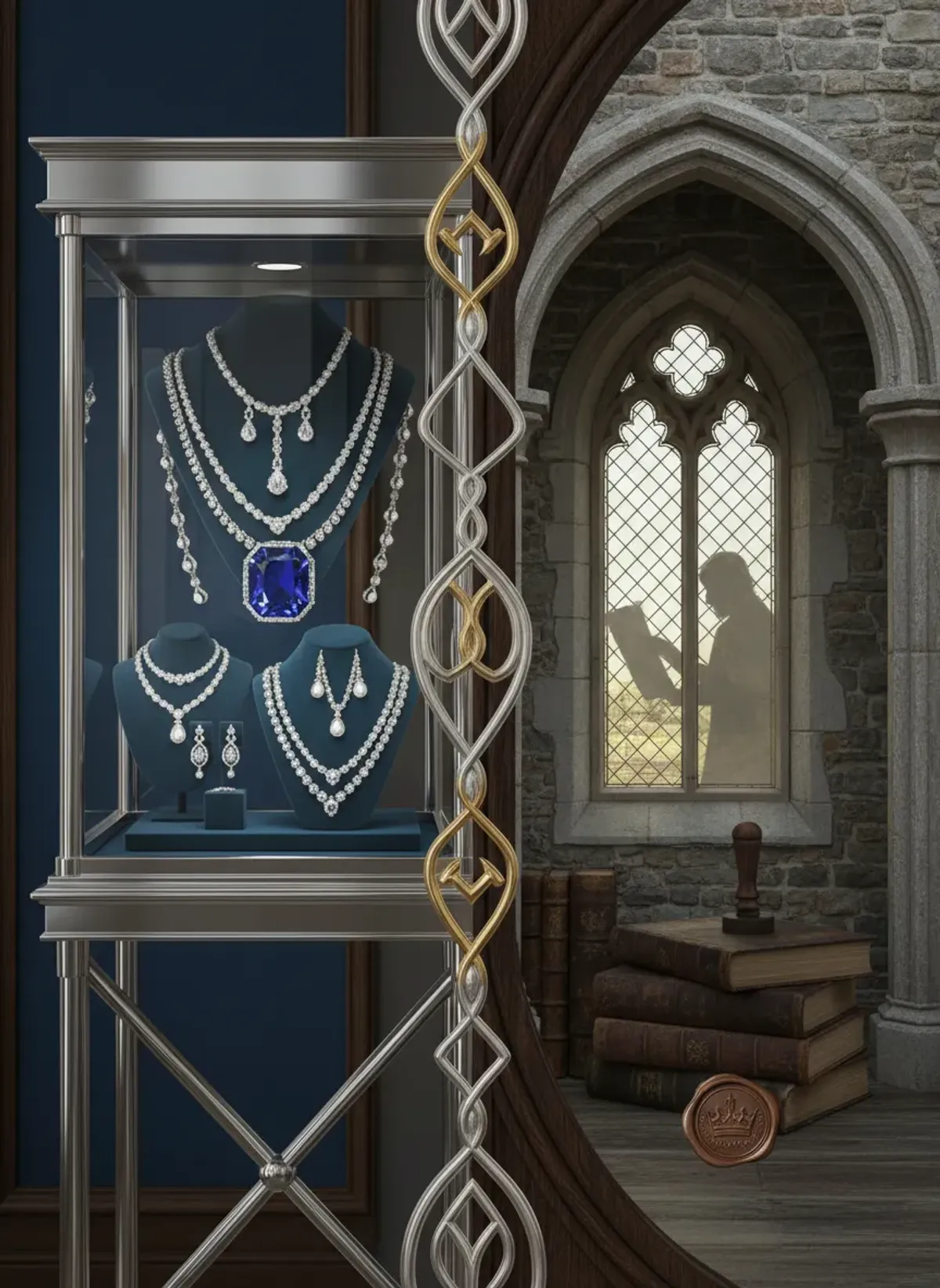
Building Purchase History: Jewelry vs. Tudors
When building purchase history with an Authorized Dealer (AD) to secure an allocation for a “hype” timepiece, buying high-margin jewelry is significantly more effective than purchasing Tudor watches. Dealers prioritize clients who purchase non-watch items—specifically diamonds and precious metals—because the profit margins on these items (often 50%+) dwarf the margins on Swiss watches (typically 30-35%). While buying a Tudor demonstrates brand loyalty to the Rolex group, jewelry signals you are a holistic “whale” client rather than a watch flipper, which drastically expedites your waitlist position for models like the Daytona or GMT-Master II.
The Authorized Dealer “Dance”
It is one of the most frustrating realities of modern horology. You walk into a boutique with cash in hand, ready to buy a steel sports watch, only to be told there is “no stock” while a dummy model sits in the display case. You aren’t just buying a watch anymore; you are buying a relationship.
To get “The Call” for a heavy hitter, you need skin in the game. This is what collectors call “building a profile” or, more cynically, “paying the AD tax.” The question isn’t if you have to spend money on things you might not fully love—it’s what you should spend that money on to maximize your leverage.
Do you go the route of the “tool watch” sibling by picking up a Tudor? Or do you bite the bullet and buy earrings for your anniversary? Let’s break down the economics, the psychology, and the strategy.

The Economics of the Authorized Dealer
To understand why your Sales Associate (SA) pushes certain products, you have to look at their commission structure. An Authorized Dealer is a business, not a museum. They have rent to pay, inventory to move, and overheads that are frankly terrifying in prime locations.
Why They Love Jewelry
Jewelry is the golden goose for ADs. A generic diamond necklace or a pair of gold hoops often carries a markup that makes watch enthusiasts weep. When you spend $5,000 on house-brand jewelry, the store might be clearing $2,500 to $3,000 in gross profit.
Buying jewelry tells the AD two things:
- You aren’t a flipper. Flippers hate jewelry because it has terrible resale value. By buying it, you prove you are an end-user.
- You support the store’s health. You are helping them move the inventory that usually collects dust.
Why They “Like” Tudor
Tudor is a fantastic brand. In fact, for many, it’s the gateway into serious collecting. But from a profit perspective, it’s strictly volume. The margins are tighter. If you buy a Tudor Black Bay, the store makes money, sure. But they know that the secondary market for Tudors is relatively soft. They also know that Tudor is often used as a stepping stone.
However, Tudor has a distinct advantage: it keeps your purchase history within the specific niche of horology. If you want to impress an SA with your knowledge of mechanics, discussing the nuances of the Black Bay GMT’s movement can show you are a genuine enthusiast, not just a label chaser. But does passion get you a Pepsi? Not always. Cash flow does.
The Strategy: Buying Jewelry
If your goal is speed, jewelry is the accelerator.
Let’s say you want a Rolex Submariner Date. The waitlist is two years long at your local AD. You walk in and drop $10,000 on a diamond bracelet for your partner. You have just contributed roughly $5,000–$6,000 of pure profit to that store’s bottom line.
That is powerful leverage.
Sales associates often have quotas that are heavy on the jewelry side. By helping an associate hit their monthly jewelry target, you become their favorite client. You solve a problem for them. In return, they solve a problem for you (getting that watch allocation).
The Downside: The moment you walk out the door, that generic jewelry loses about 60% to 70% of its value. You are effectively lighting money on fire to buy access. If you have a partner who loves jewelry, it’s a win-win. If you are buying it solely for the “spend,” it’s a steep tax.
To keep your current collection sparkling while you play this game, investing in a high-quality ultrasonic cleaner is a smart move. It shows you care about maintenance.
Magnasonic Professional Ultrasonic Jewelry Cleaner
The Strategy: Buying Tudors
The “Tudor Path” feels more dignified for the watch purist. You are buying a legitimate, heritage-rich timepiece. You aren’t pretending to like diamonds; you are buying a Swiss diver or chronograph.
Tudors are excellent watches. In recent years, they have started utilizing materials that big brother Rolex rarely touches. For instance, if you look at the debate surrounding titanium vs stainless steel, Tudor’s Pelagos line offers a titanium construction that is robust, light, and technically superior to many steel watches at double the price.
The Pros:
- Asset Retention: A Tudor might lose 20-30% of its value upon exit. That is significantly better than the 70% drop on jewelry.
- Usage: You get a great watch to wear while you wait.
- Credibility: You look like a watch collector, not just a hype beast.
The Cons:
- Availability: Ironically, some of the best Tudors (like the FXD or the Chronos) can be hard to get, too.
- Lower Margin: You might need to buy three Tudors to equal the “brownie points” of one diamond necklace.

The “Bundle” Reality
Let’s stop beating around the bush. Sometimes, the conversation isn’t subtle. We’ve all heard stories of the “bundle.” The AD implies—or outright states—that if you buy this specific ladies’ watch or this specific Tudor, the “safe” will magically open.
If you are forced into this corner, look for value. Don’t just buy a random dress watch you hate. Look for utility. Perhaps you need a travel watch? Or maybe you look at their other brands. If they carry IWC or Breitling, checking out their top 5 pilot watches might yield a purchase that serves a purpose in your collection rather than just being “spend history fodder.”
If you are going to own multiple watches to build this history, you need somewhere to put them. A quality watch roll is essential for the collector accumulating pieces they may or may not keep forever.
The Math of Retention
Let’s run the numbers.
Scenario A: The Jewelry Route
- Spend: $10,000 on Earrings.
- AD Profit Impact: High (loved by SA).
- Resale Value: ~$3,000.
- Cost of History: $7,000 loss.
Scenario B: The Tudor Route
- Spend: $10,000 on two Tudor watches (e.g., a Black Bay and a Ranger).
- AD Profit Impact: Medium (liked by SA).
- Resale Value: ~$7,500.
- Cost of History: $2,500 loss.
Mathematically, Tudor is the smarter buy. You lose less money. However, because the AD makes less profit, it may take longer to get the Rolex. You are effectively trading time for money. If you are impatient, pay the jewelry premium. If you are patient and budget-conscious, stick to watches.
When to Walk Away
There is a limit. Sometimes, the required spend history exceeds the premium you would pay on the secondary market.
If an AD wants you to spend $20,000 on “stuff” to get a Rolex GMT-Master II “Batgirl” at retail ($10,900), your total output is nearly $31,000.
You could go to a trusted grey market dealer and buy that same watch for $16,000 tomorrow. No games. No wait. In these cases, playing the AD game is ego, not economics. Sometimes, looking at the market for a pre-owned Rolex Air-King or even a slightly used GMT makes infinitely more sense than begging a shop assistant to take your money.
The Human Element
We often forget that SAs are people. They deal with entitled jerks all day long—people demanding items, flashing cash, and treating the staff like servants.
Being a decent human being goes a long way. Building a purchase history isn’t just about the credit card swipe; it’s about the chat. Ask about their day. Be passionate about the watches. If you buy a Tudor, wear it the next time you visit. Show them you actually use the products.
The “Human-First” approach to buying usually yields better results than the purely transactional one. If you buy a piece of jewelry, explain why. “It’s for my wife’s 40th.” That gives the SA a story to tell their manager when fighting for your allocation. “This guy isn’t a flipper; he just bought a nice gift for his wife, and he wants the Submariner to mark his promotion.”
Stories sell. Even internally at the AD.

Is It Worth It?
This is the question that haunts every forum thread. Is the dignity loss of buying things you don’t really want worth the prize at the end?
If you genuinely like Tudor, it’s a no-brainer. They are fantastic watches that hold their own against anything in the $4k–$5k bracket. Building a relationship with a brand you respect is easy.
If you are forcing yourself to buy diamonds you have no use for, pause. Step back. Look at the grey market prices. If the “tax” is higher than the grey market premium, buy grey. Life is too short to own jewelry you hate just to own a watch you might be afraid to scratch.
But, if you find yourself deep in the game, needing that one final push to get the grail piece out of the vault, remember this: Diamonds are a Sales Associate’s best friend.
For those deep in the hobby, knowledge is the best currency (second only to actual currency).
A Man and His Watch: Iconic Watches and Stories
Summary
- Jewelry = Fast track. High margin for AD, high loss for you, quickest allocation.
- Tudor = Slow burn. Better value retention, builds “enthusiast” cred, slower allocation.
- Grey Market = The math check. Always compare your “spend history” cost against the simple premium of buying without a waitlist.
Choose your poison, play the game, or flip the table and buy pre-owned. The choice is yours.