Titanium vs. Stainless Steel: Material Science in Watches
We break down the pros, cons, and material science behind Titanium and Stainless Steel watches to help you decide which metal belongs on your wrist.
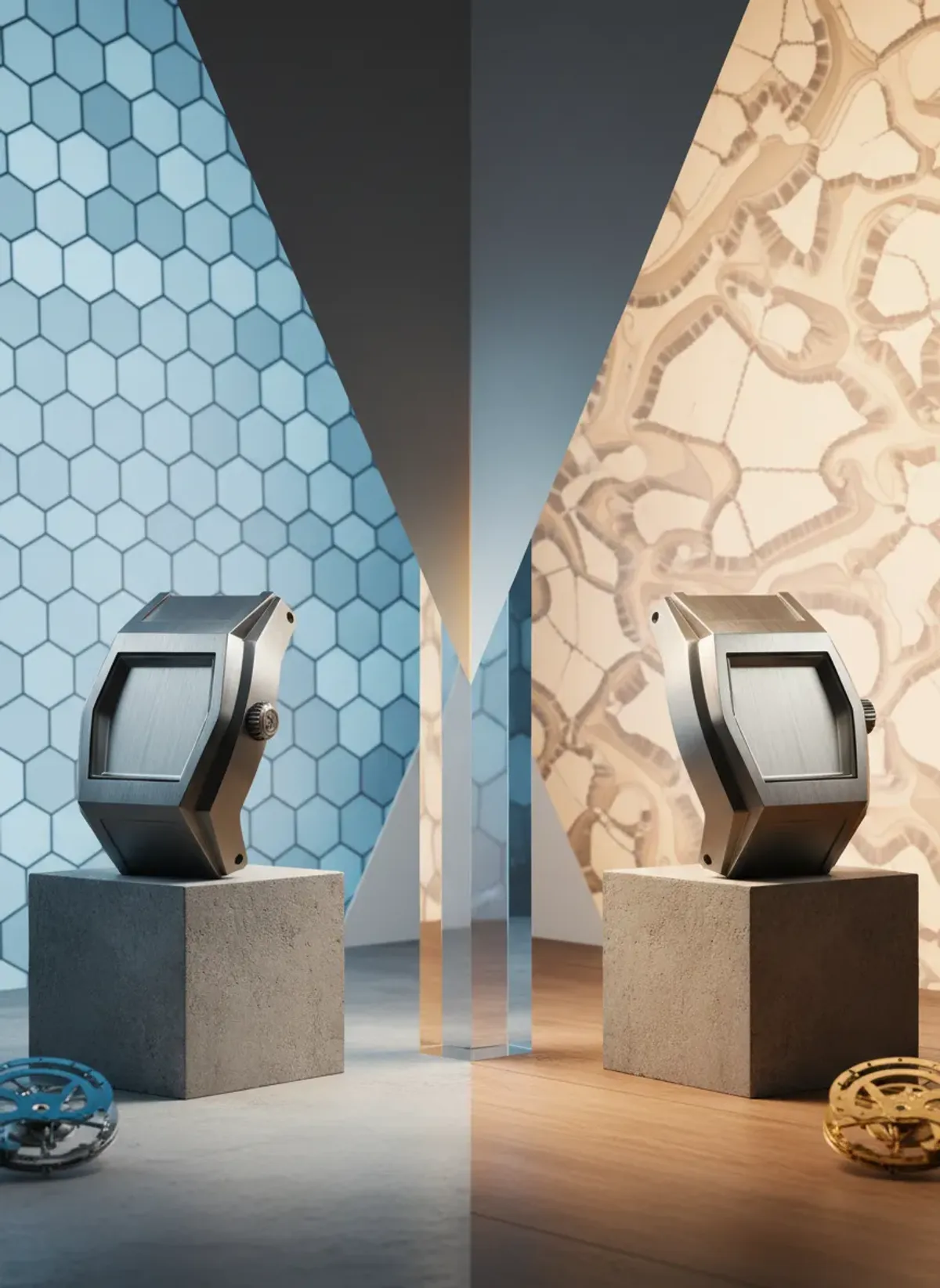
Titanium vs. Stainless Steel: Material Science in Watches
The primary difference between titanium and stainless steel in watchmaking comes down to weight, durability, and aesthetics. Titanium is roughly 40% lighter than stainless steel and boasts a higher strength-to-weight ratio, making it hypoallergenic and highly resistant to corrosion, though it is prone to surface scratching and has a darker, matte grey finish. Stainless steel, conversely, is heavier on the wrist, offers a brighter, lustrous shine that is easier to polish, and is generally more affordable, though it lacks the supreme corrosion resistance of high-grade titanium.
The Battle of the Metals
Choosing a watch isn’t just about the movement ticking inside; it’s about what you feel against your skin for twelve hours a day. For decades, stainless steel has been the undisputed king of the horological hill. It’s solid, shiny, and signals “luxury” from across the room. But in recent years, titanium has surged from a niche aerospace material to a mainstream favorite, gracing everything from rugged divers to high-horology masterpieces.
So, is the upgrade to titanium worth the premium price tag? Or is the classic heft of steel still the superior choice? Let’s strip these metals down to their molecular level.
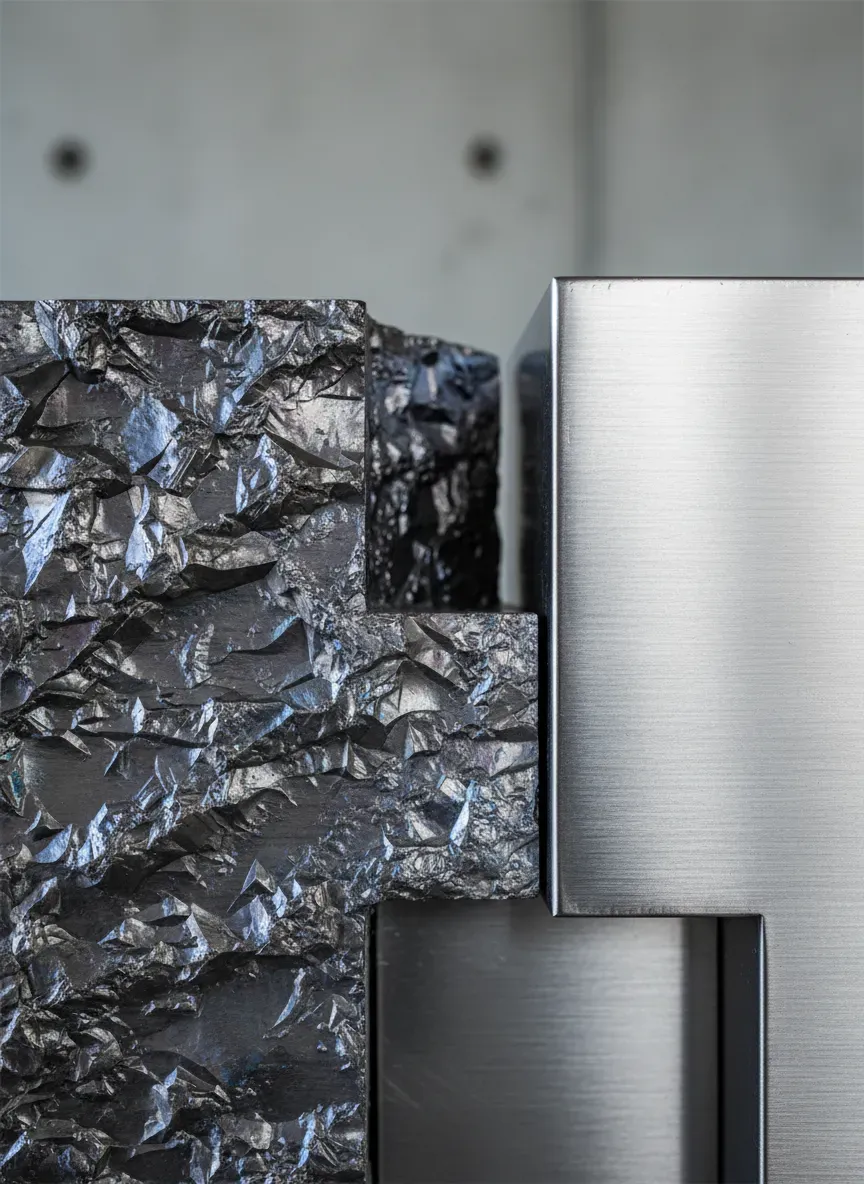
Stainless Steel: The Heavyweight Champion
If you close your eyes and imagine a luxury watch, you are likely picturing stainless steel. It is the backbone of the industry for good reason. Most reputable watch brands use 316L stainless steel, often referred to as “surgical grade.” It’s tough, resists rust reasonably well, and takes a polish like a mirror.
Rolex, being Rolex, takes it a step further with 904L steel. This alloy contains higher levels of chromium, molybdenum, nickel, and copper. The result? It’s harder to machine, but it offers superior corrosion resistance and holds a polish that seems to glow differently than standard steel.
The Aesthetics of Steel
Steel is versatile. It can be brushed to a utilitarian matte finish or polished to a high-gloss shine that catches the light beautifully. That “white metal” sparkle is often what people associate with expensive jewelry. When you are learning how to spot a fake luxury watch, one of the biggest tells is often the quality of the steel finishing; cheap replicas rarely capture the crisp transitions between brushed and polished surfaces that genuine 316L or 904L steel provides.
The “Heft” Factor
For many collectors, the weight of steel is a feature, not a bug. There is a psychological connection between weight and quality. When you strap on a steel diver, you know it’s there. It feels substantial. It feels like money.
Pros of Stainless Steel:
- Lustrous Shine: Brighter and “whiter” than titanium.
- Scratch Repair: Scratches can be easily polished out by a jeweler (or a careful owner).
- Affordability: Generally cheaper to machine and process.
- Heft: Feels solid and substantial on the wrist.
Cons of Stainless Steel:
- Weight: Can be fatiguing during high-activity sports or daily wear if the watch is large.
- Allergies: Contains nickel, which can irritate sensitive skin.
- Corrosion: While resistant, it is not immune to saltwater pitting over long periods if not rinsed.
If you are looking for that classic steel experience without breaking the bank, the Tissot PRX Powermatic 80 is the current gold standard for integrated bracelet steel sports watches.
Titanium: The Space-Age Contender
Titanium is the cool, quiet achiever. Discovered in 1791 but not widely used in industry until the mid-20th century, it brings a completely different vibe to watchmaking. It is paramagnetic, incredibly resistant to chemical corrosion (you could leave it in seawater for a century, and it would look the same), and possess thermal conductivity properties that make it feel “warm” to the touch almost immediately.
In watches, you usually encounter two types: Grade 2 and Grade 5.
- Grade 2 is commercially pure titanium. It’s dark grey, lightweight, and corrosion-resistant, but somewhat soft.
- Grade 5 is an alloy (combining aluminum and vanadium). It is significantly harder, can be polished to a higher shine than Grade 2, and is much more expensive to manufacture.
The “Grey Ghost” Aesthetic
Titanium doesn’t shine like steel. It has a gunmetal, matte grey hue due to the oxide layer that forms on its surface. This gives it a tactical, utilitarian look. It’s stealth wealth. It doesn’t scream for attention; it handles business.
The Featherweight Factor
The first time you pick up a titanium watch, your brain might trick you into thinking it’s “cheap” because it’s so light. It is roughly 45% lighter than steel. Once you get past the initial shock, the comfort is unparalleled. You forget you are wearing it. For huge dive watches, titanium is a godsend, making a 45mm hockey puck wearable for the average wrist.
Pros of Titanium:
- Comfort: Ideally suited for active wear or hot climates.
- Hypoallergenic: The oxide layer makes it chemically inert—no nickel allergies.
- Strength-to-Weight: Higher tensile strength than steel at half the weight.
- Temperature: Doesn’t get scorching hot or freezing cold; acclimates to body temp.
Cons of Titanium:
- Scratch Magnet: While strong, the surface oxide layer scratches easily (though these scratches often “heal” or oxidize over time to become less visible).
- Hard to Polish: You cannot just buff out a scratch with a cloth; it often requires professional refinishing.
- Cost: Titanium is difficult to machine (it eats CNC tools for breakfast), driving up the price.
For a robust entry into the world of titanium, the Citizen Promaster Dive Eco-Drive Titanium offers incredible specs and ISO certification at an accessible price point.
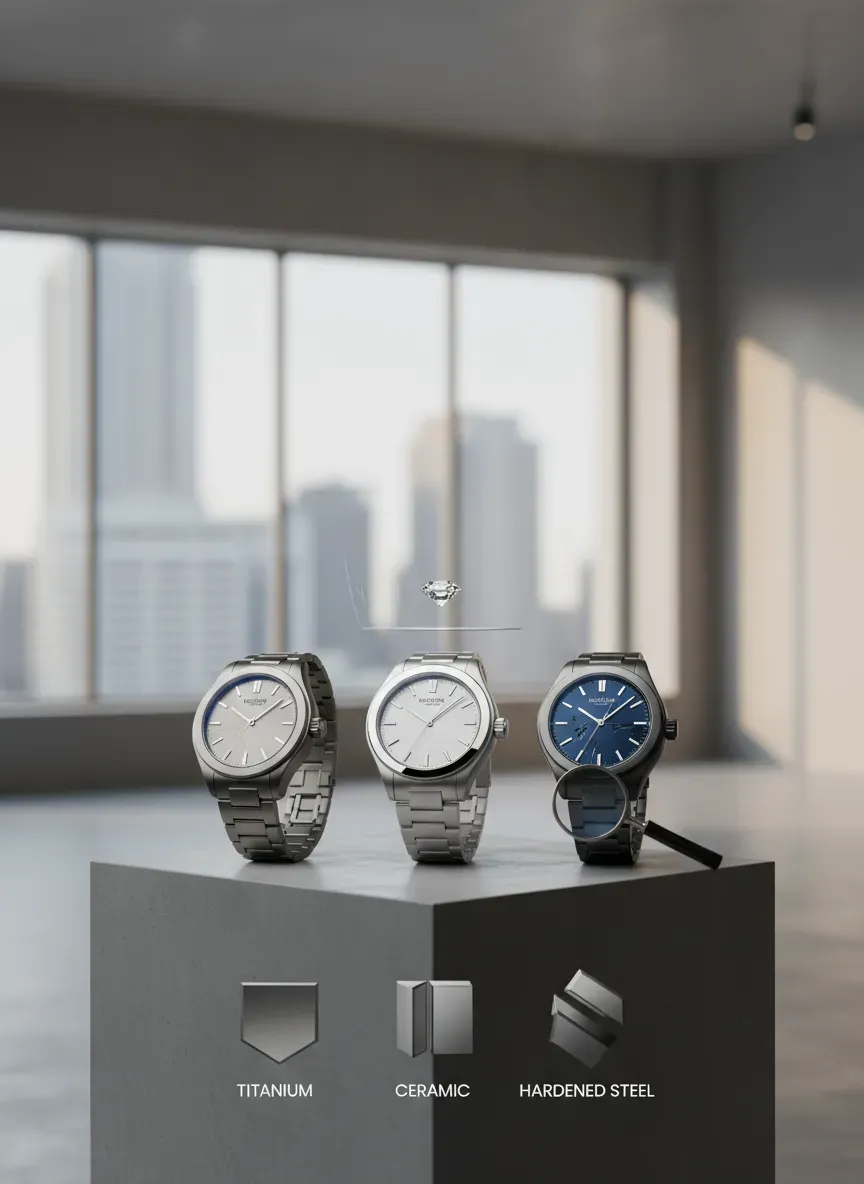
The Science of Hardness (Vickers Scale)
Let’s get technical for a moment. To objectively measure how easily a watch will scratch, we use the Vickers Hardness Scale (HV).
- 316L Stainless Steel: ~150-200 HV
- Grade 2 Titanium: ~145-200 HV
- Grade 5 Titanium: ~350 HV
Wait, if Grade 2 Ti and Steel are similar in hardness, why does Titanium get a reputation for scratching? It’s because titanium oxidizes. When you “scratch” titanium, you are often just displacing that oxide layer.
However, watchmakers have solved this. Brands like Citizen (Duratect), Seiko (Diashield), and Sinn (Tegiment) apply surface hardening treatments. These processes can boost surface hardness to 1,000+ HV, making the titanium virtually scratch-proof against daily hazards like door frames and zippers.
When looking at long-term value, durability matters. If you check our investment guide on entry-level watches, you’ll see that condition is king. A hardened titanium watch that looks brand new after five years may hold its value better than a scratched-up steel counterpart.
Which Material Fits Your Lifestyle?
Choosing between these two comes down to how you live your life and what you value in a luxury object.
The Case for Steel
If you spend your days in a suit, work in an office, or want a watch that transitions from the boardroom to a dinner date, steel is usually the better bet. It flashes from under a cufflink in a way titanium simply cannot. It matches belt buckles and wedding bands.
Furthermore, if you are just starting your collection, the liquidity of steel watches is generally higher. As we highlighted in our list of the top 10 entry-level luxury watches, steel models dominate the market because they are the safe, classic choice.
The Case for Titanium
If you are an adventurer, a frequent traveler, or someone who hates the feeling of a heavy bracelet sliding up and down your wrist, go titanium. It is the material of choice for the “one-watch collection” guy who hikes on weekends and works in a casual creative office during the week.
It is also worth noting that titanium has a “tool watch” heritage. If you appreciate engineering over jewelry, the matte grey finish of Ti speaks to a functional aesthetic that steel can’t replicate.
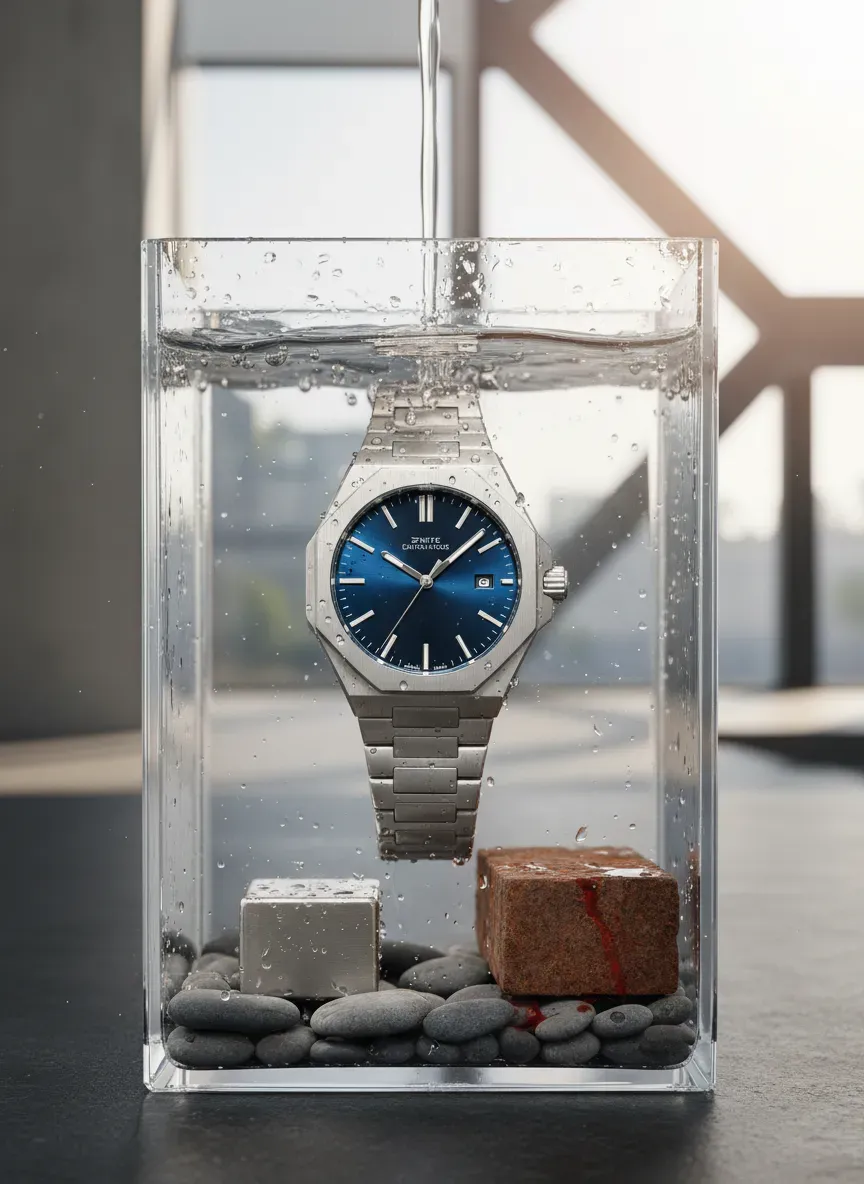
Maintenance and Care
Living with these metals requires different approaches.
Stainless Steel Care: Steel will scratch. It’s a fact of life. The “clasp rash” from typing on a laptop is inevitable. The good news is that a simple polishing cloth can work wonders on polished surfaces (avoid using them on brushed surfaces, or you’ll ruin the texture).
- Recommendation: Keep a pack of Cape Cod Metal Polishing Cloths in your drawer. They are magic for erasing hairline scratches on polished steel cases.
Titanium Care: Titanium develops a patina. Some owners love this; others hate it. You cannot use standard polishing cloths on titanium effectively. For raw titanium, a fiberglass scratch pen can sometimes re-brush the finish, but it requires a steady hand. If your titanium watch has a hard coating (like Duratect), do not try to polish it—you will strip the coating and make it look worse. Just wash it with soap and water and embrace the wabi-sabi.
Conclusion: The Verdict
There is no scientific “best,” only what is best for you.
- Buy Stainless Steel if: You love the shine, you want a watch with “presence” and weight, and you want a classic look that fits formal attire.
- Buy Titanium if: You prioritize comfort above all else, you have nickel allergies, or you prefer a stealthy, matte aesthetic that flies under the radar.
Material science in watchmaking has evolved to the point where neither choice is a compromise on quality. Whether you choose the bright allure of steel or the grey warmth of titanium, you are wearing a marvel of modern metallurgy.