Rolex AD Etiquette: How to Make a First Impression
Master the art of the Rolex Authorized Dealer visit. Learn the etiquette, conversation hacks, and red flags to avoid to secure your dream timepiece.
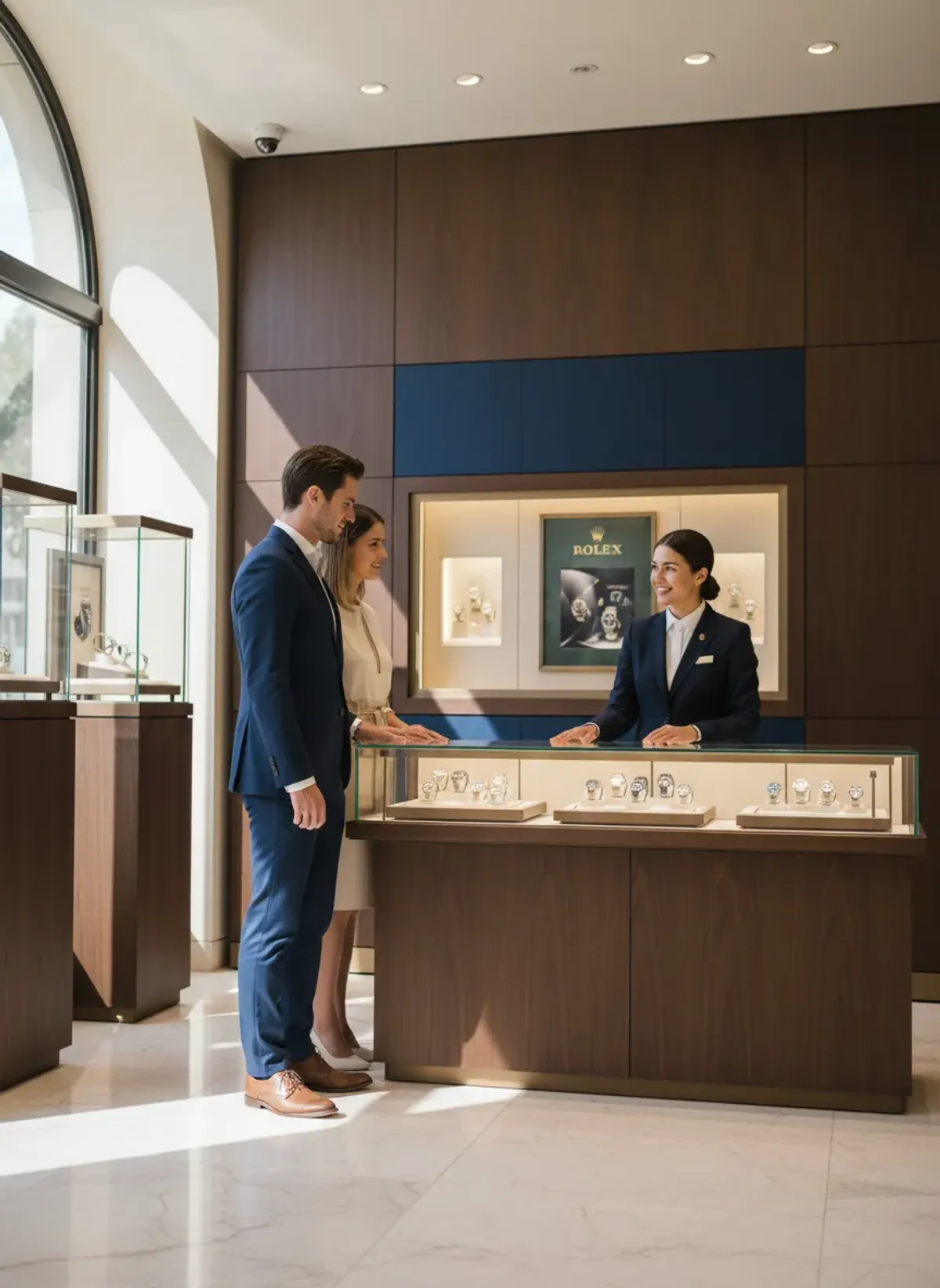
Rolex AD Etiquette: How to Make a First Impression
To make a successful first impression at a Rolex Authorized Dealer (AD), you must present yourself as a genuine enthusiast rather than a profit-seeking flipper. Dress in “smart casual” attire or better to signal respect for the establishment, but avoid looking overly flashy. Enter with a polite, humble demeanor, displaying knowledge about the specific model you want without being arrogant. Crucially, explicitly state your intention to keep the watch for a personal milestone or collection, and never lead the conversation by asking about the “investment value” or secondary market prices. Building a relationship takes time, so treat the initial visit as an introduction, not a transaction.
The Psychology of the Gatekeeper
Let’s get real for a second. Walking into a Rolex boutique in 2026 feels less like shopping and more like auditioning for a secret society. You have the money. You have the desire. But somehow, that isn’t enough.
Why? Because the Sales Associate (SA) standing behind that glass counter isn’t just a cashier; they are a gatekeeper. They are protecting the brand’s inventory from the grey market and ensuring these mechanical works of art end up on the wrists of people who actually give a damn.
The moment you walk through those heavy glass doors, you are being profiled. It sounds harsh, but it’s the reality of the current luxury watch climate. They are scanning for specific cues: Are you a flipper? Are you rude? Do you actually know what a caliber 3285 movement is, or do you just want a “Pepsi” because you saw it on Instagram?
Your goal isn’t to buy a watch today. Your goal is to sell yourself.
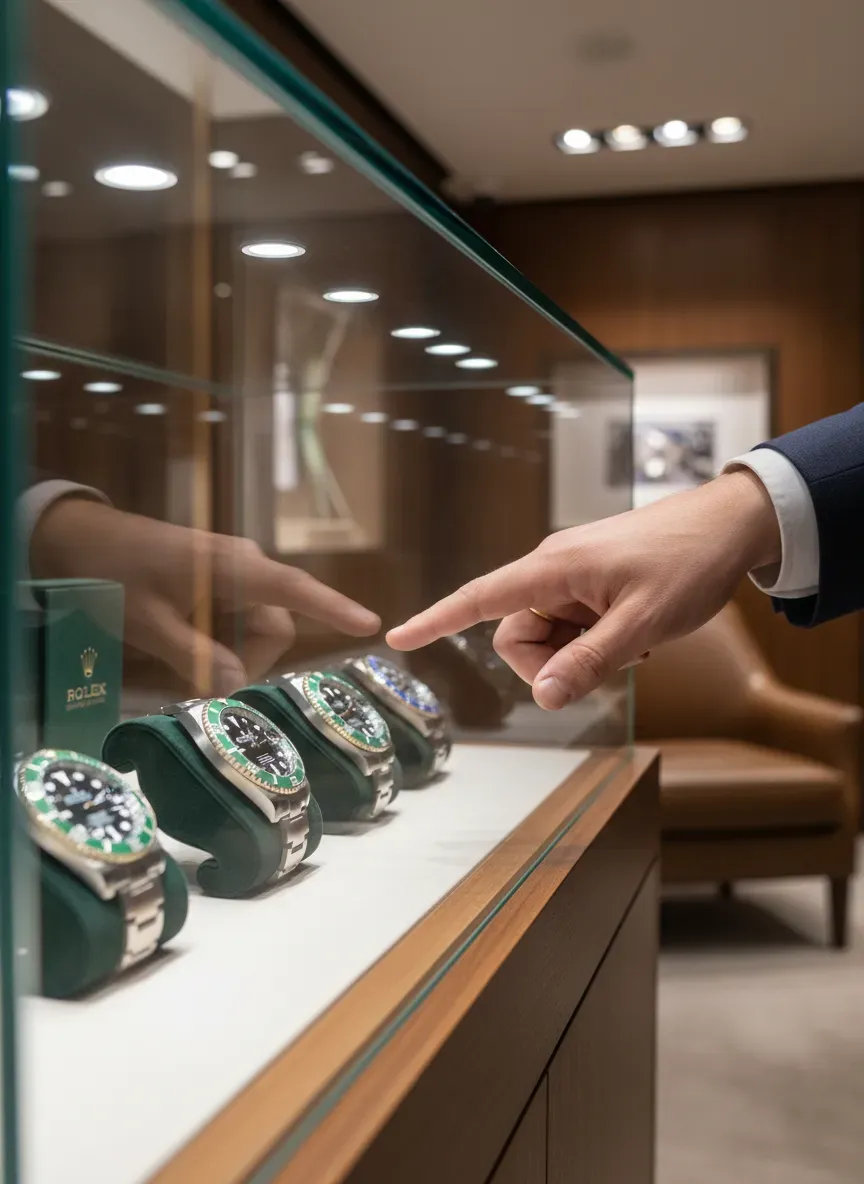
Dress Code: The “Quiet Luxury” Approach
You don’t need to wear a tuxedo. In fact, please don’t. Walking in wearing a three-piece suit on a Saturday afternoon can scream “trying too hard,” just as loudly as gym shorts scream “I don’t care.”
The sweet spot is smart casual. Think well-fitted denim, a crisp button-down, or a high-quality polo. You want to look like you belong in the room, like this is a normal Tuesday for you. If you are wearing a watch, make sure it’s clean. A battered Apple Watch is fine, but if you’re wearing a mechanical piece, it serves as an excellent icebreaker.
Speaking of carrying your collection, presentation matters even for the accessories you bring. If you plan on showing them what you currently own to prove you’re a collector, don’t pull a loose watch out of a linty pocket. Pull it out of a Wolf Heritage Watch Roll. It shows you respect the hobby.
Technical Knowledge: Walk the Walk
Nothing annoys a seasoned AD veteran more than a customer who demands a watch by its nickname but knows nothing about what makes it tick. If you ask for a “Batman” but don’t know what a GMT function does, you’ve lost points.
Before you go, brush up on the mechanics. You should understand the difference between a simple three-hand movement and the more complex engineering feats. If you can articulate why you appreciate the mechanics, you separate yourself from the hype beasts. For a deeper dive into what makes these movements special, read up on complications explained: GMT and Moonphase.
When you express admiration for the independent hour hand on a GMT-Master II or the depth rating of a Sea-Dweller, you shift the dynamic. You become a peer, a fellow enthusiast, rather than just another wallet.
The Conversation: What to Say (and What to Avoid)
There are landmines in this conversation. Step on one, and your name goes in the “trash bin” (mentally, if not physically).
The Red Flags
- “Is this a good investment?” Never, ever ask this. The AD wants to sell to collectors, not investors. If you talk about retention value, you are signaling that you might sell the watch the moment the market spikes.
- “Do you have any sport models in the safe?” They might. But they aren’t for you. Not yet. Asking for the “secret stash” is presumptuous.
- “I’ll pay cash right now.” Money is not the issue. Every person walking in there can pay cash. waving money around implies you think they can be bought. It’s tacky.
The Green Flags
- The Milestone: Tie the purchase to a life event. A wedding, a promotion, a birth, or a major anniversary. It gives the AD a “story” to sell to their manager when allocating the watch. “I want this Submariner to pass down to my son” is a cliché, but it works because it implies long-term ownership.
- The Passion: Talk about your journey. Why Rolex? Why now?
- Curiosity: Ask about the history. Ask to see the catalogs.
While you’re chatting, it helps to be well-read. Having a copy of The Watch Book Rolex by Gisbert L. Brunner on your coffee table is great, but referencing the history you learned from it during your chat is even better.
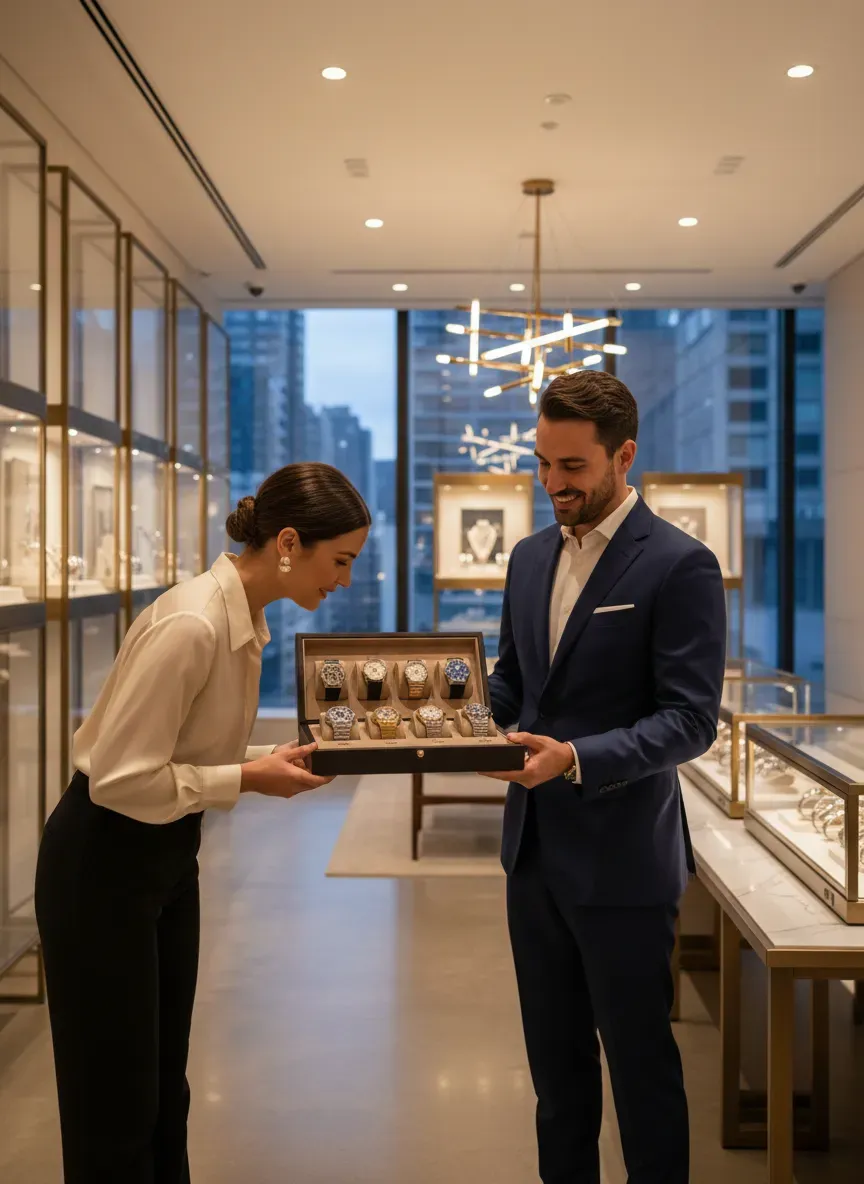
Discussing Materials and Preferences
Flexibility is your friend, but vagueness is your enemy. Walking in and saying, “I want a Rolex,” tells them nothing. However, saying “I want a stainless steel Daytona with a white dial” is a fast track to a five-year waitlist.
Find a balance. Express interest in a specific family (e.g., the Submariner or the Datejust) but be open to variations. Perhaps you have a preference for the weight and durability of specific metals. This is a great time to discuss the nuances of construction. If you aren’t sure about the differences in heft and hypoallergenic properties, check out our guide on titanium vs stainless steel.
While Rolex is famous for their Oystersteel (904L), showing an appreciation for their experimentation with titanium (like in the Yacht-Master 42) or their proprietary gold blends shows you are keeping up with current release news.
The “Purchase History” Dilemma
Here is the elephant in the room: Do you need to buy jewelry or undesirable watches to get the Rolex you want?
Officially? No. Unofficially? Often, yes.
ADs are businesses. They have margins to hit. A client who buys an engagement ring, a pair of earrings, and a Tudor is a more valuable client than someone who only wants a steel GMT.
However, do not buy things you hate just to please the AD. It smells of desperation. If you genuinely like other brands they carry, take a look. If they sell Tudors or Breitlings, and you actually need a daily beater, buying one there helps.
If you are a fan of aviation pieces, you might find common ground discussing other brands they carry. You might even find that a different brand scratches the itch while you wait. We’ve compiled a list of the top 5 pilot watches that often garner respect from horologists and can serve as excellent conversation starters about aviation history.
The Art of the Follow-Up
You left the store. You made a good impression. Now what?
Do not call them every day. Do not text them every week asking, “Any news?”
The follow-up should be organic. Pop in every few months just to say hello. “I was in the neighborhood and wanted to see how things are going.” Keep your face fresh in their memory.
If you hit a major milestone that you discussed, let them know. “Hey, just wanted to let you know I got that promotion we talked about. Still dreaming of that Explorer to celebrate.”
Treat the SA like a human being. Remember their name. If you talked about their dog, ask about the dog. It sounds manipulative, but it’s basic human decency. People help people they like.
Keeping Your Timepieces Pristine
When you visit the AD wearing your current daily driver, ensure it looks cared for. A dirty watch suggests you don’t value the item. It’s a subtle psychological cue. Before you head to the boutique, give your current rotation a quick shine. A simple Chronos Watch Cleaning Kit can make a battered daily wearer look like a cherished heirloom.
When to Walk Away (and Go Grey)
Sometimes, despite your best efforts, the vibe just isn’t there. Maybe the AD is located in a high-traffic tourist area where they simply don’t need new local clients. Maybe the SA was having a bad day.
If you feel disrespected, or if the “games” feel too transactional (like implied demands for a $20k spend history for a basic entry-level model), it is okay to walk away.
There is no shame in the secondary market. Yes, you pay a premium, but you save time. Time is the only asset more valuable than the watch itself. If you’ve been waiting two years for a watch to celebrate a specific date, and that date has passed, the AD failed you.
For some models, the wait simply isn’t logical. If you are looking for specific vintage aesthetics or models that are discontinued, the AD can’t help you anyway. In those cases, looking into the pre-owned Rolex Air-King market or similar avenues is the only way to go.
The Long Game
Securing a hot Rolex model at retail price is a marathon. It requires patience, social intelligence, and a bit of luck.
Don’t take rejection personally. The demand for these watches is global and insatiable. By dressing the part, knowing your stuff, and treating the staff with genuine respect, you put yourself in the top 1% of visitors.
The rest is just a matter of time.
Remember:
- Be memorable, not annoying.
- Be knowledgeable, not arrogant.
- Be patient, not desperate.
Good luck. You’re going to need it.