Smartwatch vs. Fitness Tracker: Pros, Cons, and Which One You Actually Need
Cut through the wearable tech noise. We break down the exact biometric, psychological, and hardware differences between smartwatches and fitness trackers so you can choose what actually fits your wrist.
Mar 22, 2026 - Written by: Linda Wise
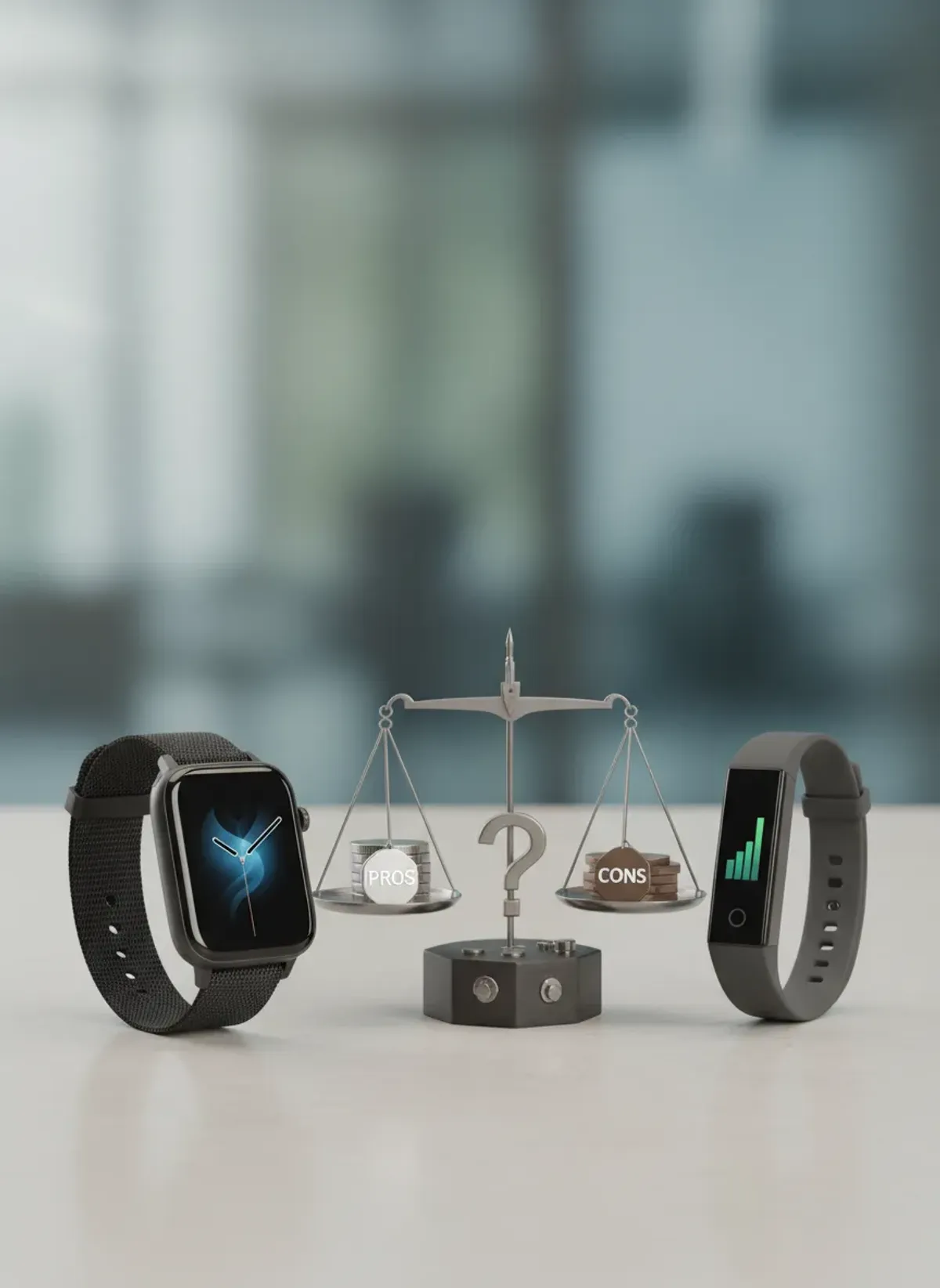
You are staring at your wrist, contemplating a tech upgrade, and the sheer volume of options is frankly paralyzing. We have officially entered an era where the distinction between a smartwatch and a fitness tracker is blurrier than an out-of-focus photograph. Brands muddy the waters with aggressive marketing jargon, promising devices that will simultaneously organize your calendar, track your sleep cycles down to the REM stage, and somehow make you run a faster 5K.
I’ve spent the better part of a decade strapping various lithium-ion powered computers to my forearms. I’ve personally found that buying the wrong device isn’t just a waste of money; it’s an invitation to notification fatigue or biometric frustration. You either end up with a high-powered mini-smartphone dying on your wrist by 6 PM, or a glorified pedometer that doesn’t do half of what you need it to do during a chaotic workday.
To make an informed decision, we have to strip away the marketing veneer and look at the raw utility of these devices. A smartwatch wants to replace your smartphone. A fitness tracker wants to replace your personal trainer. Choosing between them dictates how you will interact with digital information—and your own body—for the next two to three years.
Quick Comparison: Top Picks
| Product | Rating | Check Price |
|---|---|---|
| Apple Watch Ultra 2 | ⭐⭐⭐⭐⭐ | View on Amazon |
| Garmin Fēnix 7 Pro | ⭐⭐⭐⭐½ | View on Amazon |
| Fitbit Charge 6 | ⭐⭐⭐⭐ | View on Amazon |
The Core Divergence: Defining the Wearable Spectrum
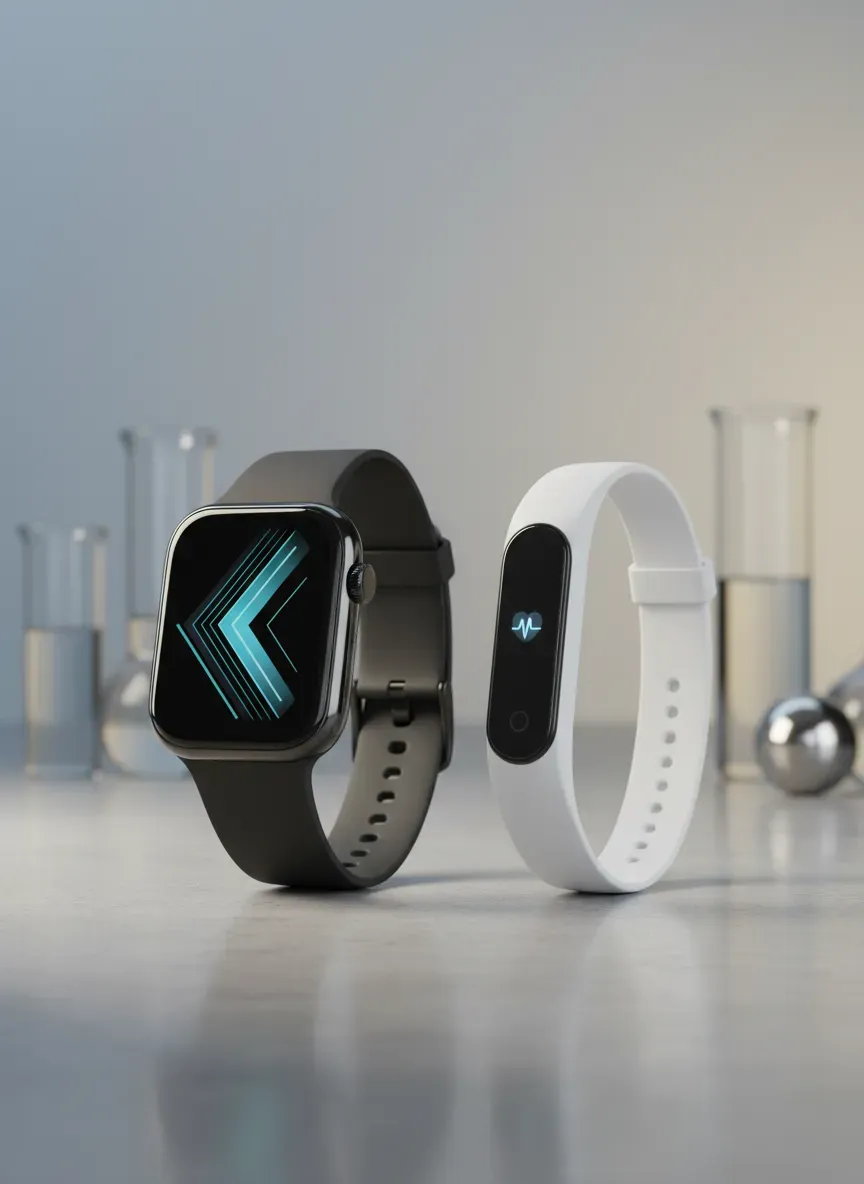
Before we dive into the granular pros and cons, we have to establish a baseline nomenclature. The lines have crossed, but the philosophical foundations of these two categories remain entirely distinct.
A smartwatch is an extension of your mobile operating system. Devices like the Apple Watch, Google Pixel Watch, and Samsung Galaxy Watch are built with rich, vibrant displays, robust app stores, and complex processors capable of rendering maps, streaming music, and handling voice dictation seamlessly. They are generalists.
A fitness tracker, conversely, is a specialist. Devices like the Whoop 4.0, Fitbit Inspire, and Garmin Vivosmart prioritize physiological telemetry above all else. They often feature minimal screens (or no screen at all), passive data collection, and physical footprints so small you forget you are wearing them.
Pro Tip: Don’t buy a wearable based on an aspirational version of yourself. Buy it for the person you are right now. If you hate running, a premium triathlon tracker won’t magically make you love the pavement.
The Smartwatch: A Miniature Command Center
The allure of the smartwatch is undeniable. We live hyper-connected lives, and having a triage center on your wrist can theoretically reduce the amount of time you spend staring vacantly at your phone screen.
Pros: Unmatched Connectivity and Utility
The primary advantage of a true smartwatch is ubiquitous connectivity. When you opt for a cellular-enabled model, you achieve a level of digital independence that is genuinely liberating. You can leave your phone at home, head out for a coffee, pay for it using NFC, text your spouse via voice dictation, and stream a podcast directly to your Bluetooth earbuds.
Furthermore, the third-party app ecosystem on WatchOS and WearOS is staggering. You are not limited to the manufacturer’s native software. Want to use Spotify instead of Apple Music? Done. Prefer a specialized golf GPS app over the default workout tracker? You have dozens of options. Smartwatches integrate deeply with your smart home ecosystems, allowing you to unlock doors, adjust thermostats, and view security camera feeds directly from your wrist.
Cons: Battery Anxiety and Sensory Overload
Here’s the real kicker: that brilliant AMOLED screen and lightning-fast processor come at a steep cost. Battery life on true smartwatches is notoriously abysmal. You are looking at 18 to 36 hours of uptime, assuming you aren’t hammering the GPS chip for long outdoor excursions. This creates a phenomenon known as “battery anxiety.” You have to consciously schedule time to charge your watch, which severely compromises its utility as a sleep tracker. If it’s on the charger on your nightstand, it isn’t monitoring your REM cycles.
Then there is the psychological toll. Smartwatches are designed to command your attention. Every email, Slack message, breaking news alert, and calendar reminder triggers a haptic tap on your wrist. Unless you are ruthless about managing your notification settings, a smartwatch can quickly transition from a helpful assistant to a parasitic drain on your mental focus.
Who Actually Needs This?
You need a smartwatch if your primary goal is productivity and connectivity. The ideal candidate is someone who spends their day in back-to-back meetings, needs to discreetly check urgent messages without pulling out a phone, and views fitness tracking as a secondary “nice-to-have” feature rather than a primary obsession.
The Fitness Tracker: Purpose-Built Biometric Mastery
If the smartwatch is a Swiss Army Knife, the fitness tracker is a scalpel. It doesn’t try to do everything. It tries to do one thing exceptionally well: quantify your physical existence.
Pros: Laser-Focused Health Metrics and Endurance
Because fitness trackers aren’t wasting processing power rendering rich animations or pulling down emails from the cloud, their battery life is phenomenal. We are talking about durations measured in weeks, not hours. This endurance is the key to unlocking accurate health data.
To truly understand your body’s recovery metrics—specifically Heart Rate Variability (HRV) and Resting Heart Rate (RHR)—your device needs to be on your wrist 24/7. Fitness trackers excel here because they only come off your wrist twice a month for an hour to recharge. You get a much more comprehensive, uninterrupted picture of your physiological trends.
The form factor is another massive advantage. Many people find sleeping with a bulky 45mm metal computer on their wrist to be incredibly uncomfortable. Fitness trackers are lightweight, unobtrusive, and rarely snag on clothing. They disappear into your daily routine, quietly logging data in the background.
Cons: The Screen Real Estate Problem
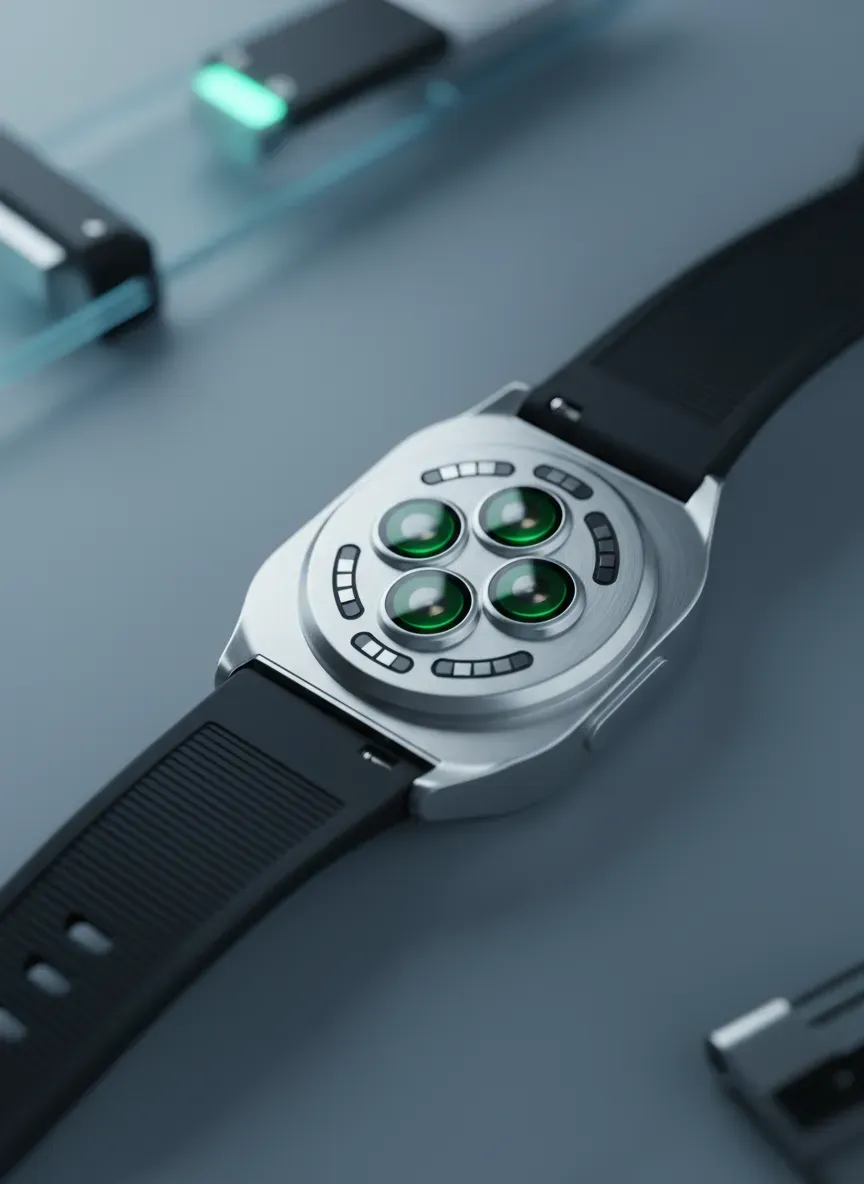
The minimalist design is a double-edged sword. When a fitness tracker does have a screen, it is usually a tiny, vertically oriented strip of OLED that struggles in direct sunlight. Reading text messages requires squinting as the words awkwardly marquee across the narrow display. Interacting with the user interface can feel clumsy and restrictive.
Furthermore, you are entirely reliant on your smartphone. A fitness tracker cannot stream music independently, it cannot make phone calls, and it rarely offers onboard GPS (meaning you have to carry your phone if you want accurate route mapping for a run).
The Ideal Candidate
The dedicated fitness tracker is for the data purist. If your main objective is optimizing your sleep, monitoring your recovery, and tracking steps without the distraction of group chats blowing up your wrist, this is your category. It is also an excellent choice for traditional watch enthusiasts. If you are curating a collection, you might eventually pivot to the 10 best luxury watches on the market. Wearing a discreet fitness tracker on your right wrist allows you to rock a mechanical masterpiece on your left without looking like you are wearing two competing computers.
Bridging the Gap: The Hybrid Revolution
The binary choice between a fragile smartwatch and a hyper-minimalist fitness band is slowly dissolving. A third category has emerged, dominating the wrists of endurance athletes and outdoor enthusiasts: the rugged hybrid.
Brands like Garmin, Coros, and Suunto have essentially created high-end fitness trackers trapped in the bodies of indestructible smartwatches. These devices utilize Memory-in-Pixel (MIP) displays or highly optimized AMOLED screens to stretch battery life into the 20-to-30 day range while offering robust mapping, multi-band GPS, and basic notification mirroring.
You might be surprised to learn that the G-Shock ultimate god-tier watch ethos—the idea that a watch should be able to survive a nuclear blast while delivering precise telemetry—has deeply influenced modern fitness wearables. Devices like the Garmin Instinct or the Apple Watch Ultra lean heavily into this tactical, over-engineered aesthetic. They provide the deep biometric analytics of a fitness band, the durability of a diver’s watch, and the notification triage of a smartwatch.
The compromise? They are often massive, expensive, and possess learning curves that require dedicated study to master. They also lack the smooth, app-rich environment of an Apple Watch. You won’t be ordering an Uber from a Garmin Fenix anytime soon.
Analyzing the Hardware: Sensors, Screens, and Durability
To truly understand what you are buying, you need to look beneath the glass. The marketing materials will highlight the sleek bands and the colorful watch faces, but the actual value of a wearable is dictated by its internal hardware topology.
The Sensor Suite
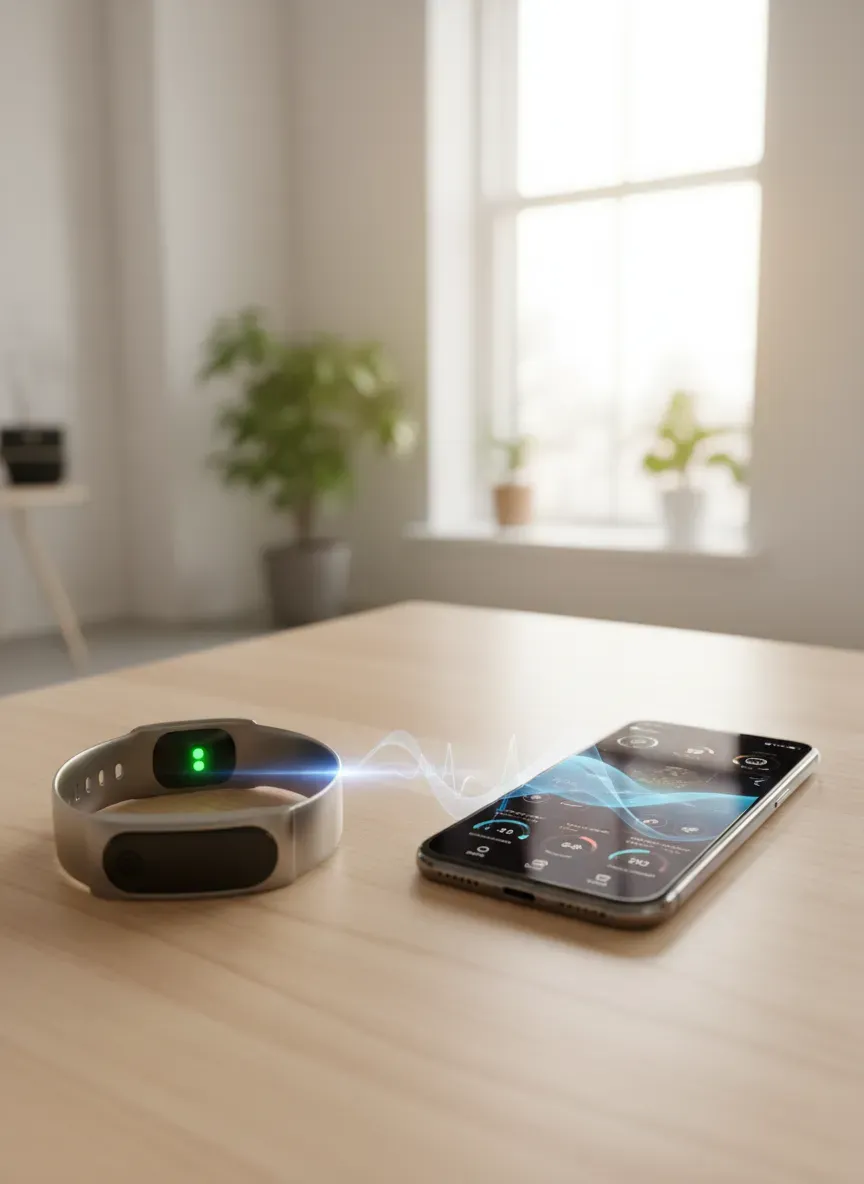
Modern wearables rely on photoplethysmography (PPG). This is the array of green, red, and infrared LEDs flashing against your skin. By illuminating your capillaries and measuring the light that bounces back, the device calculates your heart rate and blood oxygen (SpO2) levels.
Here is where the divergence becomes apparent. Premium fitness trackers and high-end hybrids invest heavily in the accuracy of these optical sensors and the algorithms interpreting the raw data. They account for skin tone variations, sweat, and the erratic arm movements associated with high-intensity interval training. Cheaper smartwatches often use off-the-shelf sensor packages that provide “good enough” resting metrics but completely fall apart during a heavy lifting session or a sprint.
Additionally, we are seeing the integration of ECG (electrocardiogram) sensors capable of detecting atrial fibrillation, and skin temperature sensors that aid in precise menstrual cycle tracking and early illness detection.
Display Technology: AMOLED vs. MIP
Your choice of device will likely dictate the type of screen you stare at.
AMOLED screens (found on the Apple Watch, Galaxy Watch, and premium Fitbits) are gorgeous. They offer deep blacks, vibrant colors, and smooth refresh rates. The trade-off is parasitic battery drain and poor visibility in harsh, direct sunlight.
Memory-in-Pixel (MIP) displays (found on many Garmin and Coros models) look incredibly dull indoors. They lack backlighting by default and feature muted, low-resolution colors. However, they are highly energy-efficient and rely on ambient light to be visible. The brighter the sun outside, the clearer the screen becomes. If you are a trail runner or a cyclist, MIP is arguably superior.
The Psychological Impact of Your Choice
We rarely talk about the mental toll of strapping data-collection tools to our bodies. The device you choose will actively shape your relationship with your own health.
Smartwatches often trigger a reactive mindset. You are constantly responding to external stimuli—closing rings, answering texts, standing up when the watch demands it. It is a very active, sometimes aggressive relationship.
Fitness trackers tend to foster a proactive or analytical mindset. Because they silently collect data for days on end, you are more likely to review your metrics the morning after, analyzing how a late-night glass of wine destroyed your deep sleep architecture.
However, this constant surveillance can lead to “orthosomnia”—an unhealthy obsession with achieving perfect sleep or recovery scores. If waking up to a low “readiness score” on your tracker ruins your mood and dictates your entire day, the device is no longer serving you; you are serving the device.
Pro Tip: Turn off all non-essential notifications on day one. Allow phone calls and text messages from your inner circle to bypass the filter, but strictly banish email, social media, and news alerts from your wrist. Your wearable should be a tool for focus, not a conduit for endless distraction.
Software Ecosystems: The Walled Gardens
Hardware is only half the equation. When you purchase a wearable, you are marrying into a software ecosystem.
Apple’s Health app is a masterclass in clean, accessible UI. It aggregates data seamlessly but keeps the deep, granular analytics somewhat hidden to avoid overwhelming the user. It is a walled garden; you must own an iPhone to play.
Garmin Connect is a playground for data nerds. It is dense, complex, and throws an intimidating amount of charts and graphs at you. It tells you your VO2 Max, your training load focus, and your heat acclimation. It is platform-agnostic, working beautifully with both iOS and Android.
Fitbit (now owned by Google) offers a highly intuitive, gamified experience that is wonderful for beginners. However, they controversially lock some of their most insightful historical data and advanced analytics behind a monthly “Fitbit Premium” paywall. Factor this subscription cost into the lifetime price of the device.
Just like following an ultimate guide to buying your first timepiece, selecting a smart wearable requires you to look past the shiny exterior and evaluate the underlying movement—or in this case, the software ecosystem that will govern your daily interactions.
The Verdict: How to Make Your Final Choice
You’ve waded through the technical jargon, the battery limitations, and the ecosystem lock-ins. How do you actually pull the trigger?
- Key Takeaways
- Assess your phone usage: If your goal is to leave your phone in your pocket more often, buy a fully-featured smartwatch with LTE capabilities.
- Evaluate your charging habits: If you know you will forget to charge a device every single night, immediately disqualify any watch with less than a 5-day battery life.
- Determine your athletic intent: If you are training for a specific event (a marathon, a triathlon), prioritize a dedicated fitness tracker or a hybrid GPS watch with advanced recovery analytics.
- Consider wrist real estate: If you love wearing traditional mechanical watches, opt for a screenless fitness tracker (like Whoop or Oura Ring) or a minimalist band that can be worn discreetly.
The Bottom Line: There is no universally perfect device, only the perfect device for your specific lifestyle. Stop trying to find the wearable that does everything. Find the wearable that seamlessly fixes your specific pain points without introducing new ones. If you prioritize digital communication and urban convenience, the smartwatch wins. If you prioritize physiological mastery and battery endurance, the fitness tracker is your undisputed champion. Choose the tool that serves your reality.