Tudor Black Bay vs. Omega Seamaster: The Battle for Your Wrist
A head-to-head showdown between the Tudor Black Bay and Omega Seamaster. We analyze design, movement, and value to help you pick the ultimate luxury diver.
Feb 10, 2026 - Written by: Brahim amzil
Tudor Black Bay vs. Omega Seamaster: The Battle for Your Wrist
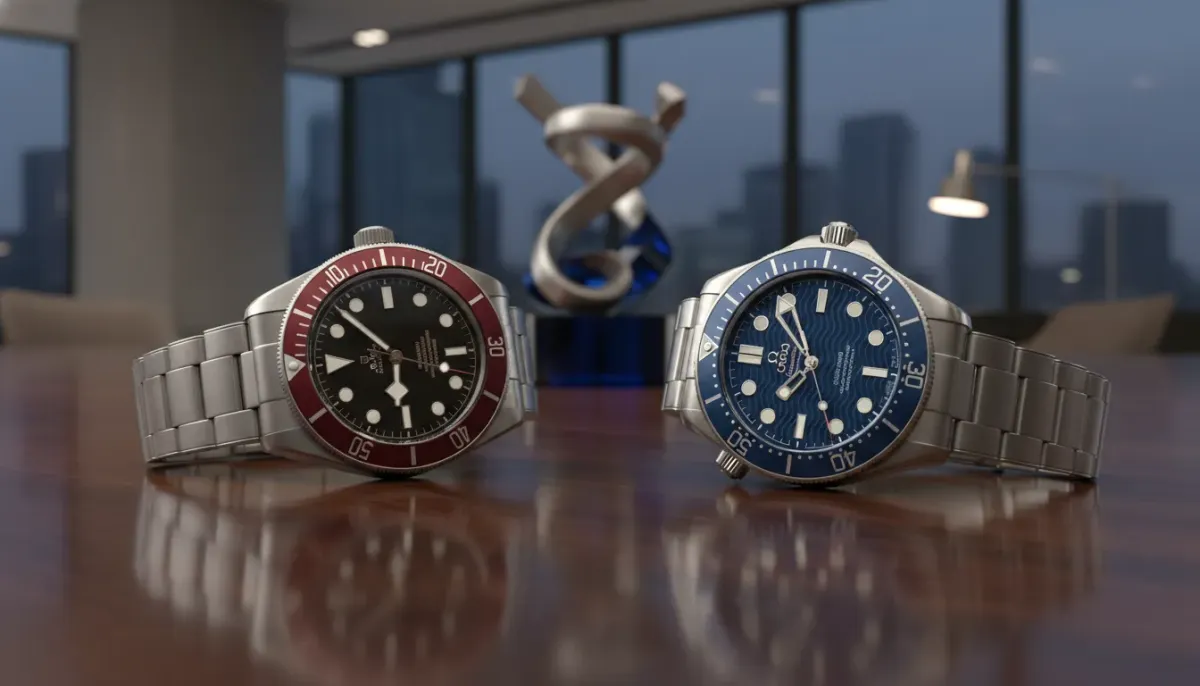
This is the heavyweight championship of the mid-tier luxury watch world. If you have anywhere between $4,000 and $6,000 burning a hole in your pocket and you want a dive watch that commands respect without requiring a second mortgage, you are inevitably staring at two names: Tudor and Omega.
Specifically, the Tudor Black Bay and the Omega Seamaster Professional Diver 300M (often just called the SMP).
Choosing between these two isn’t just about comparing spec sheets. If it were, the math would be easy. No, this is a battle of philosophy. It’s a choice between the warm, nostalgic embrace of the mid-20th century and the cold, clinical precision of modern material science. It’s the difference between a watch that whispers about its heritage and one that shouts about its technical prowess.
I’ve worn both. I’ve scratched clasp buckles on desk surfaces with both. I’ve checked the lume at 3 AM with both. And I’m here to tell you that while there is no “wrong” answer, there is definitely a right answer for you.
Let’s break it down.
The Contenders: A Tale of Two Philosophies
At a glance, these two watches fulfill the exact same function. They are robust, waterproof steel sports watches with rotating bezels, good lume, and automatic movements. They are the kinds of watches you buy to celebrate a promotion, a wedding, or just the fact that you survived another year.
But look closer.
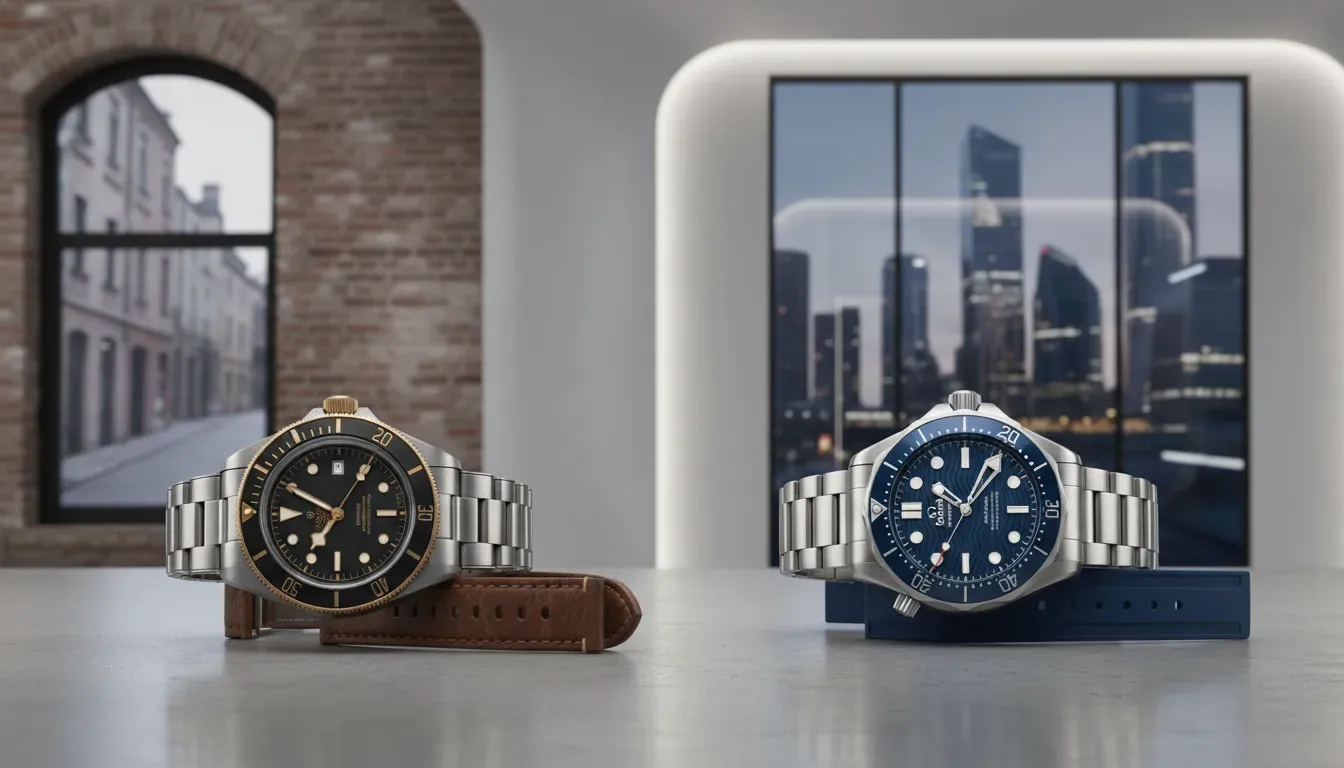
The Omega Seamaster Diver 300M is a child of the 90s that grew up to be a modern tech giant. It is unapologetically modern. Ceramic dial, ceramic bezel, laser-engraved waves, helium escape valve, and a movement that is impervious to magnetism up to 15,000 gauss. It feels like a piece of equipment designed by a lab.
The Tudor Black Bay, on the other hand, is a love letter to the 1950s. It doesn’t want to be modern. It wants to be timeless. It uses aluminum for the bezel insert (which fades over time), a matte dial, faux-rivet bracelets, and a “slab” case design that recalls the early Submariners. It is warm, tactile, and charming.
Historical Pedigree: Bond vs. The Navy
You cannot talk about these watches without acknowledging the massive shadows looming behind them. Marketing plays a huge role in how we perceive luxury goods, and both brands have played their cards exceptionally well.
The Omega Seamaster Diver 300M
Omega struck gold in 1995. When Pierce Brosnan stepped onto the screen in GoldenEye, wearing a blue wave-dial Seamaster, he changed the trajectory of the brand forever. Before that, Bond was a Rolex man. Suddenly, the Seamaster was the spy watch.
That legacy continues today with Daniel Craig and the newer iterations. When you strap on an SMP, you are buying into that cinematic cool. You are wearing a watch that feels active, dynamic, and slightly dangerous. It’s a watch that looks just as right with a wetsuit as it does (controversially) with a tuxedo.
The Tudor Black Bay Heritage
Tudor doesn’t have James Bond. They have something grittier: The Marine Nationale (French Navy).
For decades, Tudor was the “working man’s Rolex.” They used Rolex cases but third-party movements to keep costs down, supplying watches to navies around the world, including the US Navy SEALs and the French Navy. The Black Bay line, launched in 2012, isn’t a reissue of one specific watch. It’s a “greatest hits” album of all those vintage divers. The big crown from the 1958 reference, the snowflake hands from the 70s, the red triangle on the bezel—it’s pure nostalgia.
If the Omega is a sleek Aston Martin, the Tudor is a vintage Land Rover Defender.
Case and Design: Ceramic Flash vs. Vintage Warmth
Here is where the rubber meets the road. Or rather, where the steel meets the wrist. The physical wearing experience of these two watches is drastically different.
The “Slab” vs. The Scallop
The biggest criticism leveled at the Tudor Black Bay (specifically the 41mm Heritage models) is the “slab sides.” The case flanks are tall, flat, and polished. Because the case back protrudes downward, the watch can feel visually thick. It sits high on the wrist. While the GMT and Chrono versions exacerbate this, even the standard diver has a chunky presence. It feels like a block of steel. For some, this is robust and reassuring; for others, it’s clunky.
Omega takes a different approach. The Seamaster case is complex. It features those signature “lyre” twisted lugs that curve inward, blending polished and brushed surfaces. The case sides are scalloped, breaking up the visual weight. Even though the dimensions are similar on paper (42mm for Omega vs 41mm for Tudor), the Omega often looks slimmer from the side profile because of how the light plays off the curves.
However, the Omega is slightly wider. 42mm is a modern size, and the helium escape valve at 10 o’clock adds a protrusion that drives some purists crazy. They ask, “Why do I need a valve for saturation diving when I only snorkel in the hotel pool?” It’s a fair question, but it’s part of the Seamaster’s DNA now.
Dial Texture and Bezel Action
This is an easy win for Omega if you value specs. The Seamaster bezel is ceramic with white enamel numerals. It is virtually scratch-proof and will look brand new in 50 years. The dial is also Zirconium Oxide (ceramic), laser-ablated to create those deep, glossy waves. It catches the light like a disco ball. It is flashy, expensive-looking, and incredibly high-tech.
Tudor goes the other way. The Black Bay uses an anodized aluminum bezel insert. It’s matte. It’s soft. If you bang it against a doorframe, it will scratch. And fans love that. They want the watch to age with them, to develop a “ghost” bezel effect over decades. The dial is usually a matte, grainy texture that absorbs light rather than reflecting it. It ensures legibility and reinforces that “tool watch” vibe.
Also, we have to talk about bezel action. Tudor is widely considered to have the best bezel action in the industry, even beating out its big brother Rolex in some opinions. It has a distinct, mechanical click at the 12 o’clock position that locks it in place. It is tactile perfection. The Omega bezel, while secure, can be harder to grip due to the scalloped edges, especially if your hands are wet—ironic for a diver.
If you are looking to modify or accessorize your current diver while you save up for one of these, there are some great tools and straps available. Check out generic watch repair kits on Amazon
The Movement: Master Chronometer vs. In-House Workhorse
Five years ago, this was a different conversation. Today, the gap has narrowed, but Omega still holds the crown for technical wizardry.
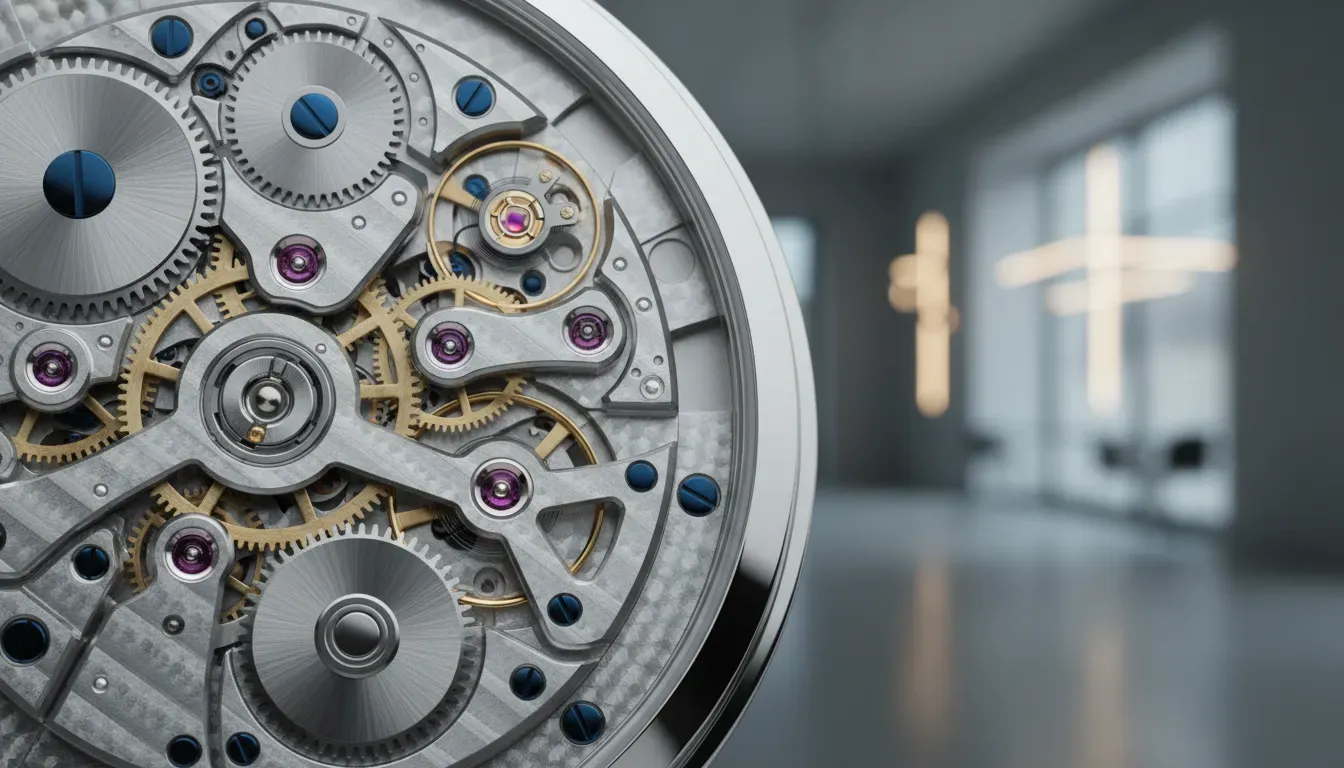
The Omega Calibre 8800: This is a beast. It is a Co-Axial Master Chronometer, METAS certified. What does that mean? It means the watch is tested to an inch of its life. It is accurate to 0/+5 seconds per day. It resists magnetic fields up to 15,000 gauss (essentially MRI-proof). It features a silicon balance spring and the famous Co-Axial escapement invented by George Daniels, which reduces friction and service intervals. You can see this beautifully decorated movement through the sapphire case back.
The Tudor Calibre MT5602: Tudor stopped using off-the-shelf ETA movements years ago for their flagship models. The MT5602 is a “manufacture” movement. It is COSC certified (-4/+6 seconds per day), boasts a 70-hour power reserve (beating Omega’s 55 hours), and uses a silicon hairspring. It is a “weekend-proof” watch—you can take it off Friday night and it’s still running Monday morning. Omega dies after roughly two days.
However, Tudor hides the movement behind a solid steel case back. Why? Because the movement is finished industrially. It’s not ugly, but it’s not jewelry. It’s a tractor engine—reliable, strong, and hidden under the hood.
Bracelet and Clasp: The Achilles Heel?
This is where the battle gets bloody. Both watches have polarized opinions regarding how they attach to your body.
The Omega Seamaster bracelet is… controversial. It hasn’t changed much since the 90s. It features a five-link design that is intricate and very comfortable, but visually busy. It does not taper. That means if it’s 20mm at the lugs, it’s 20mm at the clasp. This adds visual bulk to the underside of your wrist. The clasp is excellent, featuring a quick-adjust diver extension that you can slide in and out on the fly.
The Tudor bracelet tapers beautifully. It looks classic and feels lighter. However, it features “faux rivets” on the sides of the links to mimic vintage bracelets. Some people find this charming; others think it’s fake and cheesy. The older Black Bays lacked on-the-fly adjustment, but the newer models are slowly being updated with the “T-Fit” clasp, which is Tudor’s answer to the Rolex Glidelock. If you are buying a Black Bay, check if it has the T-Fit. It is a game-changer for comfort.
If neither bracelet suits you, both watches are “strap monsters.” They look incredible on NATO straps, rubber, or leather.
Find premium NATO straps on Amazon
Value Proposition and Investment Potential
Let’s talk money.
The Tudor Black Bay typically retails around $4,000 to $4,500 depending on the model and bracelet choice. The Omega Seamaster 300M sits higher, generally between $5,600 and $6,000 on a bracelet.
Is the Omega $1,500 “better”? Technically? Yes. The ceramic materials, the METAS certification, the exhibition case back, and the brand prestige justify the premium. Omega is a tier above Tudor in the Swatch/Rolex hierarchy.
However, Tudor offers arguably the best value in the entire luxury watch market. You are getting 90% of a Rolex Submariner for 40% of the price. The finishing is immaculate, the movement is in-house, and the resale value holds remarkably well.
Speaking of resale: Omega produces a lot of watches. You can walk into any boutique and buy a Seamaster. Because of this supply, they tend to depreciate on the secondary market. You can often snag a slightly used SMP for significantly less than retail. Tudor, specifically the popular models like the Black Bay 58 or the monochrome updates, tends to hold value slightly better, though the hype has cooled off recently.
If you are buying to keep forever, ignore resale. If you are a “flipper,” Tudor is slightly safer, but buying pre-owned Omega is the smartest financial move.
For those looking to keep their investment safe at home, a quality watch winder is often a good addition for collectors with multiple automatic pieces. See top-rated Watch Winders on Amazon
The Verdict: Which One Deserves Your Wrist?
This decision comes down to what you want your watch to say about you.
Buy the Omega Seamaster Diver 300M if:
- You love modern tech and want the highest specs for your money.
- You want a dial that pops and catches attention from across the room.
- You appreciate the “Bond” connection and the prestige of the Omega logo.
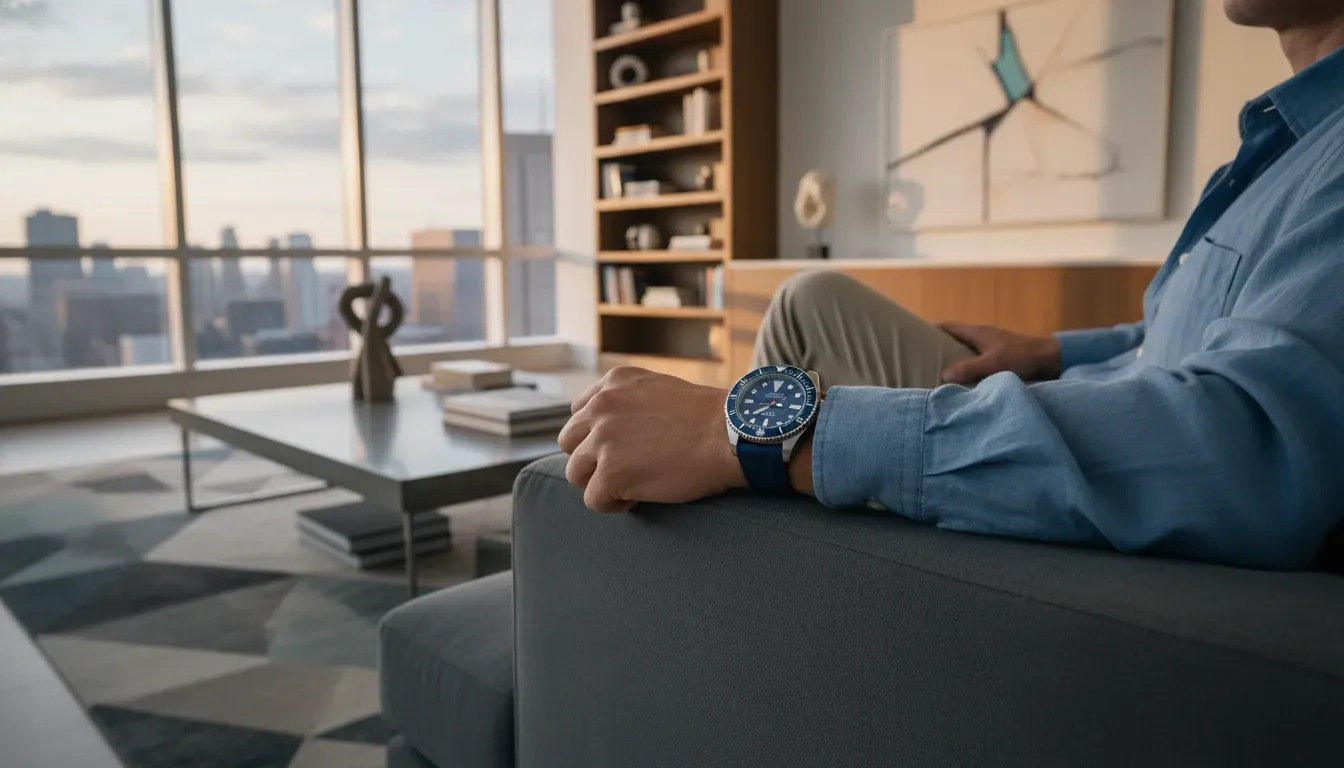
- You actually plan to use it in the water (the rubber strap integration is superb).
- You prefer a watch with a bit of “bling.”
Buy the Tudor Black Bay if:
- You prefer an understated, vintage aesthetic.
- You find ceramic dials too shiny and prefer the warmth of matte aluminum.
- You want a longer power reserve (70 hours vs 55 hours).
- You hate the helium escape valve protruding from the case.
- You want the best possible value for money in the luxury diver segment.
For me? It’s a tough call. The head says Omega. The specs are undeniable. But the heart? The heart often drifts toward Tudor. There is something about that snowflake hand sweeping across a gilt dial that feels like home. It’s less pretentious, less “look at me,” and more “I’m ready for anything.”
But then again, looking down at those laser-engraved waves on the Omega while sitting in a boring meeting… it’s a nice reminder that adventure is just a dive away.
Whichever you choose, you aren’t losing. You’re wearing an icon. And really, isn’t that the point?
If you’re still undecided, you might want to read our thoughts on entry-level luxury watches or check out our guide on maintaining automatic movements. The battle for your wrist is won by the watch that makes you smile every time you check the time—even if you already know what time it is.